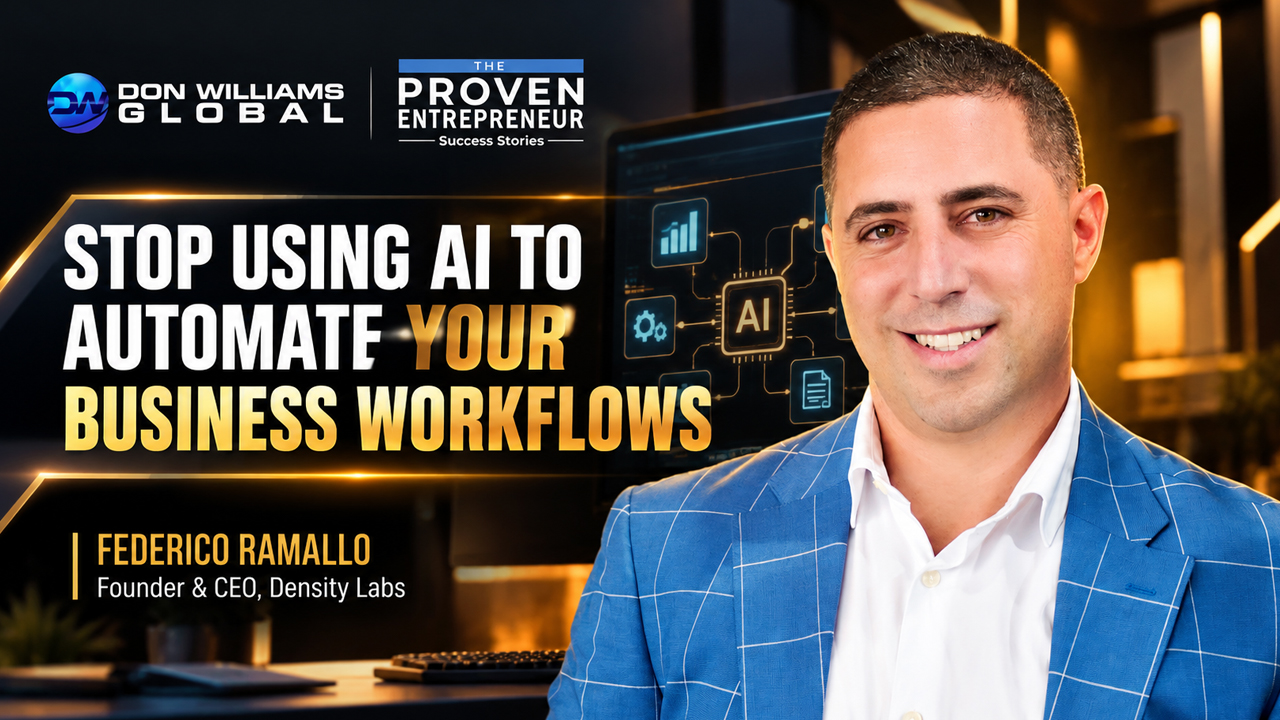
Overview: AI is everywhere in business right now, but many projects look great in a demo and then fall apart in daily use. In this conversation from the Proven Entrepreneur Show, Federico Ramallo, founder of Density Labs, shares how he approaches AI engineering, AI automation, and hiring AI engineers for US companies. He explains why he thinks many founders use AI in the wrong place, why he believes in keeping and upskilling employees, and how authenticity may gain value as AI slop spreads. The episode also covers his personal story as an entrepreneur and what he believes will set apart the founders who lead the next decade.
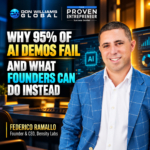
Your AI demo looked perfect in the meeting, so why does it break the moment real customers touch it? Federico Ramallo, founder of Density Labs in Guadalajara, Mexico, says that gap is where most AI projects fail, and he cites a figure that 95% of demos never survive real use. After ten years of building engineering teams through staff augmentation, he now focuses on AI engineering that has to work inside real business workflows. For US founders, CEOs, and CTOs planning an AI strategy, his view is a useful reality check before the next budget decision.
Cost is another topic every founder asks about, and Federico speaks to it directly. He says an AI engineer in the US typically runs around $300K a year, while a dedicated AI engineer through a cross-border engineering team can cost about a quarter of that. He also argues that labor savings are only part of the picture, and that long-tenure teams with deep institutional knowledge give a company a much bigger advantage. That is why he encourages leaders to upskill employees to manage AI agents instead of rushing to replace them, a point host Don Williams strongly agrees with when discussing the future of jobs and the future of work.
The conversation also looks ahead at where business is going. Federico shares his thoughts on AI slop, why authenticity and craftsmanship could become premium, and which kinds of work he expects to stay human. He also opens up about the times he nearly quit entrepreneurship, and why he believes the founders who win the next decade will be the ones who solve real problems and get better at distribution.
For information on how to work with Don visit us at https://donwilliamsglobal.com
You can also reach out to Don Williams at https://provenentrepreneurshow.com
Watch the episode here
Stop Using AI to Automate Your Business Workflows (Do This)
Hey, Don Williams here with today’s episode of the Proven Entrepreneur Show. Got a really special guest, maybe my new best amigo. Okay, Federico Ramallo from Guadalajara. Well, originally from Argentina, but now in Guadalajara, Mexico. Federico, welcome to the show.
Dunn. Thank you for having me. I I’m excited to be here today.
Yeah, I’m I’m thrilled. And I I I never spend more than about five minutes with a guest before we start. And and we we spend about thirty and I have more words for you, but but we should get started. So Federico, your company that you founded is density labs.io. Okay. Tell us what you do, who you serve, why you do it, give us the give us the commercial for your business.
Sure, sure. Thank you, Dan. so Density Labs was founded ten years ago. we’ve been doing stuff augmentation. basically people hire me and they want me to build engineering teams for them, right? So we’ve been focusing on high quality talent, finding the really great talent. So we had an
95% success rate for every placement that we position. we build training programs with a hundred percent retention rate and a hundred percent customer satisfaction, which is hard to do. so for me it’s not about it’s not about throwing bodies at it, it’s about finding the
you know, building trust with the managers. And then from there we can, you know, f finding great people, and then from there just solving problems one at a time, right? recently I pivoted towards AI engineering. The way that I see it is it’s it’s still an engineering problem. It’s a different type of problem, but it’s the same problem. So I am leaning on my, you know, on my
engineering practice. by the way, we have you know customers with us for 10 years, five years. You know, we build a long-term relationship with them, right? and currently what I’m focusing on is shipping AI that survives the demo. Right. there’s a lot of hype around AI. There’s a lot of, you know, it looks good on the demo. 95% of the demo fails. So
I am trying to break those statistics as much as possible, right? By providing AI engineering that actually moves the needle.
Love that. Yeah, I think there’s a lot of noise where when you say AI, you kind of have put your ear filter on. There’s a lot of noise there that needs to move to the side. And and and then there are people who can do unbelievable things. And so and and what I’ve found is that senior skilled
Software engineers. It’s one thing to be a a very good user of AI, and it’s another thing what a senior, highly skilled software engineer can do. It’s almost like they’re directing a symphony. And so I I have I have seen both sides side by side in our own business, it’s our practice to typically
Do two of everything. Okay. And choose the one that’s best. And it’s amazing how many times you’re surprised. I thought A was going to be best, but B is better. Okay. And I would just say this: in the hands of a true professional, okay, I’ve seen some unbelievably elegant AI solutions. Not
Not just getting the job done, but getting the job done in the most proficient, most efficient, best user experience method. And to me, technology if technology doesn’t do that, you know, it’s a failure. so so I appreciate that. And then I think because you are based in Guadalajara, Mexico, okay.
that for US clients, not only do you provide a superior engineering resource, okay, but also there probably is some pricing benefit as opposed to hiring a similar US engineer. Yes.
Yes, I so you typically an AI engineering is around three hundred K a year, right? We can work for you know much less, you know, we can go work for a quarter of that, right? You know, we we we are around a hundred K for dedicated AI engineering, which is you know, really good value for the money, right? the way that I see it is yeah, I mean
Labor arbitrage is good. It’s one one of the competitive advantages of working with a cross border engineering teams. we can use AI arbitrage, you know, we can we can lever a AI to boost our productivity, both on the building the software and then on building features on the software that helps the users, right? And the third one is
Building AI software that automates workflows and decisions within the organization, right? Automating business processes, right? But I feel that those are important and we we do all that. But I think that long tenure teams you can have a much bigger level with that than the first two, right? The first
you know to arbitrage. what I’ve seen is a lot of founders just saying, I I want to switch to AI, you know, get rid of the people, right? but my argument is or my thesis is keep the people because they have institutional knowledge. Now let’s work on training them to use AI more efficiently to manage the agents that are going to run your business.
Founders keep saying they want to switch to AI and get rid of their people. Keep them instead. They hold institutional knowledge, and you can train them to manage the AI agents that run your business. Share on XRight. And they’re going to be much more productive. Right. of course, in you know, it’s not black and white. There’s some people that eventually might need to to be let go because they’re not willing to upscale, right? But at least let’s try to, you know, keep those odds as favorable as possible, give the opportunities and space for them to learn, because they’re they’re the most valuable assets these companies have.
I I love that. And I and the the word that resonated most with me in that was upskill. I I think I think no job actually goes away where the human is willing to upskill to co corro co corroborate and cooperate with AI. I think they just upskill, okay, and they and they get more done. Now for the employee
No job disappears when the person is willing to upskill and cooperate with AI. They just get more done. Share on XWho refuses to learn to grow to improve? Yeah, I I don’t know. That’s probably a problem, but that’s a choice they made. And so so that’s what that is. Okay, I’m gonna ask you about five or six questions.
Yes.
And I’m gonna ask you some questions about AI because you’re an AI expert. So question number one, Federico, what’s something you believe about AI that you think most entrepreneurs
would disagree with.
You can use AI to automate business workflows.
Okay.
I I can expand on that if you like.
Please.
So yes, you can use AI to automate business workflows, sure. But you’re using the wrong tool and your token consumption goes up, right? So my proposal or my suggestion for that is let’s use AI to build software, let’s build code that automate the workflows, right? That way you build it once, you use it many times, right?
Using AI to run every business workflow means using the wrong tool and burning more tokens. Use AI to build software that automates the workflow once, then reuse it. Share on XThen for most of the business workflows where you have deterministic decisions, right? When you’re qualifying a client, you know, you have a very set criteria. It’s not fussy, is you know, revenue numbers or you know, employee size, whatever it is, but it’s very specific. It’s rules-based, right, is what I’m trying to say. For that, we don’t need AI, right? I mean, it’s great, it works, right? But
When a decision follows fixed rules, like qualifying a client by revenue or company size, plain software runs faster and needs zero AI tokens. Save AI for the edge cases. Share on XCan build a software that does that, right? It’s going to run faster, it’s going to require zero tokens, right? Now, what happens when you find a solution a problem or an edge case that does require some you know further analysis? That the you know the rules don’t apply for that use case, then you use AI for that. And we’re talking about maybe 10%, you know, 20 at the most, right?
But usually even those cases can be eventually learned from and adapted into the code.
I love that. So I was talking with a client the other day and they sell expensive vehicles here in the US. And he told me, he said, we made a sale yesterday and the day before, where our bot handled the sale from the very first interaction from the client all the way to scheduling delivery. And so and so it was a it was somebody who preferred this.
form of communication to this. Okay. And so they texted the text bot, communicated, showed them the the three units that fit what they fit what they were looking for, negotiated the price, delivered the contracts. The buyer initiated the contracts, sent them back, scheduled delivery, accepted payments.
And and I was sharing that with somebody who’s and I of course I live in the sales world, but somebody who lived in the sales world and they’re like, AI and automation, you’re never gonna automate expensive thing, expensive purchases. I’m like, that we’re already automating complex purchases. Okay. And anything that you think it can’t do, just give it a minute. Okay. Look at look at
Yeah.
look.
Two years ago, at you did a graphic, you said said make an image, and I had seven fingers. Well, you don’t see any more seven finger images, you know. And it’s the the thing about machine learning is it can learn unbelievably fast based on the volume that’s in there. Okay, so question number two. Five years from now.
What jobs will still require humans? And tell me one or two that’ll just disappear. Humans will no longer do it all.
That’s very interesting question. I
I think that a lot of the physical labor is going to remain. The because you know, maybe in five years people invent robots, AI robots that do that, right? But so far, you know. and the thing is this is growing so quickly that it’s hard to predict, right? but anyways, for f for future Federico, you know, if I’m wrong, I’m wrong.
If if I was wrong, I was wrong. I’m sorry.
Sure.
so anyway, coming back to that is I think that physical physical jobs are going to remain the the accountability of the outcomes I feel is going to remain on humans, right? So managing agents is going to remain. Building software. I mean, I my first
first time I I I start experimenting with agent tick development, I realized, we software engineers are going to have so much more work, right? Because somebody has to guide those agents to build software. They don’t do it magically, right? It’s not magic, right? The it it it it it lowered the bar, so now somebody non technical can actually build a lot of stuff.
AI is not magic. It lowered the bar so non-technical people can build software, but someone still has to guide the agents, so software engineers will have more work, not less. Share on XBut still, vive coding is a lower form of software development, right? or the out outcome is not there yet. and then the I feel that we’re going to see a researching of craftsmanship, right? so that’s going to be very interesting to see how that that is implemented, right? because
We’re going to get to a point where we’re going to get saturated by AI slop and we’re going to want to see the authentic authentic thing things, right? I still don’t know how that’s going to happen because that’s hard to predict, right? But the you know what used to be the blue check on you know on Twitter, now X, you know, that’s you know, mark of authenticity. That’s something that
people are going to start looking for and they’re going to be willing to pay premium for it.
As AI slop floods the market, people will start looking for the authentic thing, and they will be willing to pay a premium for it. Share on XYeah, I I I certainly agree with that. I think that analog is going to
Ha ha.
analog is going to become more valuable. So
I agree.
is there a moment
When you almost quit building your company and when you decided no, I’m gonna keep going
yes, many moments.
Many moments. Yeah. You’re an honest man. Yeah. Care to share one?
Yes. It’s
let’s see.
So
I I I was doing business before, but when I started density, you know, I was in a transition of trying to figure out what I was going to do next. And I was considering moving to Ireland and work there as an individual contributor, you know, just to go back to the you know, simple life of being an individual contributor, right?
And we we thought about it, you know, very very you know deeply. we went there, we interviewed with with with a few people. You know, I I have the I’m a European re resident, so I was able to, you know, go there and work with no issues. and that that could have been probably fine.
But there was something in me that said, and this was you know right before starting the company, right? So I I I had bad experiences and I was thinking, you know, I’m done with being an entrepreneur, right? but then there was in Argentina there’s a saying, you know, when you have ants in your ass, right? because you know.
You have the urge to do more, right? you cannot be contained within a box, right? You you know, it it’s it it relates me to that expression, right? And and I I understand that it doesn’t translate directly, but I hope I’m trying to, you know, provide the intent of that phrase. But I that I had that that feeling and that dreadful feeling of being
Caged in a box, if you like, right? Was harder or more, you know, dreadful than the just looking at the abyss of entrepreneurship, right? knowing that it’s going to be so much more painful and still deciding to do it, right? that has been yeah and
The dread of being caged in a box felt worse to me than staring into the abyss of entrepreneurship, even knowing it would be far more painful. I still chose to start. Share on XAnd the the way that I see it is that every day that yeah you know, after I made that decision, decided to start the company, I I I don’t regret it, but still every once in a while, you know, when I have you know a bad hire, when I have you know, an issue with a an employee or a b or a bad fire, you know, when I realize why didn’t I make the decision earlier, right?
I kind of think about it. Why, why, why did I start, you know, decided to become an entrepreneur, right? life is so much better on the other side, right?
Yeah.
So I I loved what you said, the abyss of entrepreneurship. I I think people who are not entrepreneurs just look at the entrepreneur community and say, well, they make a lot of money and they take a lot of trips and and whatever. And and that’s true for a segment of the entrepreneur population, but there’s probably a much larger segment that is working a hundred hours a week and not sleeping good at night.
And worrying about this and that and this and that. And and maybe even probably they should just go get a job. Okay. and simplify their life. They’d make more money, they’d work 40 hours a week. But but just like an art, my wife is a painter, so she paints beautiful paintings.
My it’s not really optional. My wife is a painter. She must paint. People that are vocalists, they must sing. The person who’s a concert violinist, they must play the violin. They really can’t not do it. And entrepreneurs, for many of us, that is our art. It’s really not optional.
We we we
Yeah.
we we don’t it’s we really don’t have the choice. Now I love Ireland, okay. It’d be a great place to be, but I love Argentina and Mexico too. And so, yeah. So okay. All right, thank you for sharing
Yeah, but
that.
but just to wrap wrap that answer up is yes, there’s a lot of you know it’s a painful process. It’s you know, there’s so many ups and downs. But the definition of happiness is you know finding a mountain that has personal significance for you, right? And it’s not about getting to that mountain, it’s about walking up. So it’s going to be hard, you know, you’re going to, you know, have some.
Happiness is finding a mountain that has personal significance for you. It is not about reaching the summit. It is about the climb. Share on Xpain, but you you know, you’re going to enjoy it, right? Because that’s the definition of happiness.
Agreed. It’s the journey, not the destination. Yeah. And and the average entrepreneur can be at the top of the mountain at 10 a.m. and in the deepest valley at one and back halfway up the mountain at three o’clock that afternoon. It can it can be a tumultuous ride, but but for the artist who must be an entrepreneur, there really is no choice. They they they have.
Right. Yeah, completely
agree. And the fulf
They have to do it.
the last fulfilling thing for me that happened that I didn’t realize is when I see my employees grow, becoming, you know, better, you know, being able to buy a house, being able to buy a house, a car, a house, being able to get married, right? sometimes they invite us, sometimes they don’t, right? most
Yeah, sure.
of the most of the time they do, right?
So I I feel a lot of appreciation from them and I am very proud of everything they accomplish within my organization and you know when they leave, right? Because that’s a life cycle of of any employee, right? They’re you’re going to hire them, they’re going to leave eventually, right? So being prepared for both and
And yeah, and I and I feel that being part of that, you know, of their journey and helping them becomes, you know, my larger purpose.
Yeah, I I love that. And spoken like a great leader. A great leader is looking on how they can improve other people and they’ll get their improvement through the improvement of others. And something you said that reminds me, I I was on a panel with about a hundred entrepreneurs in the room, and we were talking about staff. And one of my businesses, I’m in I’ve been in the contact center business. So a lot of employees.
lot of turnover. Okay. And and we had about the lowest turnover in the industry. but it’s because we’re very picky about how we hire. Okay. We don’t we’re not we’re not liberal in how we hire. We’re very picky. And so we just date and marry the right people, you know, so to speak. And and and we were talking about attrition, you know, people leaving.
And and when when they came to ask me, I was like, well, just realize everybody who works for you today will leave one day. They were like, that’s so dark. And I was like, It’s so true. That they will all go one day. Okay. And and maybe the day they go is after you go. But but you know, the only thing that’s forever is your faith in your family. Every everything else is transitory and employment certainly is.
Okay, so I’m I want to ask you to finish a sentence. Pardon me.
Mm mm.
The entrepreneurs who dominate the next decade will be the entrepreneurs who do what?
The entrepreneurs that dominate the next decade are those that
understand what people need and can build can be software, they can get the right people, but basically build the solutions that they need. I feel that that’s not going to change. You know, that has been happening before, but I think that’s going to become much more important. The reason for that is because the noise of half baked solutions are going to increase, right?
so dramatically that you know the people that ac can actually execute and solve the problems are going to become much more successful, right? So it’s solving the problem and then distribution, right? Being able to connect with the potential clients and articulate it better than everybody else. Those are the two things that are going to
The founders who win the next decade will solve real problems and master distribution: connecting with potential clients and articulating their solution better than everyone else. Share on Xbecome much more important than than currently.
Yeah, I I I love that. And so my second book, Romancing Your Customer, one of the principles in delivering exceptional experiences, you have to see everything from the customer’s point of view. So much so that your point of view is really almost irrele irrelevant. It almost
Irrelevant, right.
it just doesn’t matter. Okay. It only matters what the customer thinks. And I’ve seen I I don’t know how many.
software products where somebody had an idea and they went off and spent a lot of time and money and they developed something, but you know, they never had a customer involved. And so they get to the end and they’re like, okay, now we got to go find a customer. I’m like, man, that is the hard way to do that. It’s a lot easier to have a customer up front and build it from their point of view because that will probably be appealing to other people.
Build from the customer point of view. Your own opinion of your product almost does not matter. It can be technically excellent, but it will not matter if the customer does not like it. Share on XOkay, but just from your point of view, it might be technically excellent, but it won’t matter if the customer doesn’t like it. It just will not matter. And so, Federico, how would someone reach out to you or design labs? Maybe they maybe they want to discuss a potential project. Okay, what’s the best way to reach out to you?
Yeah, so they can reach out to me at federico at densitylabs.io. they can visit my website. the first proposal that I do is an AI assessment, or basically I give them a roadmap of and I I interview the founder and the and the team to understand.
what are the what are the challenges, what are the bottlenecks, what are the low-hanging fruits, right? And I try to provide a an initial assessment on where can we leverage AI the most towards business goals, right? Towards outcomes, right? And then from there, if they’re open to it, we can implement it following that roadmark, right?
of that. Federico, it’s been my pleasure to have you on the show today. Thank you so very much.
Don, it was truly an honor to be here today. Thank you for having me.
My pleasure. Folks, that’s today’s episode of the Proven Entrepreneur Show. We’ll see you next time. Thanks. Bye.