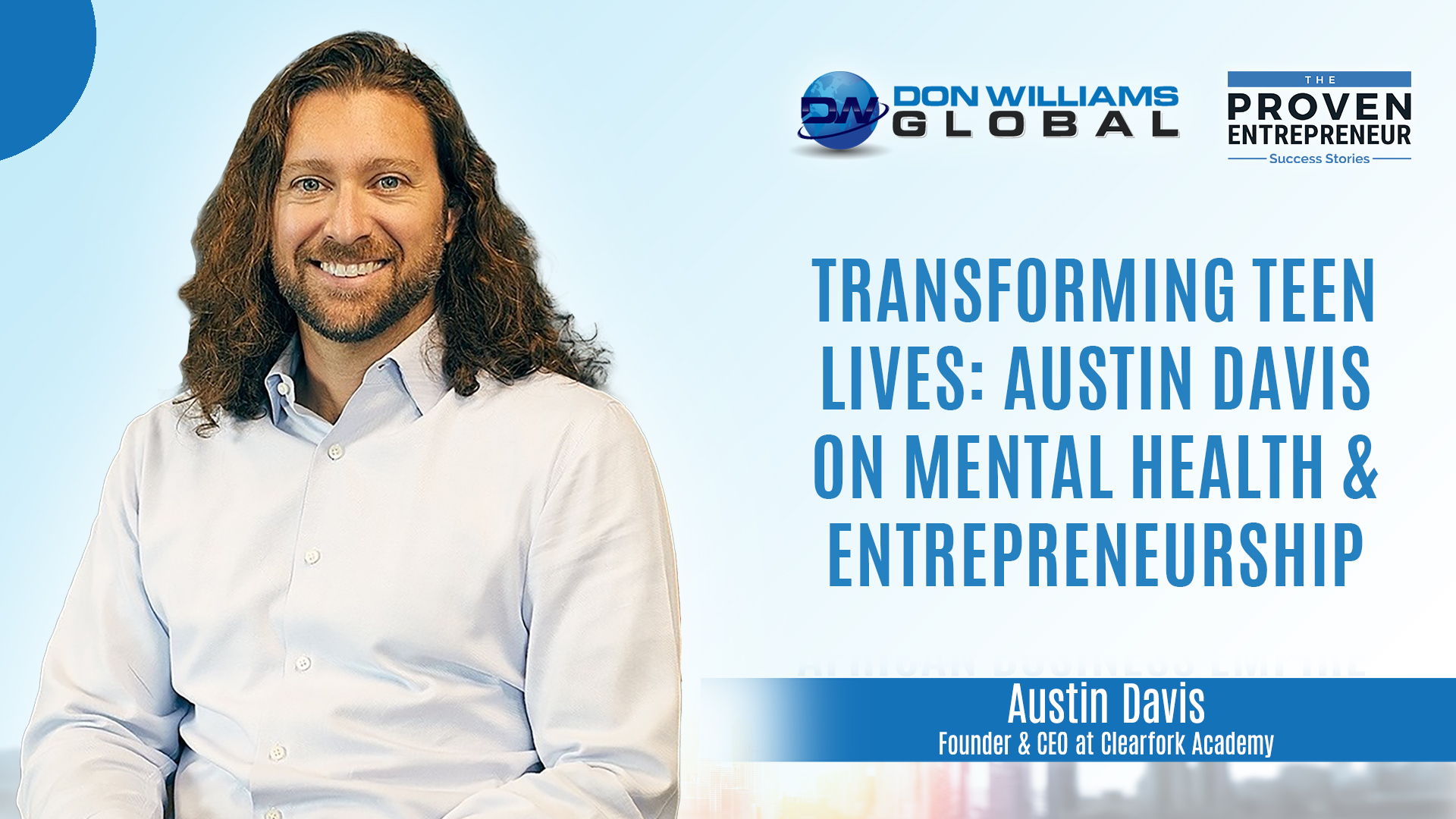
In this inspiring episode of The Proven Entrepreneur Show, host Don Williams sits down with Austin Davis, the visionary founder of Clearfork Academy. Austin shares his incredible journey from a youth pastor to a leading mental health professional, dedicated to transforming the lives of teenagers struggling with mental health and substance use issues.
Join us as Austin discusses the mission of Clearfork Academy, which provides comprehensive care for adolescents through detox, residential treatment, and outpatient programs. He opens up about his entrepreneurial spirit, influenced by his father’s business endeavors, and how his faith and passion for helping others led him to pivot from pastoral ministry to mental health counseling.
Austin also shares valuable lessons from his entrepreneurial journey, including the challenges of scaling his business, the importance of finding the right team, and the pivotal moments that shaped his career. Whether you’re an aspiring entrepreneur, a mental health advocate, or someone looking for inspiration, this episode is packed with insights and heartfelt stories.
Tune in to hear about:
- The mission and services of Clearfork Academy
- Austin’s personal and professional journey
- The impact of mentorship and faith on his career
- Key lessons learned from scaling a business
- The importance of resilience and adaptability in entrepreneurship
Tune in The Proven Entrepreneur Show and don’t miss this episode filled with wisdom, encouragement, and practical advice for anyone looking to make a difference in their community.
For information on how to work with Don visit us at https://donwilliamsglobal.com
You can also reach out to Don Williams at https://provenentrepreneurshow.com
Listen now and be inspired to create your own legacy!
Watch the episode here
Transforming Teen Lives: Austin Davis on Mental Health & Entrepreneurship
Hey, Don Williams here with today’s episode of the proven entrepreneur show. I am so excited. I have somebody who’s a good friend of mine, but you’re also going to love him. Austin Davis. Welcome to the show. Hey man. Happy Friday to you. Going to get slide into the weekend pretty shortly after this episode. So I appreciate you coming on today. Um, Hey, let’s take you what? No, before that. So tell me, I know you have a couple of businesses.
What’s up, Don? Great to have you this morning.
I think.
Okay. But let’s just talk about your primary business. What’s your primary business? What do you do? How long have you done it? All that kind of stuff.
Mmm.
so our tagline is create new legacy is what we do. How do we do that is we help 13 to 17 year old boys, girls with mental health and substance use issues. Do that through a continuum of care all the way from detox or stabilization, residential inpatient treatment or partial day programming all the way to just, you know, once a week, individual therapy.
Awesome. And the name of the business is, Clear Fork Academy. And you’re literally helping people change their lives.
Clearfork Academy.
Yeah, yeah, Families, kiddos, grandparents, sometimes teachers, everybody who’s involved in that kid’s life hopefully is impacted by their changes they’re making on their daily basis.
And I would even say larger than that, the world at large, you know, yeah, to take somebody who is suffering with or from addiction and get that monkey off their back, that has an unmeasurable change on their life, their family’s life, and everybody they’re going to come in contact with forevermore. So appreciate you doing that. Okay. Now I’m going to take you all the way back to little Austin.
And that’s the hope.
Okay. You probably haven’t thought of a little Austin in a day or two. Okay. Cause I know you have, even your littles aren’t that little anymore. Okay. Or if I take you all the way back to five year old Austin and maybe up through high school, but that timeframe in the household, you were raised and everybody’s household looks a little different. You know, that’s, that’s kind of all different, but in the household you were raised. What one was there an adult who set an entrepreneurial example to.
Ooh.
Independent of that question, was there a time when you were a child when you said, I’m going to grow up and be an entrepreneur?
yeah. First off, I didn’t know what that word was until I was probably, you 20. But that spirit was definitely inside of me probably since day one. I did. I saw my dad create his own business probably around the age of
I don’t know, seven or eight, something like that. He started kind of an office equipment sales and service company. was a one man band, servicing copiers, computers, faxes at every local business. Right before the internet, you had to go to the Yellow Pages and call somebody because there wasn’t a YouTube video to fix your printer. So.
Right.
you know, that’s what he did. you know, I have fond memories of, you know, laying in the floor of the office underneath the desk tying two million paper clips together or, you know, learning how to, you know, service and build computers and things like that. So you know, grew up around sort of technology and built my own first computer and all those kinds of things. So, yeah, a lot of that entrepreneurial
You love that by the way.
I wouldn’t say mentorship, but sort of spirit was in the family.
Yeah, love that. And so it sounds to me like you inherently had some problem solving. And if you’re thinking about, problem solving and then tip also typical with entrepreneurs, maybe a little, resistance to authority, you know, I, can be a good follower if you can just be a good leader, you know, type of thing. And so, okay. All right. So you get through childhood and, and, I’ll ask you the question, even though I know the answer. So.
I think you backpacked across South America and then joined the merchant Marines and then the seals, right?
Yeah, something like that.
Yeah. No,
you went on to university and you studied entrepreneurship, right?
No, not at all. Not at all. So, you know, at 15 years old, I didn’t grow up in a church family. didn’t go. didn’t talk about things. I had a friend at 15 take me to a local church and just kind of fell in love with that idea and gave my life to Christ and had this call, what I thought was to do ministry in the local church. And so
And so what did you study?
At 18, graduated high school, packed up all my things, went to East Tennessee with like $20 in my pocket and this goal to get an undergrad in pastoral ministries. so did that for four years. Still kind of felt inadequate, underqualified to work in a local church. So I went to seminary, got a job as a youth pastor, kind of part-time, full-time, going to school, doing the whole thing.
And then, you know, when kids catch the house on fire, run away, get pregnant, get in a fight, whatever, we weren’t exegeting stuff out of Romans to solve their problems. I was using my counseling electives to kind of talk through the scenarios, me with the parents, me with, you know, all the stakeholders. And later went to my dean and said, hey, look, I know I’m 80 hours into this 90 hour MDiv program, but
I think I want to pivot here and get my master’s in counseling so that I can kind of go do this at scale. Because again, even in that pastoral role, my heart or my vision was always to grow things at scale. I could never see myself just in that one location, but having a multi-site location or something like that. Even then in that church world and mindset, was still…
multi-site, multi-location, scalable, know, those sort of ideas.
Love that. Okay. And so went to school thinking you were going to be in full-time ministry and 80 hours into a 90 hour program pivoted. But, but love the independence and the courage to be able to do that. I mean, that takes some, it takes some guts to say, Hey, I’m going to make a change here. And, and so then when you graduated, you went out and started your first business.
Day one, right?
no, no, no, no. no, I started working in mental health hospitals, and like bigger institutions, you have to do 3000 hours of internship and you got to log a bunch of hours and time. And, you know, the state wants to be, really comfortable with your level of competency before you go and try to help anybody else. And so did that,
No!
And then kind of sort of through that process, had a mentor who was helping me supervise my hours. And he ended up starting a treatment center, much like what we’re doing today. Brought me along. I was the first therapist, first employee, then first clinical director. So we grew this empty building into, you know, thirty four, thirty two, thirty four people in treatment. And
That’s kind of when I had that entrepreneurial seizure, I think is Michael Gerber calls it, right? Like, hey, I can do this on my own. And so we kind of took this first calling of being a youth pastor and now this clinical expertise and kind of smash them together. And that’s what what ClearFork represents is kind of those two callings. And so I kind of get to do both work with teenagers and be a clinician.
Yeah.
and help change teens’ lives.
Yeah, I love that. So when you took that first job, first therapist, first director, et cetera, how old were you?
25, 26, 27, somewhere in there? Yeah.
Okay. So let’s just call that 26. We’ll cut it down the middle.
And you did that for how long before you had that entrepreneurial seizure and said, must go do my own.
Yeah.
Yeah, five and a half, six years. And, you know, I just I was I was doing my morning routine. I was walking through the building, you know, shaking hands and and just just kind of had this this thought. We’ll call it the Holy Spirit or God or, you know, it’s just a costed and in my walk through the day. And it was just like, hey, I’m done here. I’m done.
And my wife was eight months pregnant with our third kid. And I come home that day and say, hey, babe, I think I need to quit my job. so I wouldn’t be here without my wife. We’ve been married 20 years this coming August. And so every one of these sort of entrepreneurial
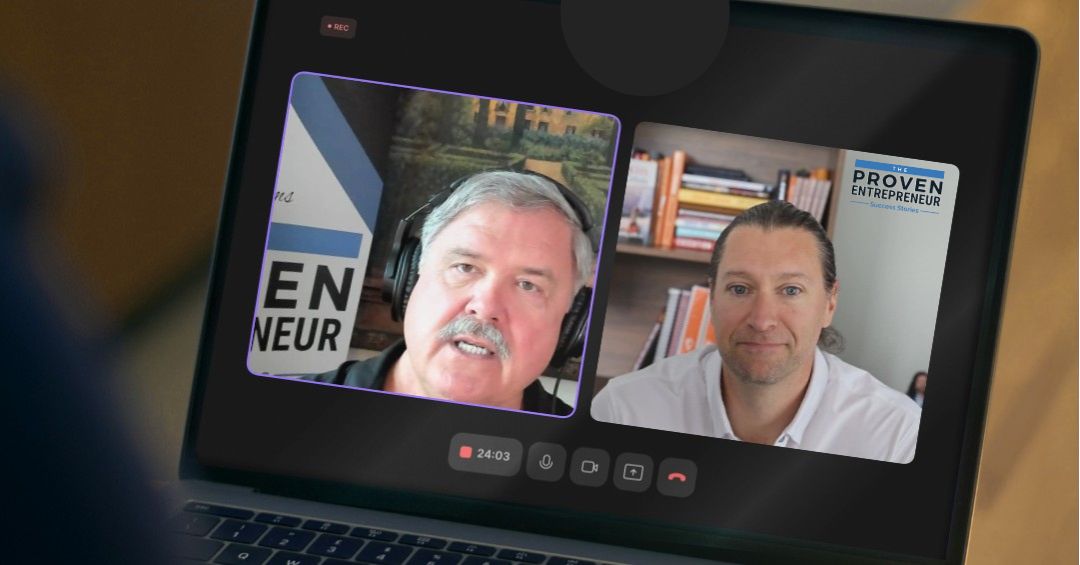
Austin Davis and Don Williams discuss about Entrepreneurial seizure.
That went over well.
Yeah.
pivots or changes or whatnot, you know, she’s been the voice of reason and the anchor behind all of that. And so I come home and I say, Hey, I think I’m supposed to quit. She goes, Yeah, I know. I’ve been praying about that too, for like six months. And it was just like perfect alignment. And so we did we, you know, we kind of already had a plan. We’re super planners. And so it was just like, stockpile as much cash as you can and prepare for a baby. And, you know, we did.
We kind of walked away from what I had my feet up on the desk and went to create our own thing. it was a crazy, probably 12, 24 months afterwards, right?
Yeah. Yeah. Well, so I love that. And I want to point out two things to the audience. One, it’s really common that a successful entrepreneur had maybe that three, four, five, six year, I’ll say apprenticeship, but that’s not really what it is. But, but this time where you get to learn and experience and fail and succeed and it’s not on your nickel. Okay. And, and ultimately you’re just learning and, and
And then typically you kind of have this idea of, think I can do better than we’re doing. Okay. And, that’s really common with entrepreneurs and it’s pretty wise actually. Maybe, maybe better to do that than to start, trying to start the next Apple in your garage at 19. That’s pretty tough. That’s kind of the moon shot. And then the second thing, and, is.
Austin’s relationship with his wife where she’s totally invested into their lives. And, and so they’re in alignment really hard to be a successful entrepreneur and have your spouse life partner kind of pulling the other direction. Pretty tough to do that. So thank you for sharing. Okay. So how long have you had, clear for.
Since 2016, so we’re going on like eight year or yeah eight years
Yeah. Okay. Awesome. All right. So thinking back across that career, your search your memory banks and what I’m looking for is I’m looking for a hard lesson. So something happened or some, maybe something didn’t happen, but when it happened or didn’t happen, it was like, man, that hurt. Ouch. I was, I was counting on the other outcome and, but maybe today was some
perspective, you look back on that hard moment and you’re like, you know, I think that was, I think that was God’s will. I think that was supposed to happen and actually has turned out really positive for me. But at the time it was like, Holy smokes, this hurts. Do you have a hard lesson you could share?
Yeah, the hard lessons. So it’s just filtering through them all. You know, here recently, we did some turnover and this whole so we’ve done the EOS kind of mindset and things for since day one. And so I’m a big fan of system and structures and having a rubric to kind of pass down through the organization. And so this whole idea of integrator
has just been a journey. It’s been a difficult thing to execute or just find the right person. And I think, you know, we went from one facility, me living on campus, having eight patients. We doubled every year, five years in a row. That’s with staff, with clients, with revenue, like everything was just kind of
and a very fast pace. so towards the end of 21, started really trying to think about how do I find an integrator? How do I find that COO? So I can be visionary and not be, you know, doing therapy every day or just plugging away at the details. And so to continue to grow, the company, our BHAG was 225 lives. That’s what we wanted to see, you know, and we had, we had 40 beds.
And so there was a lot of scale that needed to happen to do that. So just that journey, I’ve been through a couple of I’ve been through a couple that didn’t work out. And I think the biggest lesson was is I knew with the first one six weeks in eight weeks in that it was was done. It was toast. was it was it. We made the wrong choice. They knew it and I knew it. And
We just, we stayed in that sort of marriage for eight years, not eight years, eight months. And it was just miserable. It was miserable. It resulted in half the staff leaving and half the clients, know, when you don’t have staff, can’t treat clients. So half the kids don’t come in and stuff like that. And so it really just was a black eye, but I learned a lot. I learned that
Mm. Mm.
in order for that relationship to work, have to not be so OCD and micromanaging. And so there’s a lot of trust that has to be given. And the follow-up and verification, right? I think my biggest learning curve is how do I give someone adequate communication and instruction and then let them go do their thing instead of like,
you you miss this point, you missed it, you know, 80 % is good enough, like trying to trying to live by that has been a huge, just, you know, at scale, I want to scale. And so you can’t you can’t micromanage scale, like it’s messy, it’s disruptive, it’s kind of out of control. So and for a control free collect myself, then that’s difficult to
You can’t micromanage scale. Growth is messy, disruptive, and a little out of control. Embrace it. Share on XIt is kind of out of control. Yeah.
sort of live in at times.
Well, and I think two great points there. One, and my longest business is a pretty high turn. I’m in the contact center business, so pretty high turnover. And so I maybe learned this earlier. I don’t mind failing at HR. don’t mind making hires that aren’t going to make it, but, but I want to, if we’re going to fail, I want to fail fast. I don’t want to fail slow. That’s really painful. If it’s not going to work like
And I’m not very active in that business anymore, but they know if it’s not going to work, let’s part ways as friends today, rather than later, you know, friendly or not. And then the other thing you said is, Hey, I learned. And I think great entrepreneurs have this trait. I either win or I learn. And to me, learning is just a little slower winning.
I either win or I learn. Learning is just a little slower version of winning. Share on XYeah.
Okay. But just, it’s the long path, but, that’s where it goes. Okay. All right. So we’ve done the hard moment. I’m going to look for like a warp speed moment. So things are going pretty good. I make a great hire. I make a great strategy. make an acquisition. get some financing. raise some capital. I do something that even though things are going pretty good, it’s like, we’re, now we’re off to the moon.
Do you have a warp speed moment where you did something? And then it was just like, man, I walked through a door and wow, that was a good door.
I think I keep waiting for that. You know, we work with teenagers and adolescents and it’s like, if one step forward is two steps back, because it’s just because every single day is is we’re dealing with people’s chaos. so even, you know, in 21 in the midst of that COO struggle, we added our second facility. So we doubled our capacity. We had a boys only facility. We added the girls facility.
you know, it’s our our apart from each other. So that adds travel, that adds new staff that needs, you know, basically a second business that runs autonomously. And then about 18 months ago, we just we put two outpatient locations and so totally different business model and same continuum of care, but kind of different concept. And so just rethinking a lot of those things. And so it’s like
Yeah, we went from one location to four locations in about 24 months. So it doesn’t feel like a warp speed, but guess in hindsight, there’s some scale.
No doubt to other people
it might seem pretty aggressive, one to four locations in two years.
Yeah.
Right. Yeah, we position it positioned ourselves from, about a six, six million dollar a year to the possibility of 22 million. So, you know, there’s there’s a lot of lot of growth to grow into that that that model. So.
Well,
I think that one to four and you being modest about that underlies the fact you’re just an over former Austin. So everybody else is breathing a brown paper bag and he’s like, yeah, we’re growing a little bit. so good for you. Okay. All right. Maybe toughest question I ask. I’m trying to ask this to every guest. I’m gonna you in a time machine. I’m going to send you all the way back to 20 year old Austin. You got about 30 seconds.
Maybe 60 to share whatever you want to share. Okay. With your 20 year old self, that would, would have been helpful. Something you know now, you didn’t know then that if you could turn back the clock and of course we can’t, but if you could, gosh, I wish I knew that. Well, here you, here you go. What do you say?
Yeah.
Yeah, instantly this is.
it’s kind of three or four fold, but the essence is, is don’t do it on your own. And that it’ll be okay. That’s what I tell myself is like, it’ll be okay. That, you know, I live my life kind of, grandfather, my mom’s side spent like 50 years in the railroad. And so this image kind of,
Don't do it on your own. It'll be okay. Trust the process and have faith that everything will align in order. Share on XMm-hmm.
sticks with me is I feel like my life is just laying track for a train that’s chasing me. And I’m laying it as fast as I can. And it’s going to be okay. It’s going to be in the right order. It’s going to be nailed down properly. And I think that’s that that has the faith thing built into it for me, right? Like my job is just to put the track down and God or whoever behind me is making it.
Life is like laying track for a train that’s chasing you. Just lay it down and trust it will hold. Share on Xin order.
I lost you. Yeah, just putting it back in just putting it back in order and making making it straight. So message to self.
You’re back.
Yeah.
love
that. And I’m like three times older than you are. But you know, what I’ve seen across my career is, I’ve always, I’ve always been a very diligent worker. I’m the guy who shows up early. I’m the guy who works late. I can do twice as much as anybody. Okay. At whatever level I’m, I’m, I’m working at, but the interesting thing and the, what I’ve found similar in your comment, you’re laying the track and then God’s going to make it all happen is that.
My biggest periods of harvest in my life, I wasn’t working any harder. I wasn’t working any smarter. I literally believe it’s when God said, you can harvest. so appreciate you working every day. You’re called to do that. But some of those lean times, now we’re going to follow up with some fat times.
Mm-hmm.
because I really can’t see that I ever did anything any different in those timeframes when it just kind of happened. So, so love that. Okay. How can we support you? How can we reach you? If someone has a teen or adolescent suffering from addiction, how do they reach out to your company?
Yeah.
Clearforkacademy.com. Yeah, the top right hand corner is our phone numbers that ring straight to our admissions and crisis intervention team. so whether you think it’s not an issue and you’re just curious or you ended up in the ER and you know it’s an issue, we’re there to help navigate through those questions.
And if you don’t know, you don’t want to pick up the phone, you can go to Amazon and get a copy of my book, My Kid, My Crisis. And so I just kind of chronicled like 20 stories of families somewhere in that spectrum of that journey. And then how to address them if you were if you didn’t have any other resources.
Love that. And so if, if you are living with a teen or adolescent who’s suffering from addiction, let me just tell you, you’re not alone and there is help. Okay. But, most, you know, I coach business owners and, there’s sort of like three steps for them to improve. Ask for help, learn something new, put it into action.
in.
And I think that’s probably universal. If you have a teen or adolescent, ask for help, learn something new, act on it. Austin’s business, be happy to help you. Austin, thank you so much for coming on the show today. It’s been my honor.
Yeah, Don, thank you so much. I appreciate you.
Thank you. That’s today’s episode of the Proven Entrepreneur Show. We’ll see you next time. Thanks.