What if the reason your business isn’t growing isn’t your product, but the fact that not enough people know it exists?
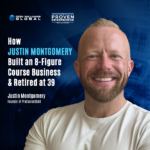
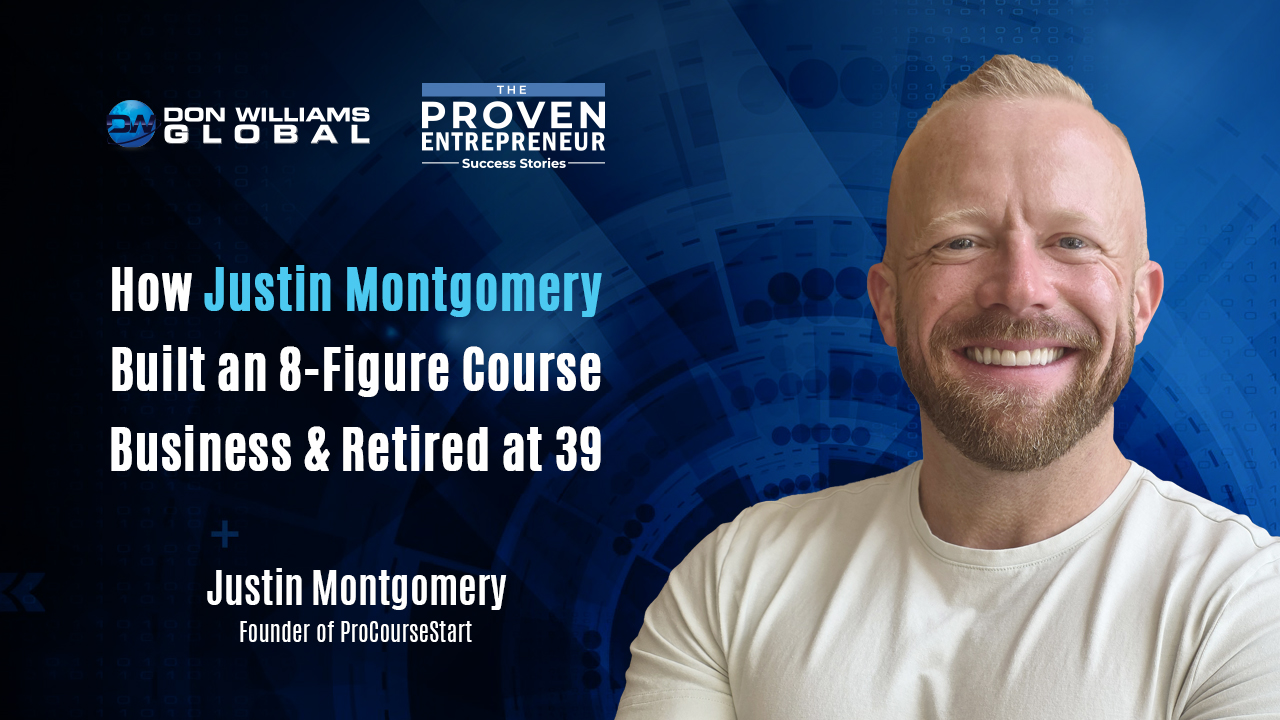
Most entrepreneurs spend months refining their offer, perfecting their website, and improving their service. Yet many overlook the one thing that determines whether any business succeeds or fails: demand. In a recent conversation on The Proven Entrepreneur Show, entrepreneur Justin Montgomery shared how he built an eight-figure education business by focusing on audience building before sales. His story challenges many of the assumptions founders have about business growth, marketing, and entrepreneurship.
One of the most valuable startup lessons from Justin’s entrepreneurial journey is that audience building should come before aggressive selling. Before launching his first course, he spent six months consistently creating content and growing a community of engaged followers. That focused effort helped him generate $50,000 in revenue within seven days of launching his first offer. For entrepreneurs looking for sustainable business growth strategies, this reinforces a simple truth: trust is often built long before a purchase is made.
Justin also challenged the popular belief that success requires a massive social media following or passive income streams. Instead, he emphasized solving meaningful problems, creating valuable content, and maintaining consistent marketing efforts. His experience shows that a highly engaged niche audience can outperform a large but disconnected following. Whether you’re building a startup, consulting business, creative agency, or personal brand, the fundamentals remain the same: validate demand, build credibility, market consistently, and focus on serving people who genuinely need what you offer.
For information on how to work with Don visit us at https://donwilliamsglobal.com
You can also reach out to Don Williams at https://provenentrepreneurshow.com
Watch the episode here
Justin Montgomery’s Blueprint for Building an 8-Figure Business Without a Massive Audience
Hey, Don Williams here with today’s episode of The Proven Entrepreneur Show. Got a real treat for you. I got Justin Montgomery with Procore Start. Justin, welcome to the show.
Thanks having me, Don, appreciate it.
Yeah, no problem. Tell us a little bit about what your company does.
Yeah, Procore Start is a, it’s essentially an education consulting company. So what we do is we teach, we teach professionals how to start continuing education course businesses. So not just like a course business, but continuing education course businesses. So, professionals out there, you know, any, any kind of licensed professional basically. So like a dentist, a lawyer, doctor, chiropractor, electrician,
All these professions require a certain amount of continued education credits or hours every year to maintain their license. And so what we do is we teach those professionals how to start their own continued education course business to tap into that, tap into that market. I mean, it’s a extremely high demand market because these people have to have these credits and hours to basically keep working. so starting a continued education course business is a, it’s a great way to start a business that’s
essentially guaranteed to work. So, yeah, that’s pretty much what we do.
I think you have a unique niche, a unique wrinkle in that you do CE courses where people, there is that built-in demand. Do you think the online course industry is…
expanding, collapsing, exposing the lazy experts. What do you think about the entire industry in and outside of continuing education?
Yeah, I think, uh, I think it’s just the general course market left a bad taste in a lot of people’s mouths over the past, you know, few years, uh, cause everyone was jumping into it thinking, you know, call themselves a guru or an expert or whatever. And they would just create garbage courses and, you know, charge people a thousand dollars for them. And, know, they’re just very bland, very unremarkable really. And with the advent of AI, especially in like 2022,
People have just utilized artificial intelligence to just pump out, you know, just a bunch of courses. And so, yeah, so I’d say overall, yeah, I’d say it’s probably left a bad taste in a lot of people’s mouths. You what I read on various message boards online, you know, on Reddit or some Facebook, you know, some Facebook group pages is that people are just extremely leery. They’re extremely cautious about
basically purchasing a course. know, people are very skeptical about it because they’ve been burnt before. so, um, so yeah, I’d say that’s my assessment of the overall industry pretty much, but the beautiful part about a continued education course is that, um, people at least get a credit or an hour that they can use towards their license. So even if the course is garbage, they’re still at least getting something from it. You know what I mean? So yeah.
Yeah, yeah, love that. And I probably agree is that the market just got flooded and there was a lot of low quality stuff, not necessarily in CE, but just in the course business. What do you think is the, if somebody was starting, somebody was thinking about doing a course, what do you think is the most common misconception they have before they launch that first course?
biggest misconception that I see with people that I mentor and consult with is that they, they think their course is just going to do well without really doing any kind of appropriate market analysis. you know, they think that because what they, know, what they think they, you know, with what they know, they think other people are going to care or they think there’s going to be demand for it when in reality there’s just not, you know, they think their idea is good, but it’s not.
Great businesses aren't built on good ideas—they're built on validated demand. Share on Xvalidated. And so then they go to market and it just flops because they just didn’t do the proper analysis during the, you know, literally during the first week of planning this business. And so what I usually tell people is, that you really need to spend more time developing your idea, developing your value proposition, identifying the problems that you’re going to solve. And you spend more time on that than you actually spend building the course itself. Really. You need to make sure this is a validated.
in demand idea. Most people just don’t do that.
Yeah. And I think that’s, you could even apply that to a broader audience of just entrepreneurs. think I’m going to start this business and people are going to line up with open checkbooks and give me a hug as they pay me. And it typically takes marketing and it takes good marketing, you know, to crack into that market. If somebody was thinking about doing a course, but they had zero audience.
Should they just pass or should they go ahead and try and build a course?
So I think that the appropriate way to do it is to build an audience. So the way I teach people, the model that I teach is that your goal is to build an audience first before you really start selling a course. You can sell a course at the same time as you build the audience, that’s fine. But most continuing education course businesses specifically, and really course businesses in general,
Most of the ones that succeed have a very large audience of people that actually enjoy their content. And so the first course business that I started was called the Elite Nurse Practitioner. I started that back in 2019 and I spent six months building an audience before I ever even launched my first course. And when I launched my first course, I had an established audience already. And we’re not talking about an audience of hundreds of thousands of people. We’re talking about an audience of maybe 3000.
Build an audience before you build a sales machine. Trust comes before transactions. Share on XAnd I made $50,000 in seven days with my very, very first course. And so I continue to create courses and I continue to build the audience. My number one goal, throughout the entire thing, my main objective was building the audience. You know, the courses were secondary, but I continue to build that audience and eventually that audience got to, you know, 20, 30, 40,000 people. and there were just nurse practitioners, just that specific.
Wow.
population of people. So I never had a hundred thousand followers. I never had viral videos, anything like that. But a quality audience. I built that business up to eight figures and had an eight figure exit event that allowed me to retire at the age of thirty nine. And so I did that by building the audience. And so when I consult mentor people now who want to build these kinds of businesses, that’s the predominant focus is building your audience through consistent, valuable content. If you do that, the people will buy the courses.
So, so I recommend typically if you’re to go to market, if you’re going to launch this business, have a product to sell right from the get go, but don’t push it, build the audience instead. And then people will buy the course, buy the product eventually.
Yeah.
Yeah, love that. And I think a really valid point you made was, didn’t have a hundred thousand followers. I didn’t have a, I’m not Gary V, I’m not Mark Cuban. I didn’t have all that. And one thing I love about Gary Vaynerchuk is he’s like, Hey, if 117 people saw your content today and they keep coming back, that’s 117 people. You know how hard that is?
to go out in the real world and shake a hundred and hands a day? That’s impossible, okay? You can’t do it on the phone, you can’t do it with your feet. And so you have to have something, but it doesn’t have to be millions and millions. You don’t have to be Shark Tank. okay, what’s a brutal truth about passive income?
that maybe gurus don’t want people to hear.
There’s no such thing as passive income. No such thing as passive income. I’m sorry. There just isn’t. You’re not going there. Just there just isn’t. mean, there’s always there. Something has to be involved with it. I mean, there has to be some time involvement. Sure. I mean, you can build a passive income stream through some affiliate marketing or whatever, you know, but like at the end of the day, how much work you just put into it to get to that point, right?
Passive income is built through active ownership. Businesses still require leadership. Share on XThere is it.
So I mean, you still had to exchange time for dollars to even get to the point where you’re, you where you’re developing passive income. It’s the same thing with investing, let’s say a million dollars in treasuries or bonds. You still have to work to get the million bucks, you know, now it’s working for you. Still not completely passive. You still have to watch the market. You know, you still have to keep an eye on your investments. And so, you know, a lot of people think they’re going to start a course business and it’s going to be a passive business. And it is not a passive business. It’s a partially passive business. mean,
your product sells 24 seven 365 days a year, but you’re, you still have to put inputs into the business if you want to sell those courses. I mean, you start to create content and stuff. So, but the beautiful thing about it though is, that especially for a continued education course business is that you only have to put maybe 10 hours a week into it. That’s it. You don’t have to put a whole lot. mean, I was, I literally was putting 10 hours a week into the business that I had an exit event through and
We were literally generating $250, $300,000 a month in course sales and I was working 10 hours a week, but it still wasn’t passive. I still had to put, I started to put time into it. Yeah. So.
Yeah.
Realistically, I don’t care what it is. If you treat it passively, it will treat you passively. And if you treat it with action, it’ll probably treat you with action. That’s just the way it goes. So give me a reason or two why some brilliant people, brilliant experts make $3,000 on their courses and others make $3 million.
Yeah.
What’s the, mean, people with real skill, but some do this and some do that.
It comes down to three things. think number one, how much you market it. Obviously, you you got to market it guys. You know, it just doesn’t happen. Number two is. How big of an audience do you build through valuable, entertaining content that’s that that that that that’s that’s actually valuable and by valuable, I mean.
Great products don't create growth. Great marketing does. Share on XDo people consume your content? they watch your videos? They listen to your podcast, they read your articles and like, and does their life change from that? You know, can they actually put it into action? Can they actually utilize what you’re teaching and put it into action to change something in their life? Most people’s content is complete garbage. It just, it doesn’t change anything. You know what I mean? And then number three, I think is
The people who have a $3 million course business and the person who sold $3,000 worth of courses, obviously the person who sold $3 million worth of courses, they were actually solving a real problem. They were actually transforming people’s lives. And so, you know, the reason why I was selling $300,000 a month in courses, some months, a million dollars during like Black Friday and stuff. The reason why was because the courses that I had,
these continued education courses would teach medical providers how to start their own practice. And so I’m essentially transforming these people’s lives. Like I’m teaching them how to build a business so they can escape working in the hospital or a clinic or something like that. That’s something that’s truly transformative, you know? And so, yeah, I think the people who actually have very, very successful course businesses are
are creating a transformation in their students. The people who just flop, they’re just not, they’re not really solving a real problem. They’re not transforming someone’s life. And so that’s what you really need to focus on.
I love that. I think, I’ll just word it a different way, you your course was literally changing their life. Okay. It was sure they were getting CE for it and they need and they got to have CE, but you know, you and I both know for most professions, I mean, you can get CE pretty economically painlessly. mean, there’s people out there that are
just giving it away. and, but, but when it was kind of what Zig used to say, if you help enough other people get what they want, you can have everything you want. And you’re showing medical professionals how to step out of a W-2 and become a business owner. And that is changing, transforming word in any way you want to. It’s totally turning over their life. So great job.
Okay. Now I’m not saying you would do this and I want the audience to be sure they understand. I’m not saying Justin does this. This is a hypothetical question. Okay. If somebody came up and said, Justin, here’s $10,000.
Can you build a course from scratch in 90 days? What would you do first?
Well, yeah, I mean, it’s extremely possible. It’s kind of the whole premise of the Procore Start program that we have. I for about 10,000 bucks, excuse me, about $10,000, you can start a CE business. It’s about what I put into the elite nurse practitioner. I’ve literally invested $10,000 into that business and it turned into a $10 million plus business. mean, you know, you kind of invest kind of return. you going to get otherwise on 10,000 bucks? just, you’re not going to find a return like that. You’re just not going to, you know, um,
And so, yes, absolutely you can. And I think that if you’re interested in doing this and you have 10,000 bucks, then number one, like I mentioned earlier is validate an idea first. That’s free. You can do that for free. You can use AI tools to help you validate an idea fairly easily. know, ChatGPT, Gemini, Claude, whatever you want to use to validate the idea. And then you’re only going to spend probably
$3,000 of that $10,000 actually building the business itself, website development, know, signing up for a course hosting platform, maybe hiring an editor to edit your course so it actually looks and sounds good, et cetera. You’re gonna about three grand. And then the other $7,000 you’re gonna spend is gonna be marketing that thing. It’s gonna be building an audience, getting content out in the world and getting eyes on it. That’s what you’re gonna spend the rest of the money on. So.
It’s relatively a simple business. It’s really not complicated.
Well, done right. so that, and that’s why you want to get an expert like Justin done right. know, somebody who’s been there, done that. Justin’s made a couple of mistakes and I’m saying that tongue in cheek, but, he’s, he would admit that he’s made more than a couple. Okay. and, but if you can get a coach, you can get a mentor, you can get somebody who’s been there and done that. You can.
The biggest mistake entrepreneurs make isn't building the wrong product—it's building one the market never asked for. Share on Xrapidly accelerate your progress. And the other thing I want to be sure and point out to our audience was this. Notice how he broke the 10,000 down. We’re to take about 30 % of it, 3,000. We’re going to build the course. We’re going to get a professional editor. It’s going to look good. It’s going to sound good. We’re going to get website. We’re going do a lot with 30 % of our budget and 70 % of our budget. We’re going to market. We’re going to tell other people, just
who we are, what we do, okay? And we’re gonna try and give them as much value as possible. And I would just say for any entrepreneur, that’s probably pretty good rule of thumb. 30 % on develop your product, service or experience and 70 % go tell people what you’re doing, how you do it and how they can buy it from you. Okay. Last question.
What do you think in your opinion?
Should most entrepreneurs in or out of CE, in or out of licensed professions, stop trying to scale their business and just go teach what they know?
Yeah, I think that I don’t think that’s well, I guess it really comes down to what your business is and how well it’s doing, but I would never walk away from something that’s generating money. Obviously. mean, you know, always continue to scale your business. I mean, don’t fix what’s, you know, that’s, know, don’t fix what’s not broken. you know, I had a mentor telling me years ago, you can only build one bridge at a time. You know, you can’t build multiple bridges at one time. You just can’t do that.
But once one bridge is built, you know, you can keep adding to it and scale it and fortify that bridge, you know, your business. but you then have some bandwidth to start on the next bridge. so, never stop focusing on scaling the business that you already have. I mean, if there is still room for growth, continue to put the effort and time into it because it’s always easier to scale and grow a business that’s successful and starting a new one. It just is because you have a proven.
Build one successful business before chasing the next opportunity. Share on Xyou have a proven concept, but if you have some bandwidth and some time and some energy, and we’re talking about five to 10 hours a week, that’s literally it. If you have an extra five to 10 hours a week and you’re looking to build another, you know, another income stream, then utilizing your expertise and skills and knowledge and putting that into a course business, preferably a continued education course business, because I think that’s just a model that
works well, then by all means do that because that’s what I did. You know, when I started my CE business back in 2019, when I started that, I was also scaling three other businesses at the same time. And I realized that, you know, I couldn’t build all those bridges at one time. And so I eventually didn’t give enough love and energy to two of those businesses. So they just kind of.
stagnated. mean, I was making a few bucks. my other businesses were, were some men’s health practices. So I opened a multi-location men’s health clinic and, I got to the point where that business fairly plateaued somewhat, you know, you can only target so many people in a region. Eventually it just kind of plateaus and then you have to open another location up and so forth and so forth. And I didn’t really want to open up other locations.
And so I got that business up to where it was generating some pretty good money. I could have just stopped there and live life, but I wanted something else. And so I started that, that, that continued education course business as a side project, as a literally a hobby. Um, it was, I didn’t expect much from it. I expected to make maybe a few extra thousand bucks a month to pay for my fly fishing habit, you know, something like that. Um, you know, pay for, you know, six pack of beer on a Friday night or something like, didn’t expect it to really
do much. Yeah. Yeah. And yeah, I didn’t expect it to do much. And so I started it. And when I made that 50,000 bucks in seven days, that’s when the light bulb went off and I was like, okay, now this is what I’m going to focus on my men’s health clinics. Screw those men’s health clinics. They can just, they can just do their thing. I’m not going to put much more energy into that. I’m just going to let it run itself. And then I put all my energy and time into that.
When the market shows you where the opportunity is, have the discipline to double down. Share on XAnd a pizza. And a pizza!
course business because that’s what I saw like, I I made more money in one week than I did in two months at my men’s health clinic really profit wise. And so that’s what I did. I just doubled down on it. And then it turned into a full fledged enterprise level, continued education course. Like I said, allowed me to retire at age of 39 years old, you know? so now I have one business now, like now I focus on pro core start because honestly, I what am I going to do? I don’t mean I can, you can only fish so much. I mean, you can only hike so much, you know, I mean,
or golf
or hunt or whatever.
Right. Exactly. You can only do so much of that stuff. Like everyone thinks that early retirement to this. I’m going to be sitting on the beach and hanging out and fishing all day and going on boats and blah, blah, blah. I’m sorry, guys. I don’t know anyone who retired early who does that. It just it just doesn’t work that way. You you get bored. Like if you have the mind and the ability.
Love you, either.
to be able to build a business that allows you to retire before the age of 40 years old, your mind is wired in a way to where you’re not going to just stop, you’re gonna do something, you’re just, have to, you know? So, yeah, so now that’s what I’m doing now, just a side business. If it takes off, great, if it doesn’t, whatever, I’m making a few extra bucks, you know, and helping people out, that’s really the main goal.
Justin, it’s been a real pleasure. the audience, how do we get in touch with the company? How do we get in touch with you? What’s the easiest way to reach out if somebody has an interest in starting a CE course business?
Yeah, you can just go to our website, procorstart.com. You have articles and videos on there. I don’t post as frequently as I should, but it’s there. There’s resources there. Procorstart.com. We have an evergreen course. It’s about 15 hours long that teaches you how to start a continuing education course business from start all the way to scaling and selling the thing. And then we also have a mastermind program as well. It’s more of a mentorship kind of a thing. So you can check out procorstart.com.
you should email me directly justin at pro core start.com. don’t have a VA. don’t have AI agents. Like I answer the emails. So justin at pro core start.com and, yeah, shoot me an email. I’ll be happy to have me answer any questions that might have.
Real pleasure having you on the show. Thank you very much.
I appreciate it, Don. Thank you.
That’s today’s episode of The Proven Entrepreneur Show. We’ll see you next time. Thanks. Bye.