
Welcome to the latest episode of The Entrepreneurial Journey, where we explore the inspiring path of Paul Carroll—from his service in the Air Force to his dynamic role as the founder of Avion Wealth. Join us as Paul shares his profound insights on entrepreneurship, emphasizing the vital role of perseverance. Discover how rolling the dice and embracing learning from failures can set the stage for success.
In this episode, Paul delves into the significance of identifying and understanding your target market, offering invaluable advice on tailoring your business to meet the specific needs of your audience. He passionately discusses the importance of treating people well, highlighting how a positive culture not only benefits your team but is essential for long-term success.
Listeners will find encouragement in Paul’s belief that entrepreneurship is more than just a career—it’s a way of life. As he inspires young professionals to embrace their potential and adapt to new challenges, he highlights one of the greatest joys of entrepreneurship: witnessing your team achieve their milestones and flourish.
Tune in to discover how you can cultivate resilience, nurture a thriving team, and foster a fulfilling entrepreneurial journey. If you’re ready to roll the dice on your dreams, this episode is your perfect starting point!
For information on how to work with Don visit Work With Don Williams
You can also reach out to Don Williams at https://donwilliamsglobal.com
Please join Don and his businesses in support of St. Jude’s Children Research Hospital in its Mission to cure Childhood Cancers. You can donate to St. Jude at stjude.org/donate
—
Watch the episode here
The Importance of Having a Target Market in Business By Paul Carroll
So Paul went to the University, Oklahoma State University, Stillwater, Oklahoma. Okay. Go Cowboys. All right. After that, did you start your first company? Did you get a job at J O B? What happened?
So I went to Oklahoma State for three semesters. I, Frank, you know, I was young. I ran out of airspeed, altitude and ideas about the same time. And for one of options, and I sure as heck wasn’t going back to Europe, I enlisted in the Air Force as an aircraft electrician. They said, well, join us, you can go to school. And that’s what I did. I enlisted, I went through a little boot camp, became qualified as aircraft electrician.
Sent to Guam.
and spent three years and nine months on Guam because the University of Maryland rotated teachers, professors through Guam, one of the big bases there, and if you scheduled your classes perfectly, you could finish your school. First I got my associate degree in aircraft electrical systems and then my, you know, studied aircraft electrics, autopilot instruments, and then I worked full time on my bachelor’s in business from the University of Maryland.
I was working very long hours. The Air Force probably 10 hours was normal, 12 hours occasionally. And then on top of that, I was going to school full time. I actually, what I would do, I would have the school in the evening, 10 PM I’d be done. I would sleep in my car, Guam by the way is quite hot, till midnight my shift.
would start at midnight, now I worked at eight, 10, 12, however long the shift was. And more than once I would get pulled over for drunk driving and I was just sleepy. I was driving so erratically. Catch up with studies on weekends and that was my life for three years and nine months in bomb. But I graduated summa cum laude with a 4.0 average. And with that, I got out of the service literally
with just months after I completed my degree. I didn’t know what I was gonna do because you don’t know what to do after that. So I applied for graduate school. Number of schools I applied to, but Texas A&M offered me a fantastic package. They were trying to build up their business school. I had great GMATS, 4.0. Their offer was fantastic. It was in-state tuition, an office not unlike the one I’m in now.
married student housing, I was single. It was about a three microsecond decision on the phone. And of course I’m in Guam. So back in those days, a phone call to the US for five minutes was $15, which was a lot of money back then. Some of these schools, UT being one of them, they were very, well, please hold. I’m sorry, I can’t do that. Texas A&M reached out to me and with hindsight, it was a fantastic decision.
Love that. And, you know, one of the things I do when I consult with clients about customer experience, I’m like, man, let me tell you about the telephone. Do you answer the phone on the first string? Do you answer it with a live person? Do you act like you’re thrilled that they called you? Because if you’re not doing that, okay, if, if a prospect calls your business and you don’t answer and they hang up, you know what they do? They call the next business.
They call you a competitor. And Google’s proven time and time again, published multiple studies that the person who wins the business is the person who talks to the prospect first only 70% of the time. And so it makes good sense to answer that flipping telephone with a smile on your face and love in your heart and say, thank you for calling. How can I help you today and go win that business? So.
I love that. And I know you’re just right down the road. You didn’t travel very far after you left A&M. Faded all the way to Houston, you know.
Well, actually, Houston was very circuitous. When I got my master’s and I graduated, my first job, let me see here, it was 1987. The All Patch was a disaster. Texas, there were no jobs. The jokes in those days were, last man to leave the state, turn off the lights. People would abandon the house, leave the keys at the bank and just leave. Maybe you remember those days, Don.
I do.
And this is why Texas A&M was so good to me. The Association of Former Students reached out and said, Paul, you don’t need to worry, which seemed a little strange. And sure enough, when the interviews came up, Arthur Anderson interviewed me. And interviews in those days were quite different from today. I remember the University Bank of Interviews. People would come out of these interviews in tears. Now, this touchy-feely, you got to treat the employee with care didn’t exist.
in a day with 7, 10, 15% unemployment in the state. It was more like old school. But when I was in that interview, it was quite clear the skits had been greased. They frankly told me there’s nothing here. But if you’re willing to talk to our LA office, we’ll fly you out there. And I did. And they pretty much gave me a job on the spot in LA. And I spent a year at Arthur Anderson, what became Accenture. And
And it was mainly just a job, right? You take a job. I talk to young people today all the time. Well, I’m waiting for this. No, you get a job and then you would leverage that into something better. I was at Anderson for a year. After that, I switched over to Ernst & Young, still systems consulting, not what I wanted to do. And then finally I got a job at Smith Barney.
and of all places, Kansas City, Missouri. And I was a stockbroker at Smith Barney for about a year. Smith Barney was dialing for dollars. It was my first experience in the sales. They had what’s called the squat box. They would basically tell you what to think. I had the handicap of having a finance background and understanding that some of this junk was in fact junk. And I really hadn’t signed up for.
for that kind of job. And I also didn’t have good mentoring. A good mentor would have said, hang in there, you can redirect your career once you’ve made it. That’s why mentoring to me as a business owner is so important. I never wanna lose a young professional because I failed to mentor them and show them the light at the end of the tunnel. But a good friend of mine, as I was being disillusioned, said, hey, Paul, there’s a shortage of pilots.
Love you.
Let’s go learn how to fly. It can’t be that hard. And get a flying job. So I literally took all my earnings for the next two to three years and plowed that into flight training. I would work nine months, take time off for a couple months, get the next level, fly around for the next year, some building time, do the next level. So it was the hard way to learn how to fly, but without a big checkbook, that was the only way.
About when I was ready to enter the job market, I had not only all the licenses, but I’d been flying as an instructor for a year. The aviation industry plummeted into the longest and worst hiring drought in its entire history. So I’ve learned if there’s a shortage about the time you’re ready for the job, that shortage may well be gone. I ended up working seven jobs and building 7,000 hours before Continental Airlines.
Started hiring and they had me in one of their very first classes and that was 1997 so I’ve been at this now for quite some time paying a lot of dues and I flew out of New York for a few years and then of course September 11 struck well, I was in the New York base and actually I was in town when that happened and
September 11, it not only blew a hole in the heart of America, it blew a hole in the side of the aviation industry and continental airlines. Back then, a lot of people don’t know this, but the whole industry practically caved in the next couple of months. Continental airlines, as was this way, airlines were a lot less friendly to employees back in those days than they are today. It was, Paul, you’re going to Houston.
Yeah.
and oh, by the way, you’re paying for the move. So I did. Then two months after I moved here in 2000, the next comment was, yeah, sorry about the move, but now we’re gonna furlough you. So after wiping me out financially, then they decided to give me a furlough notice. I was very motivated at this point to come up with a better system.
I don’t like unions. I don’t mind saying it in public. I don’t like the seniority system. And though I love flying and have never left flying, I was very frustrated being on this seniority treadmill and now being on a list to be furloughed solely based on seniority. And I decided, yeah, I don’t know how many pilots you know, but an awful lot of them think they have a raw deal and a lot of the rest of humanity thinks they’ve got a fantastic deal.
Ha ha ha!
I got tired of hearing this and I would always tell people, if you think you’re worth so much money, why don’t you go into the marketplace and prove it. May not have been a comment that made me popular in the crewroom, but when this happened, I looked in the mirror and said, you know what, I’m going to go into the marketplace and see what I’m worth. And I founded a business, then it was called Efficient Wealth Management.
Love that. And let me just say this as an aside on 9-11. So I live in Dallas-Fort Worth, Dallas-Fort Worth International Airport, one of the busiest airports in the world. At any given time of day or night, you can step outside and look in the direction of the airport and you will see multiple planes somewhere in the flight pattern of landing and multiple planes.
somewhere, taking off to somewhere. And I think, I don’t know, today it’s like five or 6,000 daily takeoff and landings. I mean, it’s a busy airport. But 9-11, when 9-11 happened, and I love what your description of it punched a hole in the heart of America, on 9-12, you could walk outside of any one of those doors in the Dallas Fort Worth Metroplex.
It is.
and looked to the sky and there was not one plane anywhere in vision. Because the entire industry, except for military, was grounded. And it was just eerie in a city that really, you know, 35 years ago, before Dallas-Fort Worth International Airport was here, this was a much more pedestrian location. And
Multiple studies have proven that the airport is the economic engine for the entire North Texas area. So, blood.
And Don, that’s a really important point. I know it’s a sidebar, but I think people don’t get how important aviation is to the economy. And also there’s parts of aviation that we don’t see. There’s cargo, this amazing amount of cargo flying going on. There’s also what we call general aviation. And general aviation is corporate flying. And general aviation, I believe, gets a really bad rap. North Houston, Montgomery County,
has a fantastic general aviation airport, Conroe North Houston Airport. And in no small part because the effort of that community to build that airport rather than Lambastead, to get a customs facility there, the industrial park that they built around that airport is thriving, it is exploding. Whereas you go to California, Santa Monica Airport, arguably is why LA exists. The Douglas Aircraft Company was founded
at Santa Monica Airport. LA was an aerospace city. They wanna close that airport down because it’s dangerous. Three airplanes in the last five years have landed on the beach or in the golf course. No one killed. Unlike the roads within a half a square mile of the airport. And yet still they wanna shut this down, not realizing that people move their business based on the infrastructure and the opportunities that are available.
And it’s interesting to me to go to these communities and see whether or not they’re pro-aviation or negative. And of course, everyone who’s negative moved there many years after the airport was built, which to me always has appeared to be hypocritical. People worry about the carbon emissions. That’s a real worry. But corporate aviation is the… Corporate aviation, I think of it as like luxury cars.
Yeah.
Every single safety feature in your car today was in a luxury car first. Sustainable aviation fuel and the efficiencies that will make aviation carbon neutral are being built on the back of these corporate aircraft and on the wealthy people that fly them. And so to attack them is OK, if you want to set that technology back five years, go right ahead and shut that down. So that’s the plug for aviation.
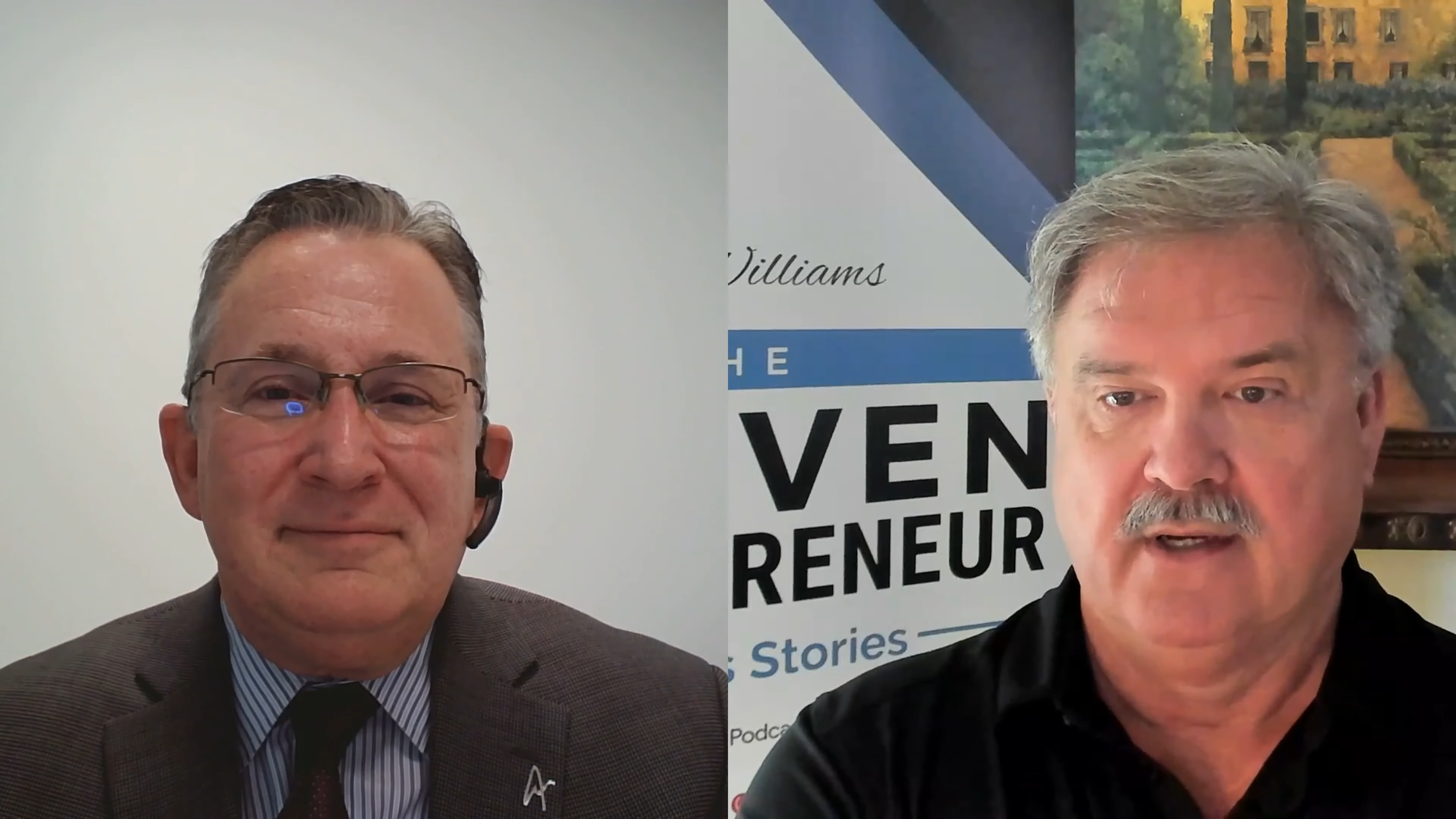
Yeah. Well, I love that. I love living in Dallas, Fort Worth. You know, I’ve, I’ve traveled about a bazillion miles a year. I’ve, I was in Chicago last week. I was in South Africa about six weeks ago for a month. And I never questioned, Hey, can I get a flight? Okay. Because we’re going to have one. It may not be the exact time of day and it may be more expensive than you want, but, but there’s going to be one. And a lot of people in America don’t have that.
And I’m very passionate about that.
Okay, so back to Paul. I’m looking for a hard moment, okay? Something that happened in your entrepreneurial life that when it happened, it’s like, ouch, that hurts. Okay, and certainly continental move and then furlough qualifies, except you were not entrepreneurial at that point. And.
All right. Sorry.
Well, that’s a great question. That’s a great question. And it actually took me two to three years to figure out what I wanted to do. This was the last thing I thought of because Smith Barney had been such a negative experience for me. I looked at mailbox, et cetera. I looked at cleaning companies. I just knew I wanted to start a business. And so I’m very unusual in the wealth management business. I didn’t have a book at Merrill Lynch and then go independent. I started from ground zero with the concept. I’m building a business.
that happens to be wealth management. And the focus of the business will be not sales, but professional, working with that team of experts to help our clients meet their goal and growth through word of mouth and referral. And the truth is it didn’t work immediately, right? I didn’t know what I was doing. I understood finance, but I found myself tweaking the dials and anyone who’s an entrepreneur relates this.
One day, they tweaked the dial and they don’t actually know what that dial was in hindsight, but everything started working. And that happened to me about 2006, 2007, we started a growth path of 25% a year compounded that just went on for over a decade until it became mathematically difficult to continue that. But what really hurt, and I should, a small aside,
Being an entrepreneur isn't rocket science—it's a way of life! Just be a little better than average, keep learning, and watch your dreams take flight! Share on XThough I was warned I’d be furloughed, the furlough stopped about six people below me. It’s like hanging on the rope that’s burning and the rope quit burning. So I was on reserve with nothing to do and I had a safety net and that was a great blessing. But, you know, just full disclosure. As you might imagine, our core constituency were pilots.
Efficient wealth management was a play on the efficient market hypothesis. But what I came to learn was most pilots are relatively cheap and they loved efficient wealth management. And so there was an accident, but it was an accident that was great. We grew fantastically among the senior captains and the instructor pilots until 2008. And you talk about the gut punch. In 2008, that crash.
Not many people remember this. Every single airline in the country, except Continental and Southwest, went into bankruptcy. Every single pilot group, including Continental, either completely lost or had their pension frozen in time. Southwest didn’t because they didn’t have a pension, they just had a 401k, which somewhat saved them. Continental didn’t go into bankruptcy because Gordon Bethune and his team had created such a positive culture.
with their workforce that when they went to the pilot group and said, we need pay freezes and we need to stop your pension, they actually were able to get it. Now, it was a contentious conversation, but every other airline, the union wouldn’t communicate. They file for bankruptcy. And unfortunately, Continental today is no longer with us and United is not of that culture, but Continental Airlines really taught me a lesson.
about the importance of how you treat people. Fortunately when Bethune left and Brennan went after him, the subsequent management pivoted a little bit and they lost that. But it was a foundational lesson for me. When that happened, when 2008 happened, we essentially lost our market. We would harvest pilots, but the wealth was when they retired and got this big chunk of change.
disappeared and we had to pivot rapidly and we pivoted to what I like to call my greatest failure.
In Houston, Texas, you can’t throw a rock without hitting an oil man. So logically, we decided let’s pivot to energy. We wrote a book, Platform for Wealth. And I call it my greatest failure because we were peddling so fast and so hard that we were growing and succeeding without noticing none of the success, or relatively none, was coming from the oil industry. And that’s okay. I mean, heads down, I think every entrepreneur has been in this situation.
Right?
Heads down, pedaling as fast as you can, making it. We actually expanded to Austin and Austin was a dud. It didn’t work. How could Austin not be working for us? And when we started running analytics in the company, we started realizing we’re targeting this market and succeeding in this market. And this market is C-suite executives and business owners, successful business owners. Well, until relatively recently,
and Austin’s changing. Austin was not a C-suite city. So half of our success was not, and the other half of our success, we weren’t doing well with energy except in that C-suite. And if you’re gonna fail, that’s the way to do it. We finally figured it out. We don’t work well with energy and tech. That’s just not our market. And that actually, that was a great learning experience because it led us to pivot and…
completely rebrand the company to what it is today, Avion Wealth. And that rebranding was completed January 1st, 2020. By May 1st, 2020, we’d forgotten about it because little bug had hit the world. And it was a very, very successful rebranding. It was great. It’s amazing.
Two lessons, one, you gotta have a target market. And the other one that no one taught me, even if you got the wrong target market, it’s better than having a shotgun approach.
Oh, no doubt. No doubt. Yeah. But what is it that the art of war, having a plan, even though the war, even though the battle will not go according to plan, but having a plan is an indicator of success. And so I love that. So we’re coming.
Right. We wrote Platform for Wealth for Energy, but that book facilitated great success despite it not working in the target market.
Yeah, yeah. We’re coming into the final turn. I can see him waving the checkered flag. We’re just about to hit the finish line. So here’s the big question, Paul. I’m gonna put you in a time machine. I’m gonna take you all the way back to 20-year-old Paul. Okay, so I think you’re in Guam at this point. Okay, and you get about 90 seconds to share something you know now you didn’t know then.
I’m sick of it.
but would have helped you, helped speed you along your path. And your path has had some twists and turns and stops and detours, okay? But put you in the time machine, it’ll send you all the way back to 20-year-old Paul. Got about 90 seconds, what are you telling?
I would tell them two things. One, life’s a numbers game. Some people get lucky early. Okay, so what? It’s not your fault, it’s not theirs. But if you keep rolling the dice, and my God, I rolled it a lot before I started making a living, you will make it. It’s that simple. The second thing is…
Life’s a numbers game: keep rolling the dice and you will make it. Persistence and curiosity pave the way to entrepreneurial success! Share on XBeing an entrepreneur is not difficult in terms of, it’s not rocket science. And I was taught in university, oh, it’s such a hard life, it’s such long hours. Being an entrepreneur is the best job on the planet, but it’s not a job, it’s a way of life. And yes, you’re gonna have to become a student of many disciplines, but if you’re interested, if you’re curious about the world, and if you believe in yourself, it’s not rocket science.
And there are so many mediocre business people and entrepreneurs out there. You just have to be a little bit better than average and you’ll be okay and keep learning. Remember the dials? When I started that business, yeah, I had a business degree. I’d never worked in a business role. I didn’t know what I was doing. I just kept reading. I hired consultants. I kept turning the dials and eventually I made it.
I love that. And so, you know, on Roll the Dice, and the audience has heard me say this before, but I’m a firm believer that in every endeavor, you either win or you learn, and learning is just a little slower winning. So keep going, take the next step, whatever that may be, and I don’t care if you’re Mark Cuban or whoever.
there’s always a next step, there’s always a frontier, okay? And I totally agree with you, I don’t think entrepreneurship, it’s not a job, it’s a life. And so many people have found untold freedom in entrepreneurship, and that doesn’t mean they might not work really hard and really long for certain periods of time, but they probably also work not so hard.
Absolutely.
hard and not much for a certain period of time and so there’s a balance.
Yeah, and my last statement is I love running my business. And I love when I have great successes with clients, but I’m so invested in this team of young millennials and Gen Zs and they’re fantastic. They’re different. They don’t have to do as I had. I don’t care. They’re fantastic employees. And I get true almost tear to my eyes joy.
When I see a young professional, they’ve hit 30, they’ve been with me eight years, sorry, and they’ve hit their first big new client, landed their first big win. To me, that actually is the number one joy I get from this business, is the value I’m creating while enjoying the fruits.
I think the generations born into a technological world, you and I were born into an analog world, I think the generations that are born into a digital world will accomplish far more than any generation before them, if nothing else, merely for the fact that they started in a digital world. So, and they are. Paul, thank you so much for joining us on the show today. My pleasure to have you.
Yeah, and they’re great kids.
Donna’s been a fantastic experience and I’m very grateful for the invite. Thank you so much.
Thank you. That’s today’s episode of The Proven Entrepreneur Show with Paul Carroll. Thanks. See you next time.