In this powerful episode of The Proven Entrepreneur Show, host Don Williams sits down with Justin Wren, a former UFC fighter turned humanitarian whose story of transformation will move and inspire you. Justin shares his remarkable journey from battling addiction and depression to finding his life’s purpose as the founder of Fight for the Forgotten, a nonprofit organization dedicated to serving the Pygmy people in Africa.
Don and Justin dive deep into how a professional fighter became passionate about fighting poverty instead of opponents. You’ll hear the touching story behind the organization’s name, directly inspired by the Pygmy tribes who call themselves “the Forgotten,” and learn about Justin’s unique approach to sustainable community development that starts with securing land rights before drilling wells.
Key Topics Discussed:
- Justin’s transition from MMA fighting to humanitarian work
- The impact of addiction recovery and finding purpose through service
- Innovative approaches to nonprofit management and fundraising
- Cultural integration with the Pygmy tribes of Africa
- Sustainable community development strategies
- The power of gratitude in personal transformation
Whether you’re an entrepreneur seeking purpose beyond profit or simply someone interested in remarkable stories of human transformation, this episode offers valuable insights into how one person’s journey from rock bottom to redemption is changing lives across continents.
For information on how to work with Don visit us at https://donwilliamsglobal.com
You can also reach out to Don Williams at https://provenentrepreneurshow.com
Don’t forget to subscribe to The Proven Entrepreneur Show for more success stories, actionable strategies, and the best of entrepreneurial wisdom!
Watch the episode here
The $2.5M Secret: How Justin Wren Built a Game-Changing African Business Empire
Hey, it’s Don Williams with today’s episode of The Proven Entrepreneur Show. Such a treat for you today. Good friend of mine from just down the street, well, down I-35, a couple hundred miles. That’s not very far in Texas though. So I have Justin Wren. Justin, welcome to the show.
Thank you, Don. I appreciate it. It’s good to be neighbors. That’s considered neighbors here in Texas.
It kind of is. mean, I would go down there for, you know, Franklin barbecue for lunch, you know, that’s just kind of, kind of how we are. So, so thrilled to have you on today. Now, Justin, I think you are a Philanthroponur and I don’t even know if that’s a word, but, maybe a social entrepreneur or a. Humanitary entrepreneur. Hey, well, I don’t know, Justin, tell us what you are and what you do.
Yeah.
Hmm. Hmm.
Yeah, I’m a former fighter turned humanitarian or I guess I’m really I’m just a dude that wants to put love and compassion in action in sustainable ways and do that many ways here. But in the biggest way over in Africa or the most biggest or deepest most meaningful way to me is for my second family, a hunter gatherer tribe, the pick me people who I got to live with for more than three years. But
My longest time there was one year and it built up more than three years in the last 13. And I just love it. We do a whole community development. Yes, we started with water, but even before drilling water wells, we…
started with land. They needed to have the land rights and land ownership legally in their name before we could drill them a well so that we knew that it was going to be theirs long term, right? And so, but now we’re building a hospital and a school and I got to meet you through Ben Hansen, my friend who has had a dinner party with him last night. Our friend, our friend, Ben Hansen. Yeah, our friend. But if you want to wrestle for it, I think I got it.
My friend Ben Hansen. our friend Ben. Okay, Yeah, okay. Our friend Ben Hansen. I don’t think I want to wrestle,
no.
But I guess my journey is one from fighting against people to fighting for people and so I did that professionally MMA, UFC was on the Ultimate Fighter TV show and it didn’t fulfill me like I hoped it had and so I grew up getting very heavily bullied. That’s why I found MMA. I wanted to fight myself or fight my way out of bullying.
And I, with some sweat and a lot of sweat and some hard work and but really great coaches, mentors, even a second father figure to me, them pouring into me and me listening, being coachable, you know, it worked. It worked pretty quick. From 15 years old stepping on the mats to 18 years old being national champion to 19 years old being a professional heavyweight MMA fighter.
out of high school, went straight to the Olympic training center from the Olympic training center, jumped into MMA, was the youngest guy at the highest level of the sport. Meaning I was 19 years old and the youngest guy I’ve ever fought still to date, he was 28 or 29 years old. So as a young gun in the kind of older man’s division of heavyweight, but by 23, I was, was ready to kind of get out of it.
because I was going through addiction, depression, two suicide attempts, two times a treatment. And when I found purpose through service, the most remarkable stuff started to happen. And that started to snowball until it kind of just did an avalanche of good in my life and the lives around me. And so I wanted to keep pursuing that.
I left fighting for five years. I came back to fighting for a purpose to raise awareness, to raise funds. I fought for about another five years so that if I fought one, got the microphone, I get to tell people not my story, but their story and rally a mass audience around a cause that I truly believed in.
And so I got to link those up for a while. And recently I stepped back out and because of our friend, Ben Hansen, who’s been my, I would say my business coach, my fundraising coach. He, you know, saw that my time was divided in many ways, you know, training full time, makes it hard to go all in on fundraising or meeting with people, or you’re tired at the meetings or, you know, you’re training two or three times a day.
love that.
So I officially retired and threw myself at, you know, being what I was acting as the founder, spokesperson, executive director, or CEO of the nonprofit. and because I kind of, you know, went all in, you know, nearly miraculous stuff has happened, in the nonprofit because of it. I’ve learned a lot in entrepreneurship, from an entrepreneur in the EO.
and being around y’all. And we recently had a fundraiser and a lot of the EO crew from Austin showed up, but even Dallas and Tulsa. Yeah. And we raised a lot of funds. We raised a lot of funds at EO Eccentric that you helped get me on stage for. And then afterwards at an event, our first fundraiser ever, we raised $292,000 and we hit our million dollar matching gift.
And because of that, they committed another $1.5 million in a matching gift. And so the $1 million became $2, and we’ve raised $2.5 million this year, which for a nonprofit that has a small team, three people here stateside, but 60 overseas, it’s been incredible to level up and learn how to ask.
Amazing.
And I would tell the story and what many people would say or I would hear was a really powerful way, but I wouldn’t make an ask. And so Ben has been really working that kind of asking muscle. He calls me the rainmaker. I even have two awards on my desk from him. This one’s a knife that says rainmaker on it. Another’s raise the bar award and.
That’s from Profit Doctor and from his entrepreneurs. He had to coach me on even how to let people go. I’m a fighter, but I have a little bit of a bleeding heart. I had to do that a couple of times with this coaching, but it was the best decision for the mission, the vision, and the people we serve. Once I saw it through that lens, it was an easy decision to make.
Awesome. Okay, so tell us the name of the nonprofit.
Yep, it’s called Fight for the Forgotten. And so I’ll tell you something I didn’t get to say on stage. When I met the Pygmy people, the M’Buti, the F.A., the Ba’atwa, the Pygmy people, they said, everyone else calls us the forest people, but we, we call ourselves the Forgotten. And because I had been a wrestler, fighter, like I had been wrestling some of the men one, two, three at a time, and just having fun, being playful.
Fight for the forgot?
They helped come up with the name. They were like, can we call this fight for the forgotten? And so that’s kind of their rally cry. My rally cry is let’s fight for the forgotten and make sure that, you know, they have a fighting chance to where they can not just have a handout, but a hand up a long lasting solution where they get to stand on their own two feet, have their shoulders back, look people in the eyes and be proud of.
the work they’re doing to come up out of poverty that really they didn’t choose. It was forced upon them. And I mean that in the most literal sense, a lot of people are like, if they’re poor, it’s their circumstances that they’re not working hard or it’s because of what they’re doing that they’re experiencing it. But they’ve been hunter-gatherers for at least 60,000 years, maybe 100,000 years, and their way of life has been systematically dismantled.
over the last few decades, or they’ve been banished or evicted from the rainforest, their ancestral home where they feel connected to their ancestors, to God, to nature, to everything. They were the protectors of the forest, the people of the forest, and the forest provided for them and they’re ripped away from it. So no, they were literally forced into slums or into really dire circumstances with no clean water.
calling people master, like literally becoming slaves, all sorts of brutal, terrible abuses and human rights atrocities that they’re going through. And so to see them coming up out of those circumstances on their own volition, but they’re just disconnected from the resources and the opportunity.
So as an organization, say opportunity, we’re a charity, we’re a nonprofit, we’re a 501c3, but our mantra is also like opportunities greater than charity. Charity can be great, but opportunity is always better, especially for those facing poverty. They don’t want the handout. want an opportunity out and they’re willing to do whatever they can do. Yeah.
Teach me, show me, how can I do it? Yeah, love that.
I’ve, I’m fortunate to have been to Africa. And I think if, certainly if you’re, if you’re US and you’ve not been to Africa, it’s hard to kind of comprehend. It’s a magical place, but it’s totally unique on all of the earth and abject. You know, been fortunate to travel all over the world, seen
Mm-hmm.
Yeah.
Yeah.
horrible poverty everywhere. Probably the worst that I’ve ever personally witnessed was on the continent of Africa. So, you know, many entrepreneurs, know, they, an entrepreneur starts a company, they build the company, they win, they lose, they succeed, they fail. And maybe one day they have an exit and it’s very common at that point for them to kind of wonder what is all this for? And there’s even a great book about that called The Second Mountain.
Yeah.
For sure.
Hmm.
where they basically go find a cause, but a cause that matters more than just dollars and jobs and commercial economics. so, when I first met you and when I first listened to your story, what struck me was that your search for the second mountain, so to speak, was really accelerated.
Hmm.
I’m guessing there’s a faith component in that. Care to share? Am I right? And care to share anything?
Yeah.
Yeah, yeah, yeah, sure.
I would say we don’t necessarily lead with it as an organization, but for me personally, like it’s definitely there and it’s a foundation and it’s what I’m rooted in. And I would say God loved the hell out of me, blessed the mess out of me and man, saved my life literally from addiction.
depression by my own hand spared me from two suicide attempts and because they were real deal ones maybe the first one was like enough to do it to a normal person but a big guy maybe not and the second one like they said it’s a it doesn’t matter who you are it’s a hundred percent a lethal cocktail so for me to wake up and me to
walk out onto the beach and get into the water of the ocean. I took a one-way trip to Tulum and when I got, I knelt down in the water, all I felt was shame. So much shame. I felt like a failure. I felt like a disappointment to my mother. Like, what am I doing to my mom? And also selfish that someone would have discovered my body and experienced that trauma in the hotel room. Like, who was I going to do that to? Like this just innocent kind of bystander doing their job, right?
Hmm.
But something shifted and would, know, people have said all sorts of different things. It was my higher self. It was this or that. And for me, it was a whisper in my soul from God saying like, be grateful for that beating heart in your chest. Be grateful for that breath in your lungs. And then it was one more thought intuition that felt like it was outside of myself.
Open your eyes and man my eyes were welling up with tears tears I had I was closing my eyes hard and tears were streaming down my cheeks and It was open your eyes and right when I opened my eyes. I saw the Sun pop up on the horizon watching the most beautiful epic majestic sunrise of my life and It shifted it switched from like shame to gratitude and as the Sun kept inching up higher and higher there was more and more
gratitude and realizing like, I don’t know, it should have been, and it was one of the worst moments of my life, but it quickly turned into one of the most impactful moments of my life. And the next part wasn’t easy, it was hard, really hard to get clean and sober, but to have this hope of like, wow, I shouldn’t be here, like I’m living in the bonus rounds of my life.
And so with the time I do have left, I better commit to doing something with it because it’s time I didn’t expect to have. I don’t know, I hope that makes a little bit of sense, but it was definitely a blessing to be spared and then to have the opportunity.
to get well and to get sober for me. Like other people don’t have to do it, but for me, a guy like me, yeah, I have to. And, and I want to, it shifted from this like curse or burden of, of having to get sober or even the burden of, you know,
now I’m labeled as an addict or an alcoholic, you know, and I can’t, I don’t want that, you know, I’ll figure it out on my own. Like for me, my experience, look what I have in my, I literally have another year sober chip in my pocket that Ben got for me to celebrate. And he gave that to me last night. And I don’t know, it became this, it became this opportunity instead of seeing it as the biggest burden, why not let it be the biggest blessing.
.
Awesome.
in a way to tell a story. then now, now going, at least for me, like people’s stories have always been the thing that changes my life the most. And seeing them take action and learning from their actionable takeaways or steps from their story. But man, like now there’s these people who have one of the most ancient stories on earth and literally they call themselves
Stories are the easiest form of learning for people to digest because it's not 'you should, you ought to. Share on Xnot just the forgotten, like they call themselves an endangered people group in the name of endangered species or rainforest preservation. Like they’ve become an endangered people group that is on the verge in the next decade or two of like no longer existing and like losing their culture, losing their stories, losing their heritage, losing their tribe. It’s like, man, if can my story potentially help their story and can we unearth like.
Mm-hmm.
Wow.
each individual’s personal story in a way that like is just something beautiful and epic that we don’t lose and that we can celebrate. So I’m going all over the place there, but it’s yeah.
I just want to add a couple of comments. Okay. So one, to me, stories, and I don’t know if you know this, so, you know, I’ve written eight books, published six books. I have stories. Yeah. I have, I have words. My wife would say, Don has words. And I think stories are the easiest form of learning for people to digest because it’s not, you should, you ought to.
Sure, please.
No, I didn’t know that. I knew you were at a couple, but I didn’t know that many. Wow.
Hmm. Hmm.
It’s like, let me tell you my story. Maybe you hear something in it that resonates with you. And then I want to go back to the transition on shame to gratitude. So it is scientific that humans perform at the very lowest level when they express or experience fear or shame. Scientific fact. I didn’t make that up. You can look it up. Google will confirm. Chatchi PT will confirm.
Mm-hmm.
Yeah.
Okay? It’s just the way it is. On the other hand, humans perform at their very highest level when they express or experience gratitude. And so, eight or nine years ago, I’m in Thailand. I’m listening to this electrical engineer talk about energy, human energy, and she’s sharing this thought with me. And I literally come back and I’ll
Bye.
I’ll put it here. This is Gratitude Stories from Our Hearts, 24 co-authors who share 25 stories and it’s a journey to gratitude. And for the audience members today, I’ll put a link where you can download it absolutely for free. Or if you want to, you can go buy it on Amazon. We give all money above the publishing cost to St. Jude, because if we can help one sick kid, I don’t have to make money on books. I have other ways to make money. But I love that.
Awesome.
Go.
The instant I think that all progress starts with a yes. And so when you accepted that challenge to open your eyes, okay, it’s like a complete about face. Now, catastrophe is sometimes avoided with a no, but progress requires a yes. And you said yes and made that progress. And so thank you for sharing.
All progress starts with a yes. Catastrophe is sometimes avoided with a no, but progress requires a yes. Share on XMmm.
Hmm.
Hmm.
Yeah,
Thank you for sharing that with us today.
yeah, of course. Well, just to say on the St. Jude’s part, just because I would love people to go buy your book, I’m gonna go buy that book, because I’m a monthly donor of St. Jude’s. Yes, I’m a nonprofit founder and I
Anytime I speak and get a speaking fee, I give to fight for the forgotten. But that’s another one that’s near and dear to my heart because my start on this journey saying yes to purpose through service started at a children’s hospital. It was in Denver. It was at the color Children’s Hospital, Colorado, and it was in a room with a kid that was a fan of mine from the ultimate fighter. And his father reached out and it changed everything. But I think as as people
and
Like we all want to kind of have this purpose to live for or need this personal progress to be being made. And then we need like community around us. And y’all have that through EO and through your business networks and with your clients and your families and friends. I had that through fighting with my training partners. Like it was like kind of this warrior tribe and we’d back each other up, be in each other’s corner whenever they’re fighting. But the whole way up until it.
But whenever I separated from it, well, when I was going through addiction, that cut me off from like truly having it. I had training partners, but I didn’t have tribe and community. And it’s kind of because I dimmed the lights, right, mentally on my faculties. But whenever I got to Africa, here I meet this ancient tribe that lives in community in such a beautiful way. think anthropologists have said,
They’re the most present. saw one article, I think it was the Guardian saying like they were the best fathers on earth or something similar to that. Because these dads, these fathers who are hunter gatherers and providers and protectors of their tribe and community. But even as a dad, they would hold their infants for 50 % or more of the time. And they’re the only people group ever documented to do that.
And I like stumbled upon it, right? And I didn’t have the best, I won’t go into that too much, but I didn’t have the best relationship with my dad or the men in my family, at least my father’s side. So whenever I got there and I just witnessed it, you know, and then got accepted into the tribe, adopted into the tribe, given multiple names, a child was named
Mabuti Mangbo Justin, which literally means the big pygmy Justin. Yeah, share please.
So hang on on the big pygmy, I gotta jump on that before I forget.
So it’s impossible for the viewing audience to get an idea. You know, I’m 6’1″, okay, you are 6 watt.
Mm-hmm. Right.
Let’s say three. Yeah. My tops card says six, four, but I’m not six, four. I’m six, three.
Yeah.
Okay.
So six, three, but, you’re also, and I’m a pretty big guy, but like when, when I met you and stood next to you, was like, he’s a really big guy. Okay. And, and the average pig me in four foot six. Yeah.
Four foot six for the men. Four foot
six or four foot seven for the men and the women are smaller. So whenever I first walked in there, they called me the vanilla gorilla, the albino rhino, know, different stuff. And I was the Viking in the UFC. I looked like a Viking. I fought like a Viking, ground and pound, pick people up, slam them and then punches and elbows. But when I got there, my first name, once I was like really…
Yeah.
integrated into the community was F-A-O-S-A. And F-A-O-S-A means the man who loves us, and that was by the F-A Pygmy people, so F-A-O-S-A. And then the Mubuti, Naming Mubuti Bang Bo. So Mubuti Bang Bo means the big pygmy. And then the Batwa, Naming Batwa Yakabambi, which means the big pygmy as well. And it’s been fun to be.
It’s so weird to even say like, Hey, here’s this big white dude that became.
family with a tribe. But it’s also been the coolest, most exciting. why it’s one of the reasons I wake up in the morning. It is the very reason that the first place I got homesick for was there. I was never homesick for anywhere here. And now when I’m there, it’s a new feeling because I’m engaged. But I do get homesick for here now for Amy and her two daughters and for our home together.
But it’s a, yeah, it’s, guess, a really unique story. It even is weird to me sometimes. It’s like, how did, I could have never dreamed this, planned this, hoped for this, had a vision for this. And what is a fighter doing? If one of the side effects of my job was,
Sometimes people would be sent to the hospital, right? And now I’m helping build a hospital like we have 60 people boots on the ground like laying the foundation right now and we’re getting ready to put up the walls and the roofs and You know, it’s it’s been a learning process, but I think what I learned through fighting and maybe this goes to entrepreneurship to is There’s a lot of people that maybe are in the NGO world
that they think inside the box. And it’s lot in the box thinking, I don’t even know how to say that. It’s just a lot of restrictions, a lot of like, we’re protective of our programs, we’re possessive of who gets credit, and it’s gotta be done this way. And you can only do one thing, and this is the normal process system, everything else.
But since day one, I think we’ve been world class at listening to the community. And a lot of times other people don’t have the quote unquote time for that. They have, you know, a big quota, a lot of funding. They have a lot of output and reports they have to make. And we’ve just been like, no, we need to listen to the community first, truly understand what they’re going through. There’s not just some simple cookie cutter.
Hmm.
Blueprint that can be replicated in every community or country or culture So we got to listen first and learn and then once we do that we can take this collaborative action effort together But I guess what I gonna say on the the part that is different. We want to be a well-rounded organization That is like a fighter. You have to be well-rounded like back in the old days of MMA. You could be just a world-class
wrestler, just a world-class boxer, just a world-class in jiu-jitsu. Now there’s all these hybrid fighters that you have to be basically at least efficient and know the basic offense and foundations, but especially the foundation of good defense in every discipline. The striking, which is boxing, kickboxing, Muay Thai, it’s wrestling, it’s jiu-jitsu, it’s judo.
Mm.
And so as an organization, we’ve really tried to fill the gaps on how can we be world class.
at being well-rounded to serve one thing, which is poverty, but there’s many different solutions and techniques and tactics and game plans for how to string that together, just like in a fight. It is a fight. It’s a fight against poverty. It’s a fight for the forgotten. And we start with land, then water, then food or farming, then better housing, then healthcare. So medicine when their kids are sick or a safe place to give birth.
Then education, that’s a way that they want, you know, every parent wants their ceiling to be their child’s like floor, right? And so, yeah, they see that. then, and then after that, it’s a, or in tandem with all the rest of sustainable livelihoods, we can start that early where we get them into tailoring, beekeeping, hairdressing, barbers, carpentry, welding, masonry, and really try to help support the community with things that.
Sure.
Who’s passionate about this or what’s y’all’s ideas for a job and livelihoods? Well, we want to do this. What do you know how to do that? Well, I kind of know, but I need some more training. OK, so if we brought in someone for training, who would actually do that and set up a committee and then people start learning actual vocational skills that go back into the community by boosting their economy and being able to pay for the school fees or pay for the medicine when the kids are sick and things like that. So.
Love that.
It sounds
like a lot, but we’re addressing one issue for one people group and one community at a time. But there’s lots of different ways to do that.
Well, I think when you’re true to your mission, you kind of, I think it was Zig who said, Hey, we’re going to be firm on principle, but flexible on method. Okay. Cause we’re going to learn as we go. And, and I love that. want to, I want to go back and touch on the acceptance piece. So, you’re in Africa. Okay. You obviously stand out, because you’re twice as tall and you look like a Viking and nobody else. Yeah, you do. You do.
Mmm.
I stand out here.
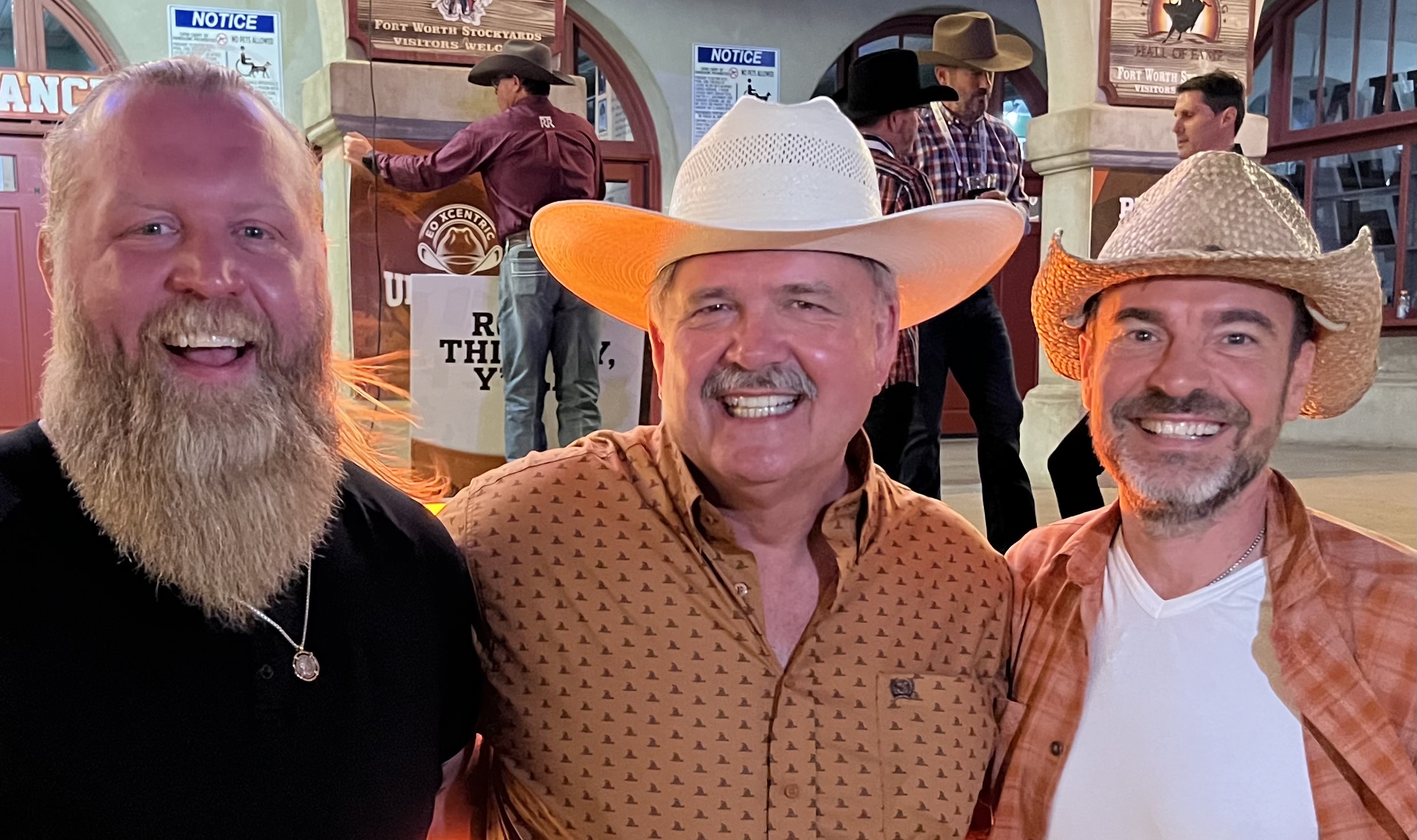
And it took a while before they did accept you, but what I found, I’ve been fortunate to travel the world and know people in a lot of different places. And what I found is this is if people would just rub up against each other, just talk to each other, just break bread, just don’t listen to the news. Don’t listen to what our governments say, just meet people. We’re not that different and we want…
pretty much the same things. My wife had surgery not too long ago. I have a team of 22 people in Pakistan and about two weeks into her recovery, the primary person I deal with said, I want to share something with you. And I was like, what’s that? He’s like, you know, we’re Muslim. And I’m like, I do. And he said, I know you’re Christian. And I’m like, I know you do. And he said, I just want you to know that I and the entire team
are praying for your wife’s recovery. And so, you know, if you just rub up against people, if you forget what jersey they’re wearing or what skin color they’re wearing, or if they’re four foot six or six foot three, I think for the most part, you find we’re all pretty much the same. There’s some outliers, we’re all, most of us are pretty much the same. We want the same things. We want a life for our kids that starts
where we ended and, you know, hate the part about, you know, relationship with your dad. You know, I was a single dad and the kids lived with me for a long time. And so I like to think of myself when you ask the boys, maybe it depends on the day, but I like to think of myself as like my pictures next to good dad in the dictionary. And, and I think I’m a, I think I was a really good dad. I’m horrible mom. Okay.
Cool.
Hahaha.
I was
no good at that. But, you know, it’s, it is a challenge to overcome missing one of those positive parental relationships. So, love this. Justin, if I were to ask you, what’s one nugget? So one piece of wisdom you’ve learned in your life.
that you’d be willing to share today, what’s a nugget of wisdom from the mind of Justin Wren?
Mm.
It’s a negative wisdom for me. I would have to defer to a couple of Swahili Proverbs, but one one that I never share from stage really it’s just one that I’ve held on to for me and It basically says if there is no enemy within the opponent on the outside can do us no harm and
Mm.
Yeah, if there is no enemy within the enemy on the outside can do us no harm. And for me, having gone through addiction, mental health stuff, or just at times it could seem like self-sabotage or unworthiness issues, or we’re trying to control things that are outside of myself. And it’s like, man, if I can be centered within,
Like nothing on the outside really can affect me. and meaning I can walk into situations that aren’t the best, but I can have a positive impact in those as long as I’m, as long as I’m taking care of my own mental, emotional, spiritual, like health. I can get like, there’s a saying in recovery that basically like, if you’re in fit spiritual condition,
You can go anywhere a quote unquote free man can go if you have a good reason to be there. Like, you know, sometimes people in recovery will be like, I can’t go to grandma’s Thanksgiving because there’s going to be a bottle of wine or I can’t go to the grocery store because they’re selling beer. and it becomes this kind of like victim mentality. That’s not, that’s not how it’s intended to be at all. If you are actually
working on yourself, working a program, have that conscious connection with your higher power, with God, then you can walk into any room for any reason and have an impact. So I go to that because I think that’s like the root or the foundation in the last few months or the last few weeks.
I played Santa five times at places in Nashville, Sioux Falls with the mayor up there all over, And people are wanting to take a shot with Santa and it’s like, you know, I’m on duty. It’s a busy season. was a long commute to get here. I got to get home to the, you know, to the workshop and the pole and get ready for Christmas. And I had fun with it, right? Instead of thinking of it as like some sort of a
chains around me or make it weird and awkward. Like it’s like, no, Santa can get a mocktail and, and, wake up without a hangover in the morning and be ready to tackle the day. so I think, I think on a, a, a professional note, man, I don’t, I think I counted myself out. I think I wanted to have somebody else be the fundraiser. Like I’m, I’m kind of the vision and I want to have my hands on the tools.
And I want to be there with the people and like seeing that more is being asked and required of me to step into fully what we can do as an organization. Like nobody’s going to be a better fundraiser than me. That’s what Ben has told me over and over. And it’s just true. Like I can try to hire a director of development. but they’re going to be telling you there are a of my stories or like secondhand stories or different things. Like I would like to grow to a place to where I have help with fundraising.
But I can’t ever assume like they’re gonna do it better than the founder, right? Like I’m the founder, I’m the executive director, it is on me. And stepping fully into that has been good and healthy. And for a while it was unhealthy until I started to learn a little bit of the systems, tools, process.
of how it works. And for me, if I’ve just shown how to do it and see someone do it and hear how they do it, then I can normally do it pretty, pretty good if I get my hands on it.
Yeah,
love that. So, know, my main business, I help people sell more of whatever they sell. so selling is really natural and easy when you do it right. And can be brutally hard when you do it wrong. And, and nobody can ever probably match the founder’s performance, but very common for an entrepreneur to reach a point where the, the visionary, the founder has to say,
Yeah.
If I can find people who can do it 80 % as good as me for us to continue to grow, for us, for me to continue to be on the edge of my comfort zone, which if you’re not on the edge of your comfort zone, you’re underperforming. You know, if you’re not a little nervous, you’re not getting everything done that probably should be done. Okay. And, but that takes a little bit of acceptance of, if I can get people who can do it.
If you're not on the edge of your comfort zone, you're underperforming. Share on XYou’re in.
75, 80 % as good as me, I probably needed to let them do it. And I needed to go on and fulfill my purpose in the role. And very common for founders, startups, bootstrappers, entrepreneurs, they get to a point where it’s like, okay, yes, you’re the best. And now it’s time to let somebody who’s not quite as good, we’ll get three.
And they’ll be 80 % as good and they’ll do two and a half times the volume you did. And you’ll be able to continue to lead the organization to where the organization ought to go. So very common. Okay. Here’s the toughest question. Toughest question I’m going to ask you. All right. I’m going to put you in a time machine. I’m going to send you back to meet 20 year old Justin.
Yeah.
Awesome.
I love that.
You get like 60 seconds. That’s it. I got probably 20 days worth of stuff I’d tell 20 year old Dawn, if I could, but you only get 60 seconds. So put you in the time machine, you go back, you meet your 20 year old self, you got 60 seconds to tell your 20 year old self something that would have been beneficial, something that would have avoided a problem, something that would have sped you towards your purpose. Whatever is that most important thing.
I wish if I could go back, which we can’t, I could go back. Here’s what I wish I knew then that I know now. So into the time machine you go. Star Wars. Okay. Here’s Justin. What do you tell him?
I love you and I’m proud of who you’re gonna become. I’m proud of who you are now, but there’s some things you’ve gotta deal with and it’s this addiction. You’ve gotta learn to face it all and feel it all because when you do that, magic’s gonna happen. You can’t run from it. It’s just gonna keep catching up with you and it might kill you. And if you can learn now,
Love yourself like your life depends on it because for a guy like you Justin it does But if you learn to love yourself like your life depends on it like miracles are gonna happen in your life and the lives around you and I Would say like rise up overcome like You’ve overcome a hundred percent of your darkest days like everyone has but you don’t see it that way and you need to because if you can
Yeah, overcome that stuff. I was gonna say another word, colorful. You’re gonna help others overcome too. Yeah, yeah, yeah.
Thanks. This is a G rated show. Yeah. So
thank you. So, Hey folks, that is the big magic. Okay. Right there. Thank you for sharing that. Okay. And notice the words that Justin used. He used the word magic. used the word miracles and all of those are possible in your life. If you just open your mind that they might be possible. So if somebody wanted to reach out to you or fight for the forgotten,
What’s the best way to do that? it LinkedIn? Is it the website? What’s easiest way to do that?
The
website is fightfortheforgotten.org. If that seems too long to spell out, just think of Fight For The Forgotten being FFTF or Frank Frank Tango Frank.org. And you can follow me on Instagram. It’s at the big pygmy, P Y G Y. And you can also hit me up on LinkedIn. I’m starting to try to use that more. I only started using it in 2024, but it’s just Justin Wren on LinkedIn.
And then you can follow our social media at Fight for the Forgotten on Instagram, Facebook, things like that. We’re going to be having a lot more exciting updates. People will be seeing the hospital being built, the school, the community hub, the vocational workshop, the staff houses, and seeing them getting to work.
them being active in their own rescue, which is awesome, and them being a solution to their very own local problems and being built up in ways that they wanted, asked for, and are active in.
Love that. Justin Wren, thank you so much for being on the show today. I’m grateful.
I’m so grateful too. I lucky.
That’s today’s episode of the Proven Entrepreneur Show and we’ll see you next time.