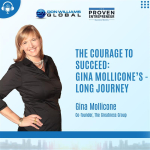
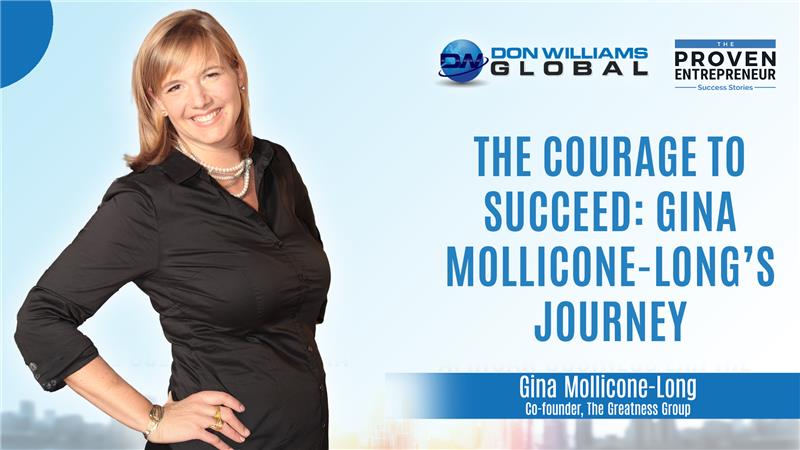
Welcome listeners! We’re thrilled to have you join us for another exciting episode of The Proven Entrepreneur Show. I’m your host, Don Williams, and today we have a truly special guest, Gina Mollicone-Long. Gina is not only a dear friend but also one of the most inspiring entrepreneurs I’ve had the pleasure of knowing. Get ready for a conversation filled with incredible stories, valuable insights, and a whole lot of inspiration.
In this episode, Gina takes us on a journey through her fascinating life, starting with her family’s immigrant roots. She shares the courageous story of her grandparents, who left everything behind in Europe to start anew in Canada. Their resilience and entrepreneurial spirit laid the foundation for Gina’s own path. From her early days studying chemical engineering to working as a welder at Chrysler, Gina’s diverse experiences have shaped her unique perspective on business and life.
Gina’s corporate journey at Procter & Gamble provided her with invaluable lessons, but it was her transition to entrepreneurship that truly defined her career. She opens up about the challenges she faced, including navigating the impact of 9/11 on her business and the unprecedented hurdles posed by the COVID-19 pandemic. Through it all, Gina’s unwavering belief in perseverance and self-belief shines through, offering listeners a powerful reminder that success often comes from embracing adversity.
As Gina prepares to embark on a new adventure, pursuing a PhD in neurotheology at Oxford University, she reflects on the importance of following your bliss and never giving up. Her story is a testament to the power of resilience, adaptability, and the relentless pursuit of one’s passions. Whether you’re an aspiring entrepreneur or a seasoned business owner, Gina’s insights will inspire and motivate you to keep pushing forward, no matter the obstacles.
Watch the episode here
Embracing the Entrepreneurial Spirit with Gina Mollicone-Long
Hey, it’s Don Williams here today. Today’s episode of the Proven Entrepreneur Show. A little tongue tied, it’s a new mouth. I’m just trying it out, but I got a really, really good friend. Literally one of my favorite people on planet earth. Gina Molekone Long. Welcome to the show.
Thanks for having me and I would echo that sentiment.
Yeah. So love you lots. Thank you so much for being here. Gina’s coming in early this morning. Are you in Toronto this morning?
I
am in Toronto this morning. It’s just, I’m not sure what to do with this giant glowing orb in the sun. I’m in the sky. I’m a bit scared by it. So I loath to close the window shade when we did to do this recording. I was like, no.
If you need to lower the shade, if you need your sunglasses, if you need a welder’s helmet, it’s all okay. I’m good. Hey, I want to take you all the way back to little Gina. So like five years old. Are you there? Okay. And so in the household in which you were raised and kind of everybody’s household was a little different, but in the household where you were raised, was there an adult who was an entrepreneur?
Yeah, oh God, yes. mean, we didn’t call it that. So my grandparents came from Europe and they came, well, they came from what we would call the Czech Republic now, but they were originally from what we would have called Yugoslavia back then and the Austro-Hungarian Empire. And as you know, things weren’t going so well after World War II. So…
At the age of 27, I always love to tell this story, my grandmother with three daughters under the age of seven, and my grandfather thought they would leave all of their wealth and privilege and aristocracy and all of that jazz behind, get on a boat and go to a country where they didn’t speak the language, couldn’t bring their money, and this was a better option. this, this.
Whenever I talk about entrepreneurs, you have to understand this backstory because then what ensued was my grandmother basically hustled her way through, you know, learning the language, working for like getting to know the financial structure of this new country and then started her own real estate brokerage early on. Like, I don’t remember a time when my grandmother wasn’t in the real estate business, but again,
I didn’t understand what it meant till I look back on it and I was like, geez, they just, it was the only way they could get even close to the life that they were used to. And so I never thought of my grandparents as entrepreneurs because I didn’t really know what that was. And it just wasn’t a word. But if you ask me the hundred percent, hundred percent, they were, they were the original kind.
Yeah, think people who have enough courage to get on a boat, leave everything they know, everything they know, all their physical possessions, culture behind, boldly go where, what was that on Star Trek? To boldly go where no man has gone before. And then to…
Everything.
Nowhere no man goes.
and kind
of lie your ass off the whole way, right? Like fake it till you make it. They really did. And what blows me is like, you know, I remember being, well, I didn’t have kids when I was 27, I was 31. But like, I remember having kids and thinking like, I can’t even get out the door. And they left everything, you know, it sound of music style.
and they got on a train, pretended they were going back to Yugoslavia, jumped off the train in Austria, walked to the refugee camp, got on a boat to Canada, came to Canada. Somewhere along the way, they were supposed to be going to Saskatchewan to be a farmer. I remember looking at the documents going, my grandfather had manicured nails. But they just do whatever it takes, then they get here. But when you talk to an entrepreneur, and you and I know this, that there’s you…
If you have even an inkling of shadow belief that you can’t, then you will make that true. I think they weren’t reading any self-help books, just so we’re clear. They actually legit burned every possible point of return. Like they couldn’t go back, they couldn’t leave, they had no money, they couldn’t speak the language, they had kids who couldn’t speak the language. They had to navigate a whole system of crap and…
If you have even an inkling of shadow belief that you can't, then you will make that true Share on XThey had no choice but to succeed. And it’s amazing what you can do in all of those obstacles. If your only choice is to succeed.
That’s so, so true and proven time and time and time time.
It’s crazy.
Okay, so thank you for sharing and your grandparents were obviously heroes in the true sense of the word. And so, okay, at 18, I think you joined the Merchant Marine and you sailed around the world for a couple of years as a deckhand. Maybe not. So you went to university. What did you do?
At 18, I went to university to study chemical engineering and that summer, for two summers, I worked as a welder at Chrysler Corporation. You may have heard of them. I worked in the factory at Chrysler welding as a student, because my mom was a financial analyst for Lea Iacocca. So kids of employees could work summer vacation relief.
A little company out of Detroit, yeah, Chrysler.
It’s a job. Great job.
Yeah.
What a great nod towards company culture. Take care of the kids and the parents are going to love that.
Yeah, make the
kids be slaves. was, but it was a, it was a great, I did. And, and, but they didn’t like, you know, it was a really like, didn’t sugar coat it. was like, like you went and worked in the factory on the line. And I, again, it, it, it opened my eyes to, maybe I’m not a snowflake, know, like maybe, maybe life’s a bit harder than I think.
I think you got a fairly generous check for welding at Chrysler.
And maybe I want to work a bit and maybe I don’t want to do that. Maybe I do want to do this. have a lot of respect for people who do it. I like, because I did it for two years and it is the first day I thought I was going to die. Like, right. I couldn’t believe people were taking overtime. All it was all I could do to crawl home. Right. One summer they made me hammer these, when you put a roof on, don’t know they still do this, but when you put a roof on there, these tabs, these metal tabs, and you have to hammer them down. then, so then you.
Mm-hmm.
weld them, but a human had to hammer them down back then because it was a bit finicky. And so I did that for a couple of days and I woke up and I was like, I can’t open my hand. Like I could still put the hammer in and do the job, but like I couldn’t open my hand. I had to go to like physio because I was hammering too hard. I I was so motivated to get my degree and get.
Yeah.
You know, I was so motivated because I was like, I can’t even do this for two days.
Yeah, but very common with entrepreneurs that they, at a very early age, learned like a real work ethic that they learned to work hard. My first job was driving a tractor at Wheat Harvest. And today people picture a tractor and a cab and air conditioning and radio and a cooler in the cab. And you’re basically just driving up and down all day. Okay. But back then,
Right.
There was no cab. The first day, and I was working for my grandfather, the first day at dinner, I’m asking my grandfather, could we get an umbrella just to keep the sun from baking you for 12 or 13 hours? And so not only is it 102 or 103 degrees, but I’m from Kansas. It’s always windy in Kansas. They don’t even talk about wind until it gets to be like,
I’m melting.
God, yes, of course. Dorothy, right, Dorothy?
30 miles an hour,
Yeah. Yeah.
you know, and, it’s dusty. And so you end up with dirt in places that you didn’t know you could end up with dirt. And, I think I was 11, but, but it was just what you did. And, and I wouldn’t trade. I wouldn’t trade for any of it. Yeah. Wouldn’t wouldn’t trade for any of it. Okay.
11.
11, 11. I know 11. That’s awesome. You know what,
you know what never happened to me? And I don’t know if this ever happened to you. Now that I think about it, like my grandparents never gave me a job in their company ever. That’s so interesting. Right? Like, although the day I quit my corporate PNG,
Hmm. Hmm.
Yeah.
like my corporate job that I’d worked so hard to get to, and I was, I mean, I was at the ripe old age of 27 or 26, 27. My grandfather cried.
And I thought, what are you crying for? I’m going to do what you did. And he was like, it wasn’t easy. That’s why we did it so that you would get one of these fancy safe jobs. right, I can’t believe you’re throwing it away.
I think my grandfather paid me $150 for two weeks, which I thought I was flush. I was just a kid, you know? That was a long, long time ago, and so that was like totally different economics. But I did learn a couple of things on that job. One, I learned how to work hard. Okay. And two, I learned I didn’t want to work that kind of hard. And so…
God.
That’s a lot of,
Yeah.
Yeah, well,
yeah, I learned that too. It’s And I also got really good at it. Like, like good in the sense that I was like, okay, I got this down. Like I’ve optimized my system, I can get the plates over there and push the welding buttons and get back and I can have like 45 seconds to just chill till the next round comes. And then I got this tap on the shoulder from a lovely coworker. And he was like, yeah, you’re, you’re gonna, you’re going too fast. Like, and I was like, gotcha.
Yeah.
Yeah.
But at first I was like, isn’t that like, I’m getting better. And he was like, you’re making us look bad. You’re making the old guys look bad. And I was like, Ooh, right. Right? Like, like slow down bunny. But, but it is true. I don’t think I could have kept honestly up that pace for the rest of my life. Do know what I mean? Like I was sprinting in a, in a marathon.
Yeah, politics, yeah.
Yeah.
Well, and also in where compensation plans are not aligned properly and there’s no incentive to become more proficient and more efficient, I think people will always find a way to profit. And if the way to profit is to do less, then I think they will. Absolutely. And so if there is a mechanism where the
Mm-hmm.
They do what they’re rewarded for, and I would agree with you on that.
company and the owner and management and labor can all win in a parallel manner. To me, those have always been the best comp plans. Everybody on the same page, everybody rowing together, you don’t necessarily win at the same level, but you win nevertheless. And so that’s great. Okay. So went to university, chemical engineering. Okay. And so you were going to go to work for Conoco or yeah.
Yep, yep, interesting.
at Dow.
I didn’t. No, in fact, I was just cleaning out. I was just doing a big spring clean and I found all my offer letters from when I graduated. No, I went to work at Procter & Gamble. But my interviewing went, this was like a direct route. I went from Dow Chemical in Northern Alberta to Morgan Stanley in New York City as a, to be a financial analyst.
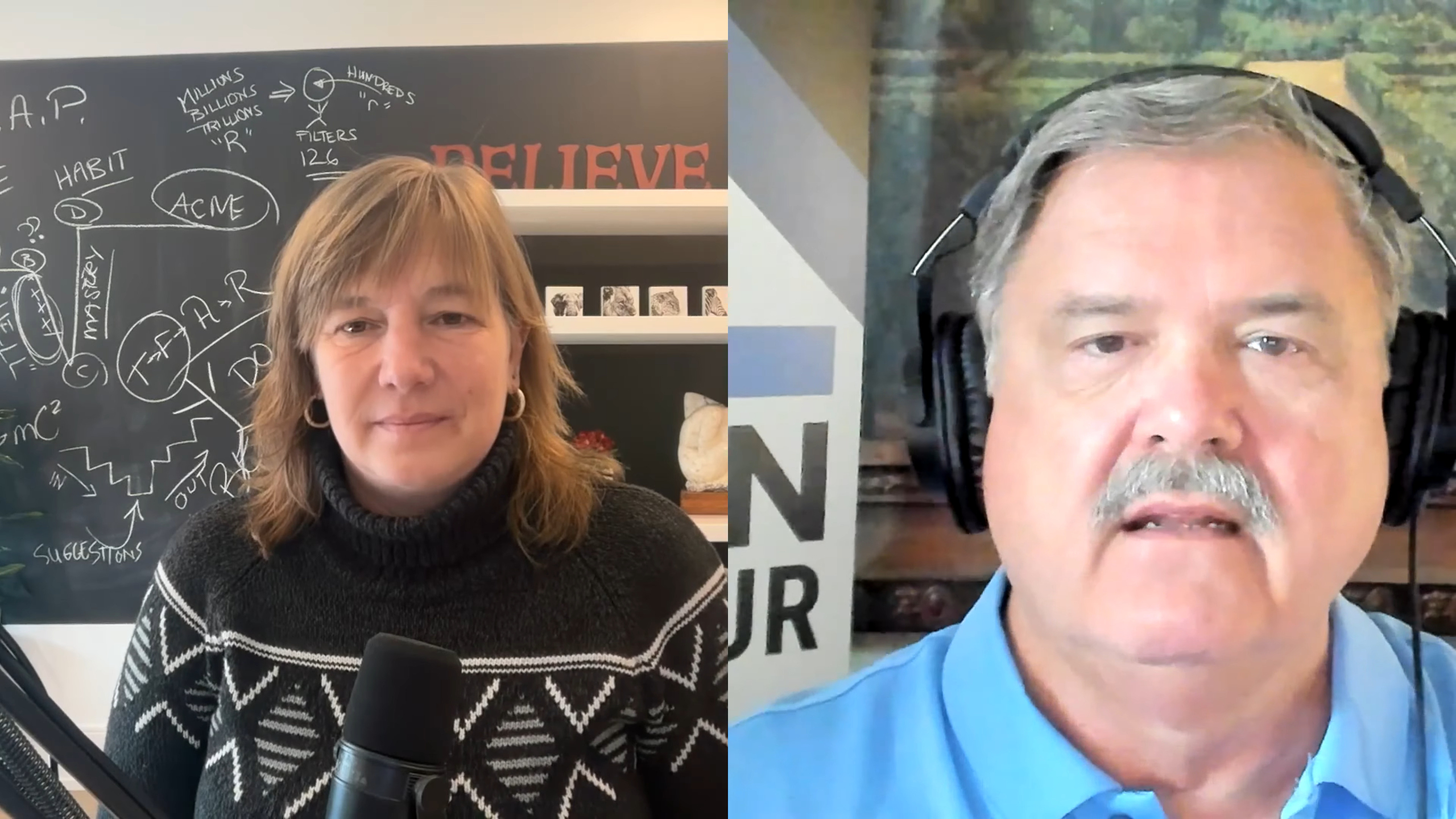
You did that? You went to work for Dow? No.
to Procter and Gamble in Toronto. I didn’t even like, this was pre-internet. So I met Morgan Stanley in the final round of interviews to be like a financial analyst. And I don’t understand what they do. Cause I’m a chemical engineer. I’ve never taken a business definition in my life. So I literally didn’t understand the concept debt financing, equity, finance. Like I didn’t even know I was there. And I remember ripping my nylons.
And this girl who was like my buddy for the day, she took me to get a new pair of nylons at the like convenience store. And she’s like, go ahead, ask me anything, ask me anything. And I was like, okay, can you, you got to explain to me quickly the difference between debt financing and equity financing. I don’t understand it. Right. And she was like, you’re hilarious. And I was like, I’m dead serious. This is pre internet. have to understand. I’ve read their annual report. I don’t understand it. And so she, she was like, how are you? You’re in the final round.
And I was like, I don’t know. But again, at whatever I was, 20, 21, I didn’t understand. But if I look back, I do. They were looking for a skill set of analytics, which I obviously had as an engineer. But I was also a well-rounded student. was a varsity rower. I was on student government. So they were looking for a type of person for the culture. But again, I didn’t think like that. And so in hindsight,
I understood why you would recruit an engineer to be a finance person. Cause you can learn the financial stuff, right? But I, that was a little bit too much of a leap for my brain. And so I settled at P and G, which was fantastic. And I just found no word of a lie. Cause I kept all my original documents from my, training there. I just found my original Myers-Briggs, my original disc, my original everything.
I don’t even remember taking these tests. I don’t even remember taking them, but was PNG was using them to support me and manage me as who I was from the beginning. Isn’t that fascinating? I find that really fascinating.
Yeah.
Smart.
Yeah. Smart, smart, smart. And really progressive, you know, for that time. I want to hit on a point. So you boldly went. So you went to Morgan Stanley. You can’t basically spell finance. But I think many entrepreneurs, I think it’s very common that they…
was 1993.
They take a chance, they walk through a door, they roll the dice, they say yes to a meeting, they hire somebody, they go someplace where they’re not sure about, but many times.
You’re so much better than you think you are. If you can just quiet that little detractor in your brain, okay, and just say, hey, I’m just going to go try. Worst thing that can happen is like, I’m right back where I am today. And the best thing that can happen, who knows? And so many times it’s just take the step, open the door, take the meeting.
yeah.
You’re describing my entire life. Like literally.
Yeah. Okay.
All right. So, so we go from P and G, what a great company to work for. Unbelievable. You know, solid as can be. And at some point you say, Hmm, maybe I don’t want to work for somebody else. Maybe I, maybe I want to work for me. So talk to us about that moment.
We’ll agree.
It’s very clear to me. So I left P &G because, and I love P &G, just so we’re clear. And I didn’t know any of this until reflection, but I ended up with a manager who had been acquired in an acquisition and P &G only promotes from within. So technically you should be very well versed in the culture and the management of people by the time you’re a director or whatever. And so I ended up with a manager who had been acquired and didn’t have the same level of trust
training. And I don’t think he placed as much value on the understanding that the more you know about the person, the more you manage in their model of reality. Again, this is in reflection. So long story short, in my 20, whatever, five or six year old brain, you know, he didn’t manage me at all. And I was very upset by that, because he wasn’t managing me, he was managing him or whatever. So I left thinking the grass would be greener at another package goods company.
It wasn’t. And that’s when I realized that I was the common factor in the unhappiness. And I distinctly remember just saying, I gotta go. Like this is obviously me. Like you said, I had no idea. So what I did was I left and don’t do this at home kids. I didn’t have a plan at all, but I had a lot of skills.
So I left and just started using my network to promise them what we would now call business coaching, scaling coaching, that kind of stuff, but it wasn’t called that back then because that wasn’t a thing. So I called it consulting and my company was called Brighter Ideas. And I went to work for small entrepreneurs and big entrepreneurs, helping them get their systems organized, right? Like they’re like,
a lot of the structure I learned at P &G and a lot of the vision and whatever. And so I was going into my first pitch meeting. Remember I’m 27, maybe 28 at this point, but I’m very young. And I’m meeting with a friend of mine for coffee beforehand. And she said, you know, what are you going to charge? And I remember saying, like I had worked it out, you you take your salary, give yourself a raise, you divide by this and that and that. It was very mathematical. And I said, I had like X or I think it was, I said, I’m going to charge 150 bucks an hour, which to me, was like a lot of money at the time.
And she was like, oh no, no, no, no, you gotta double it. And I was like, like I, you know, nose puke my car like 300 bucks. Are you crazy? Like she was like, I’m telling you Gina, I’ve already been out there. I’m telling you what they’re paying and you’re worth it. And you’re P and G trained and you’re top of the class and blah, blah, blah, blah, blah. Trust me. I was like, Oh, are you kidding? And she was like, well, it’s your call. But okay. I was like, okay, okay. So exactly. You’re like the voice in my head was like, absolutely not.
So I was going straight to the meeting. So I’m clicking over there in my heels and I’m like, shut up, just shut up. So I get in there and the woman’s explaining the project. It was a bit of a bigger company. I was doing more of a contract. And she said, okay, so how much do you charge? And I was like, $300 an hour. And she was like, okay. And she’s taking notes. She didn’t even look up and she’s like, okay. And like, are you on a contract right now or when can you start? And I was like, in a week.
and the line, would this be okay with this work and how about like this office? And was like, and so I went home and Andrew’s like, how did it go? And I was like, I got the job. He’s like, great. And I’m like, yeah. And he’s like, why do you look so upset? And I was like, I said, because I’m only getting $300 an hour. He’s like, but I thought you were only gonna ask for 150. Like, I don’t get it. And I was like, she didn’t flinch. She didn’t, we didn’t even have to negotiate. And I was like,
and flinch.
Yeah.
Damn, like, cause that taught me like if you’re like, just cause I was uncomfortable, maybe she was prepared to pay six and I only asked for three and she’s like bargain, right? So it was a huge lesson because I was going in half of that. So I like that in one day, all of that, what you just described occurred and I really got the lesson that
Yeah.
there’s no real way to put money on it. It’s like art. It’s like worth what people will pay. We’re not selling coffee beans here. And so it all it taught me a lot about you kind of get what you think you deserve.
You kind of get what you think you deserve. Share on XRight.
So true. And I don’t think there’s any doubt. And I think from the buyer standpoint, there are people that are looking for solutions and there are people that are looking for information and the people that are looking for solutions, their time is worth far more than their money. And so give me the solution, give me the answers to the final test. don’t necessarily, I don’t need to learn everything. I don’t care.
right?
Exactly.
here. Yeah.
Okay, I just want the result and the faster I can get it, the better off. And so can I write you a check and can we just be done? And, um, and I can look back in my own career where I’ve learned and relearned that a couple of times. Um, but you know, that’s just the way it goes.
I think that’s
part of the dance and that makes it a bit tricky. Somebody asked me the other day how I raise my rates right now and I was like, oh, it’s the most unscientific thing you’ve ever heard. Like if I get three breakthrough clients at the same time that are fully deposit paid, like scheduled in the schedule, but I haven’t done them yet. They haven’t come, we haven’t done the breakthrough yet. As soon as there are three in that form, I raise my rates.
Hmm hmm.
Mm-hmm.
And because
I have a, don’t want it to be my whole life. And so, and I don’t want it to be empty. And so I found that if that’s when I raise my rates, then I come up against that voice in my head again. So it tempers the train that is rolling. But it also ironically brings me much higher quality clients.
Yeah, and I think that speaks to that information versus solution seeker. You move into a different level of.
to your point.
It’s counterintuitive because you’re like, my God, no one’s going to be able to afford this. But then you move into a new echelon where money is not the number one factor. Time is or value is right. Like the complexity of the solution is.
Exactly. And, and…
And I think it’s somewhat ironic for people like you and me to still occasionally have those feelings are like when I think of you, like, she never has that. and, and, you know, people will say stuff to me and I’m like, yeah, well, if I ever could practice everything I preach, I promise I’ll be unstoppable. But
Yeah, occasionally.
All the time.
We teach
what we need to learn.
But it’s still, you you’re human and you know, got to give yourself, you give other people a break. Got to give yourself a break every now.
Well, we’re just, you know what we’re doing? We’re like pioneers. We’re out there getting our life handed to us. And as we come up with solutions, we’re paving the stone, but just because we’re putting down the stone, you know, doesn’t mean our back’s not broken, but we’re trying to make it easier for someone else to get to that place so that they could maybe leapfrog and go forward and put down the next stone.
I that. saw Atomic Habits, James Clear, think. I saw him the other day and he said, hey, if you think all of my habits are pristine, they’re not. It took me three years to write the book. It’s a great book. It will help you in your life, but don’t go thinking I walk on water because I don’t. I got my own battles to fight every day. Okay. So I want to look back across your career and I’m looking for a hard lesson.
God no.
So something happened when it happened. was like, how? Hard. Didn’t want that. Didn’t look for that. But maybe in retrospect, it turns out that, hey, at this point, I think that was a great thing to happen to me. But it didn’t feel that way at the time.
you
Which crisis
do you want to talk about? So we’ve been in business since 1998, since the late 1900s, Don. So I’ve been using that phrase because I love it and I’m gonna, I’m just leaning into it and it’s mine. Right. Well, I graduated from university and started my business in the late 1900s and the first, so, so there’s so many crises. mean, just, it’s almost, it almost feels like there’s like an agenda for the crises, but that’s a
So there’s been a couple.
There you go.
Hmm.
conversation for another time. crisis number one is 2001 in September 11th, we were a young team building company, right? Cause at this point we were trying to put a label on what the hell we did. And so we were young corporate training and team building company. had all these events running in Boston and various locations and the airspace got closed and we couldn’t employees to the events and to lose out on all those contracts that early on.
I was pregnant with our first kid, it was like a disaster. And so again, my Andrew was like, I’m on these like email groups of other event planners, because this is pre LinkedIn. would, Andrew should have invented LinkedIn. That’s how, you know, we were like, I think he was user number one, you know, like, so he, he’s like, I could contact people in those cities, see if they know somebody. And I was like, okay, then what? He’s like, well, maybe we could use Skype.
Mm-hmm.
to train them and I was like, okay, you know what, like it’s that or lose the contract. So he did and it went off without a hitch and he turned to me and he was like, our profit margin just went up by like 60 % because we didn’t have to fly anyone, put them in a hotel because they were local. And so from there, he built a database. Now this is now almost 30 years later. He’s got a database, of course he uses platforms now, but of
Go.
planners all over the world. And so while scavenger hunts has had its ass handed to it on a plate a few times, we’re still kicking because the model can be twisted and turned and, you know, leveraged and fixed. so he could turn around an event, corporate scavenger hunt in like 48 hours, literally anywhere on earth, maybe not even on earth, like.
So that was one crisis, you oh, it was a crisis, but that was just a regular financial crisis. And then 2020 was a bit of a doozy. And again, March 13th, actually my son’s birthday. So this’ll like, this’ll feed right into your hand. So there’s my son’s birthday and our entire business, which was started in the late 1900s has revenue of zero, which is that’s bad projections after being in business for 22 years.
Hmm. About March.
Not good.
And so I was like, what just happened? All my speaking gigs canceled. All my training canceled. All the corporate scavenger hunts I just talked about canceled like in one day, because that was the day. And we’re like, I was like, okay, so here are our choices. We could sit here and like literally fall apart or we could celebrate our son’s birthday. So that’s what we did. And then the next day we got up and we eliminated all.
Atta girl.
sources of information because information was the problem at the time. Distraction was the problem. So we just deleted all social media, unplugged all TVs, basically sealed off our little bubble, wrote all over our windows, all the quotes and things to keep us on track. And we had big windows looking over Black Hole Mountain, like in Whistler, was like sacrilegious to write on them. And then we just, we hunkered in, right?
We had happy hour, the hour of happiness every day. Obviously our kids were in high school, we weren’t drinking. but we were at the hour of happiness. We had to have a game and in a moose bouche and everybody was in charge and the dog. And it was just like, like, let’s just get back to basics. then within about three weeks, we got a call from one of these big coaching companies that I should have started 25 years ago. if I could train all their coaches in NLP online and that one move.
saved our lives in multiple layers. and now that I look back again, if I look back on, all of the different things that have been shocking, what they’ve done is they forced us out of complacency to find a solution, even though the solution was there the whole time, we just were too comfortable. Like I literally told someone and maybe it was you, but I don’t think it was in February or 2020 NLP can’t be taught online.
Right. And then in April or May, I was delivering a beautiful course online. Right. So what the?
You know, I actually, if you recall, we were on retreat together in February of 2020 at Victoria Island. Yeah.
So it might’ve been you. Cause you were
the last retreat that I did.
And two of my, two of my mates came home ill and, didn’t know what it was, but didn’t feel good for a while. Okay. And I never did either. Yeah. I don’t know. But, but then in March, March 16th here, the world came to, you know, we had the, began the great stay home and,
did. I yeah, so maybe it was.
And somebody asked me about six months later, they said, Don, how’s your business doing? And I’m like, man, I am so successful. I canceled 15 speaking engagements and gave back every penny. And so I’m successfully canceling speaking engagements and refunding the money. And they’re like, what are you going to do? And I’m like, it’s going to be okay. You know, we’re going to do something else. And that actually was the birth of the show because I have a certain amount of words that I must express.
Right. Well, that’s it. Wow.
Wow.
or my head will probably explode. so, and, and that’s really counterintuitive when, like, if you know me at Myers Briggs, like I am a strong I in TJ. but, but I just, but I just have words and I speak on my write-em, whatever. in fact,
It’s excellent.
Me too.
Me too.
I could go I or E, it depends on the day.
Well, I think I’m kind of ambivert really, but this book where I shared words on gratitude, you you, when I met you, that was the impetus for me to start this book. And so always.
Well,
and that is like the great flip, and I don’t think we need to talk too much about this is, like I always say this to people because I’ve been teaching gratitude for decades. Like as a physiological state, it’s not hard to be grateful about sunny days and fluffy bunnies. So that’s when you have to practice in the same way that you go to the gym to lift weight. But that’s not what the point is. The point is that if you ever had to like, know, pick up a car,
You would have the muscle fiber to be able to do that for a short period of time in the same way gratitude is is the muscle is built for those moments when it’s a disaster. And I love, I’m going to use your reframe. I’m so successful. I’m going to say I was so successful in 2020. I felt so bad. I had to give back people’s money so that other people could have it. Um, because that’s what we did. Like it was like, look, we cannot control this shit storm.
You
but we can focus on what we do have and who we are and the people we have and da da da. And let’s just do that and see what happens. And then that paves the way for things that are aligned to that to come to fruition, right? So it’s, it’s not linear. And I know that makes people uncomfortable. Believe me, I’m, I’m one of those people. And that’s why I seek for the empirical evidence, not because it makes it more true, because it makes it more palatable in our modern
language, right? I want to be able to tell you want to be able to tell people all about this power. And but then they’re, it’s not real. And it’s like, God, if I could show these people that it was real, they’d stop being so skeptical, right? So that that is part of the seeking, you know, I’m not trying to the work that I do, I’m not trying to prove it. I’m trying to make it accessible. And then periodical evidence goes a long way in our culture.
Mm-hmm.
Absolutely. Okay. Just like two more questions. So this question, I’m looking for a golden nugget from the mind of Gina that if we could talk to every graduating senior today, all across the world, what’s one thing you’d share that you think would universally help all of them?
as they begin their adult life.
say sort of twofold. Follow your bliss is what Joseph Campbell said. And that would be just if you love it, do it. Don’t you know, if no one else is doing it, that that’s not a good reason. If you love it, do it. So that’s like my, you know, Glinda, the good witch advice. And then my real advice is be like the honey badger. Right? So if you follow your bliss, then
then the honey badger is very hard to kill. If you look at that, that’s my spirit animal. And so it’s like, don’t take no for an, like just if you love it, then you keep, you never give up on it. Never. I don’t care how many people tell you, no, I don’t care how many times the thing blows up in your face. You know, if you, if it’s what you are loving in your heart is what your bliss is. And I don’t mean bliss like hedonistic bliss. mean like purpose bliss. Then you,
then it’s like the difference between being interested and committed. If you’re committed, you never quit, never. just, Winston Churchill said, never, never, never. And if you’re going through hell, keep going.
If you're committed, you never quit, never. Just, Winston Churchill said, never, never, never. And if you're going through hell, keep going. Share on XI love that. Okay. All right. So now I’m to put you in a time machine. Okay. I’m to take you all the way back. Well, not that far for you. I’m going to take you back to 20 year old Gina. Okay. You know what you know today at 20, you don’t know what you know today. So you’ve got about 30, 60 seconds to share something with your 20 year old self that you kind of wish you knew, you know, now you kind of wish you knew then, okay. If you could turn back the clock.
Great.
And so end of the time machine you go all the way back. Here’s 20 year old Gina. What do say?
Kind of what I just said, except a little bit more like the power that lies within you is far more aligned to who you are than you think. Right? And it has to be, it’s sort of like a twofold thing. No one can take it. It might feel like that at times, but that’s the big trick. No one can actually take it. But if you don’t take it, if you don’t take the sovereignty of your power and bring who you are, your fate, your…
The power that lies within you is far more aligned to who you are than you think. Share on XI love that.
whole thing to the world, then you kind of donate it into someone else’s pile. So either you take your power or someone else gets it, but they can’t take it. And that’s the honest to goodness truth.
You can only give it.
Well, you don’t even give it. It’s like, if you don’t take it, if you don’t go like, oh yeah, this is mine, I’m gonna use this power, then you’re like, I’m gonna just, I’m like a battery, I’m gonna put it back into the grid, you know? Yeah. And someone else who knows how the grid works is like, thank you.
I got it, okay.
Yeah. Okay. So I know that you’re getting ready to embark on a pretty big project. You want to share that?
Yep, I’m going off to Oxford to do my PhD. So through the faculty of theology, but in a field, it’s an interdisciplinary field, a really new one called neurotheology, which is just fancy word for using our modern neuroscientific advances to help us explain some of the deeper theological questions that have always been around. Why are we here? Blah, blah, blah, all that. But to try to find correlation.
what it requires is looking back in stuff that was already written by people who at the time would have been considered forward thinkers, okay? But they didn’t have the technological advancements that they needed to make their cases stronger at the time. So, you know, there’s a lot of neuroscientific studies being done on spiritual states and different types of experiences and what does it mean in the brain and then what does that mean in the human and then we can we back that out? So,
That’s what I’m going to do. I’m going to come out the other side, hopefully with a clearer picture of the marriage between spirit and matter. What does that mean, that power within? What does that actually mean? Or, or not?
love that. So I’m
going to say that a little slower to put enough emphasis on the right syllable. Okay. Accepted for your PhD at the Oxford University. Yeah. Amazing. Congratulations.
Yeah. Yeah, right.
Yes.
Oxford. Yeah. I can’t help but
notice the English garden in the painting behind you, by the way. Like it’s…
Yeah, well,
you’re going to be upfront and personal with English gardens. Yeah. Yeah. Yeah. Yeah. The weather, sunny old London.
totally. Like, yeah. And in English weather.
Gonna need that umbrella
that your grandfather gave you, not for the sun. That’s okay. I’ll be in the library. It’s dark in there anyways.
Yeah, yeah, yeah.
There you go. There you go. Okay, so if somebody wanted to reach out, if somebody wanted to spend a nickel with you, what’s the best way to do that?
You know what? think the easiest way is, just email me like seriously Gina. G I N a at greatness group greatness group.com like F it, you know,
Okay, what’s your email address?
Gina
at greatness group.com.
If they’re serious enough to email me, like, what are we going to go through this social media channel? Like, no, just email me. You know, I’m reachable.
Yeah. Love that. so
this young lady has the full Don Williams seal of approval. One of my favorite people on the planet. amazingly genius and a heart to match. And so reach out. Okay, Gina, thank you so much for being on the show today. That’s today’s episode of the proven entrepreneur show. We’ll see you next time. Thanks. Bye.
I’m sorry.
Ditto.
Thanks for having me.
You rock.
You rock! No one’s ever asked me that. You know what? I’ve never…