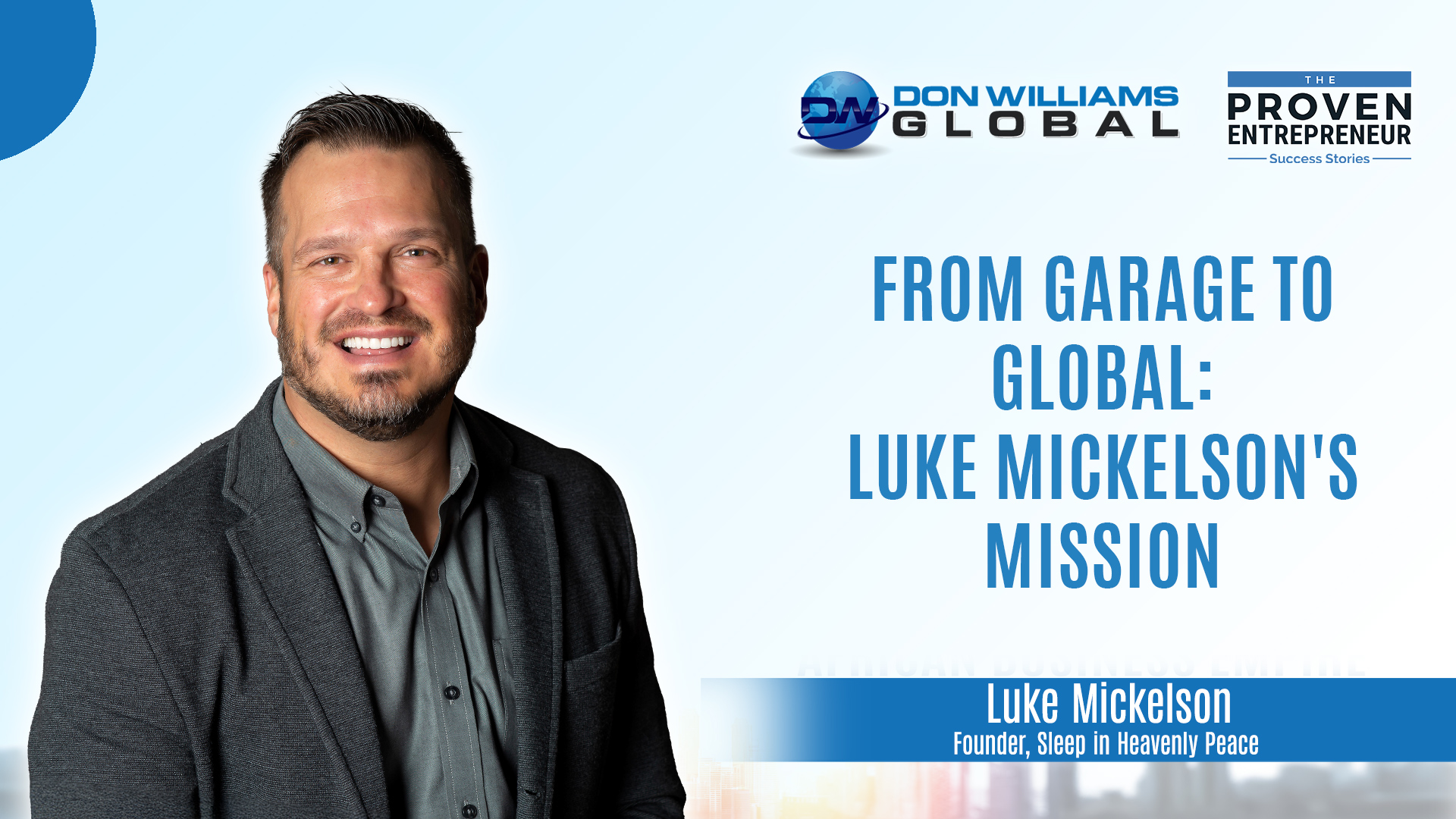
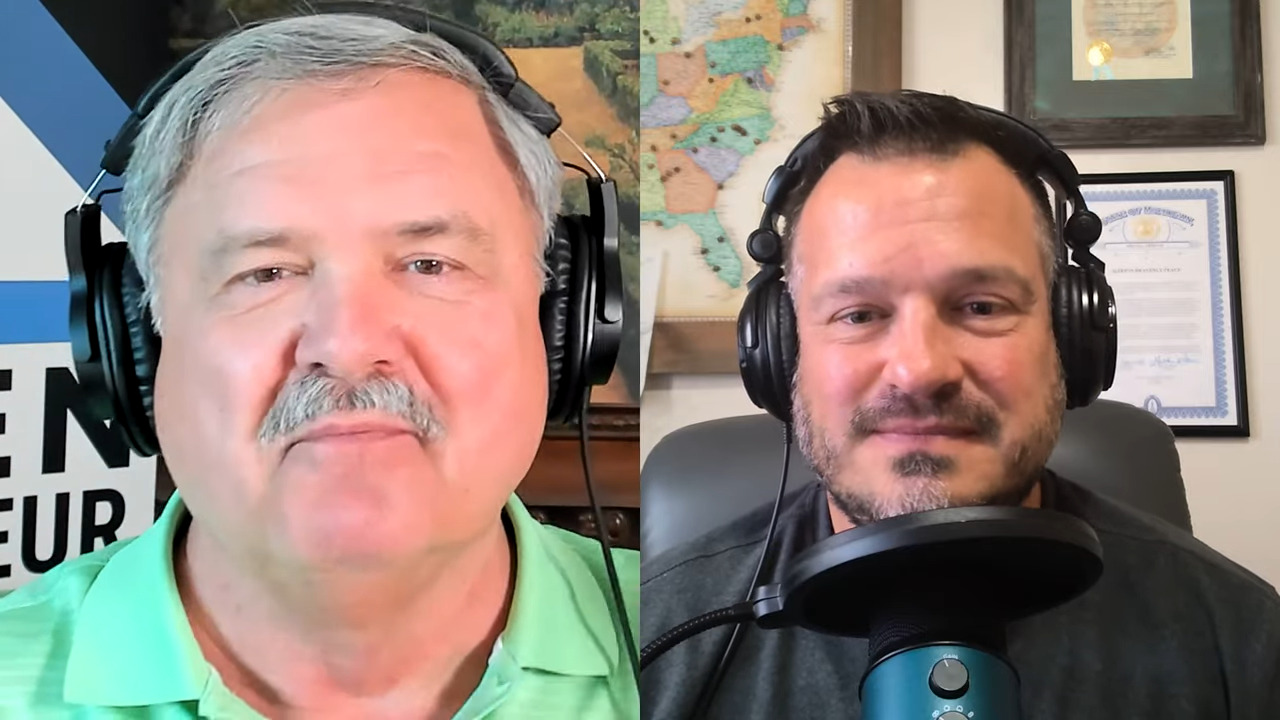
In this heartwarming episode of The Proven Entrepreneur Show, host Don Williams sits down with Luke Mickelson, the inspiring founder of Sleep in Heavenly Peace, a nonprofit organization dedicated to ensuring no child sleeps on the floor. Luke shares his incredible journey from building the first bed in his garage to leading a global movement that has delivered nearly 300,000 beds to children in need across four countries.
Discover the powerful story behind the mission statement “No kid sleeps on the floor in our town,” and learn how a simple act of kindness transformed Luke’s life and the lives of countless children. Luke discusses the challenges and triumphs of running a nonprofit, the importance of community involvement, and the impact of being named one of CNN’s Top 10 Heroes in 2018.
Don and Luke delve into the significance of passion and purpose in entrepreneurship, the value of humility and leadership, and the future goals for Sleep in Heavenly Peace, including ambitious plans to expand globally and reach more children in need. This episode is filled with motivational insights, touching anecdotes, and practical advice for anyone looking to make a difference in their community.
Tune in to hear about:
- The origins and mission of Sleep in Heavenly Peace
- Luke’s personal experiences and the emotional impact of delivering beds to children
- The growth and expansion of the nonprofit organization
- The role of community and volunteerism in solving child bedlessness
- Strategic goals and future plans for Sleep in Heavenly Peace
- The importance of following your passion and making a meaningful impact
For information on how to work with Don visit us at https://donwilliamsglobal.com
You can also reach out to Don Williams at https://provenentrepreneurshow.com
Don’t miss this inspiring conversation that highlights the power of compassion, community, and entrepreneurial spirit. Listen now and be motivated to take action in your own community!
Watch the episode here
Transforming Lives Luke Mickelson’s Journey with Sleep in Heavenly Peace
Hey, it’s Don Williams here with today’s episode of The Proven Entrepreneur Show. Got a great guest, Luke Mickelson from Sleep in Heavenly Peace. Now, I gotta love the branding of the name and I love it when I sleep in heavenly peace and today that’s what we’re gonna talk about. Luke, welcome to the show.
Thanks, Don, it’s great to be here.
Awesome. So I was telling you before we went live that you’re actually my first guest. That’s not up to their eyeballs in entrepreneurship. Okay. This is a nonprofit, which has an entrepreneurial flavor. And you mentioned, yeah, I’ve done the entrepreneur thing several times, exits and all that jazz. So I want to take you all the way back to your family house. Okay. You’re five.
Sure.
Hehe.
Yeah.
five years old, 18 years old, okay? In your home, was there an adult who was an entrepreneur or an entrepreneur who had, like most entrepreneurs have some kind of mission, okay? You have a real, well, hey, let’s start there. Back up. Tell me about the mission of sleeping in heavenly peace.
Gotcha. Yeah.
Mm-hmm.
You know, our mission is pretty simple. actually came out of, it first started out being our motto. And this is really interesting. I’ve shared this on other other podcasts, but you know, in 2018 I was named, one of the top 10 CNN heroes, right? So we get to go and be a part of the scene in here. I didn’t know what it was. Trust me. I’m from Idaho, so I don’t know much about that stuff, but anyways, I got invited to, to go to the,
Natural History Museum in New York and they honored 10 nonprofits from across the world and I was lucky to be one of them. Anyways, after this production, we met the next day and they wanted to go over media training because you’re going to get hit with a bunch of media and all this stuff. Well, first thing I talked about was a mission statement and they went around the room to these 10 other nonprofits talked about their mission statement and they came to mind and had, you know, they had this face like, this is guy doing like it was really questioning it because our
motto now mission statement is no kid sleeps on the floor in our town. And the reason why we loved it number one, was just it was actually a mission statement that came out of almost frustration. It was almost you know, when I said it, I just had delivered my first bed to a child, six years old, Haley never slept on a bed. She slept in the backseat of her mom’s car since she was born, right? And then of course couch dived and all that. But they finally got a house. We delivered a bed to little Haley.
You know, and I share with people, look, you know, when you when you see homelessness and and poverty through the eyes of a six year old, I hadn’t done that. And it really hit me like really strong. And you know, when we went to Haley’s little room in the back of this house, they just got, know, there was holes in the carpet and, you know, tears and in the wallpaper and stuff like that. But in the corner was this was this bed of clothes. And that’s what she slept on.
And so when we brought her this bed and seeing that and seeing this mom, this single mom, and I was raised by a single mom too, tears of joy just coming down her face, well, joy and the release of frustration and all this. I mean, you could imagine as a parent, right? Not being able to provide a bed for your child. I mean, it was more than a bed and it was so overcoming, Dawn, like on the way home, I had about a 30 minute drive home. I really didn’t say much. I was just so in shock. And I remember I got home and
out of tears of joy, but tears of frustration, anger, know, passion, more passion than I think I’ve ever felt my life. I’m like, no kid is going to sleep on the floor in my town. And and so that turned into our motto. Now our mission statement and at this CNN media thing, they said, that’s really odd. You know, why did you pick that? And I said, you know, mission statements are mostly for a company to express to the customer or to the
the community, the public, what they do, right? As clear as you possibly can. I said our mission statement is meant for the customer to say it back to the person, right? Because child bedlessness and solving this unknown hidden pandemic in our country needs to be solved on the community level. So we wanted, I wanted these community members, these volunteers, these these local neighbors
to say the mission statement for themselves. No kid sleeps on the floor in our town, right? And we just want our town to be everybody’s town. So that’s a little story on the old mission statement.
I love that and I love the R-Town. guest shared with me not too long ago, the concept of lift where you stand. I can’t fix everything, but I can fix something. Lift where you stand. Let me ask you, I think from that first bed with little Haley,
Yeah. Yep.
Yeah. Yeah. Yeah.
I think there’s been a couple more beds. Yeah. So, like define a few,
There’s been a few.
Sure, sure. Well, we started in 2012. We actually built a bed from the idea came from being in the middle of a church auxiliary leadership group, really what it was. And they had talked about how they were helping families in the in the little community. You got to understand, I’m from a small town, Kimberly, Idaho. It’s 4000 people. I mean, my graduating class was 69. You know, we just didn’t. We’re just small town. And but this family that we’re helping
lived in a part of our town. didn’t even know existed. I mean, that’s how that’s how small and humble let’s just say that this this house, this apartment that we went to, these kids were sleeping in. Anyways, we’re in this meeting and someone had said that the kids didn’t have any beds and and it didn’t really it took me a little while to register that right. my gosh, you don’t want any kids don’t want any beds. What’s going on? So anyways, we as being a leader over the Young Men’s Program, the activity of that was basically Boy Scouts.
And so I took my Scouts and said, okay, you know, Hey, what are we gonna, what are we gonna do here guys? We’re gonna, we’re gonna take care of this. Right. And, I decided and I’m not, mean, I know my, my way around some tools. I kid around and I don’t share this very often, Don, but I had to use my wife’s tools. That’s where I had a few, but she had what I needed. It was pretty funny. anyways, we, we, we took these boys scouts. We built this bed, we delivered it. It was such a great experience. I want my kids to have that same experience. And so we,
We built another bed and that’s when I delivered that to Haley and that was 2000, 2012. And after that experience, Don, I mean, my, the best way to say it is just my, my, my heart changed and I can literally say that my heart and my passion just changed in, I wanted to help, especially when I realized number one, it was a fun activity. mean, here I saw these boy scouts and if you’re trying to get a teenage boy,
behind a screen and have fun. Good luck, right? You know I’m saying it’s just tough, but I thought you know here’s a great opportunity to get an Xbox controller out of these boys hands. Put a saw or drill in it and let’s teach him something right and. And not only do we do that, we just had such a great time and my kids had such a great time that we wanted to do more and more well to answer your question. What is it 13 years later we have now?
Eugh.
built and delivered almost 300,000 beds. We’re in four countries. We’ve trained over 400 plus chapter presidents. Right now our goal this year is 90,000 beds in a year. So we went from a small little garage in Kimberley, Idaho to the largest bed building charity in the world. And it’s super fun. I’ll just say that.
That’s amazing and so impactful. And I’ll share, I’ve never shared this with the public, but I went through a pretty rough period in my life. was a single dad, had two sons, but I didn’t have a bed. They had beds, but I didn’t have a bed for an extended period of time. And…
Really? Yeah. Yep. Yep.
I just didn’t have any money. I was like, you can have all the air you want. I got no cash.
wow.
Yeah. Well, that’s
isn’t that some of the that’s some of the problems we face with. You know, a lot of people think, well, you provide beds to people that are in poverty. Well, that is true. But that’s also not true. You know, child bedlessness doesn’t know economics. doesn’t know logistics. You know, it doesn’t know that kind of stuff. It affects people right next door. I mean, a lot of foster care situations where people are just fine. You know, in fact, I share the story where
we had a caseworker give us a call and said, hey, do you have any spare beds? And I always kept a few, you know, just in case. And for this exact situation, foster care, little brother and sister, they were six, seven, something like that. Parents were in jail or out of the picture anyways. Grandparents across the country couldn’t take them. They put into a foster care home, but they were going to get separated because the foster care family didn’t have enough money to go buy another bed. And the judge says, you have
24 hours to get a bed. Now, if you think about that here, two kids, everybody in their life is gone. Everybody except each other. They only have each other. because of because of bed, they were going to be separated. And that’s just not right. And and so we we tell people we we provide more than just a bed. You know, it’s more than just a good night’s sleep for these for these kids. And and Don, you know,
Kudos to you. We walk into a lot of situations where there’s parents. The kids don’t have beds. The parents do. You know, there’s very few, very few do we walk in where that’s reversed. So that says a little bit about you, my friend.
Mm.
Well,
tough time. And you know, I think I’ve been fortunate, I’ve traveled all over the world a couple of times and I was born and raised in Kansas, not probably dissimilar to small town, Idaho, you know, my family’s from a town of a thousand people in Kansas. And so, you know, I had a view of what I thought was poverty. And then I live outside of Fort Worth, Texas. And so, you know,
Sure, sure.
You get a little bigger view, you know? But then when you go around the world, you know, in Asia or in South America or Central America, and I’m not being derogatory at all, or South Africa, Africa, the entire continent of Africa, not just South Africa, but the entire continent of Africa, and you see poverty has a different level, and truthfully,
out. Right, right.
If you sleep in a bed tonight, you kind of won the lottery because most of the world doesn’t. Huge segments of the population are not maybe what we would consider homeless in the U.S., but they don’t have a bed. They’re sleeping on a pallet or on a… Hailey was sleeping on a bunch of clothes, I’m guessing, that were kind of put together and that was softer than the floor. So…
Yeah.
Yeah. Yeah.
Yeah.
there’s there’s I mean, we’ve seen all I mean, we’ve seen sleeping on pallets and a lot of air mattresses and we have all slept on air mattresses with end up flat on the floor every night anyways, you know, so it’s like there’s a lot of these situations, you know, and when you look at you look something like Africa, right, you know, versus our own kids here in the United States, you know, of course, there’s the poverty.
comparison is much different, right? But I look at it as we also have a lot more resource availability to us here, right? So, and I’ve been approached by, I can’t tell you how many people in Africa that want to come over there and build beds. And it’s like, you know what, would, but the little amount of bandwidth that we have here in the United States, even with our 400 chapters, to be able to reach the need that we have here, it’s greater. This is a funny statistic. Well, it’s not funny at all, rather, but
yeah.
there’s really actually no statistics done out there for how many kids actually don’t have beds. It’s not even being recorded. That’s how unknown this situation is. But over the last, you know, 10, 13 years or so, Sleeping on the Peace has slowly kind of gathered some of our own statistics. And we know, we know it’s greater than 3 % of the total population. So if you’re in a town, you know, pretty good sized town of 100,000 people, you know, for Idaho, that’s a pretty good sized town, by the way, not Texas. But
Yeah, Kansas too.
Yeah, exactly. You know, you’re you’re we’re in the same boat here. You know, there’s 3000 3000 kids that are sleeping on the floor, you know, with brother and sister, mom and dad on the couch, you know, whatever, right? They don’t have a bed of their own. and unfortunately, beds become a luxury at that point. And that shouldn’t be especially in a country as rich with resources, with as rich as of amazing people that we have in this country. They’re willing to help just trying to
bring those people and those initiatives and those passions together to solve this problem. And that’s why we always say, you know, this is a community problem. When I set this up, you understand, I was an outside salesman for a water treatment company for 20 years. Loved it, I loved the people, was a great company to work for. When I started Sleeping Emily Peace, my attention to and passions
very quickly started changing. You know, I still felt a lot of responsibility, obviously, to make money for my family. But the revenue, if you will, that I was getting from Sleeping Omni Peace was really more internally what I needed and more of a focal point and a compass for my life than it was how many zeros I made behind my paycheck, you know. that was a tough thing for me because, you know, I grew up in small town. I was very
Sure.
competitive, very athletic. really, I sought the praises of others, right? Like we all do. But I wanted to also feel successful. I think everybody in this world wants to feel success in some way or another, right? And so how do you measure that? What is success to you? As an entrepreneur, it was very simple. Success means more dollars, right? And I think that’s a young, ambitious guy. I get that. And there’s probably some healthy points to that. But when I…
Got into my 30s and and life set in and I was coaching and my kids were growing up and I went to school or excuse me, a church and was was helping out the community. You know, just there just wasn’t enough. satisfaction with the zeros anymore. You know, there just wasn’t enough. I look at a four wheeler or motorcycle or whatever toy I had in the in the garage and they they quickly became more of a nuisance than they did something I enjoyed.
But when I helped someone, especially a child that’s never had a bed before, and I used my very limited woodworking skills to be able to solve that problem, I don’t know, Don, the thought just came to me, my gosh, I spent, you know, back then it was a number of nights to finish one bed. We can do much quicker now, but to be able to sit there and go, for that little of time and to have my beautiful kids help me or other kids help me.
to build, to solve a problem like that, yeah, that’s worth my time. And now, know, measure success is much different for me. It’s, you know, it’s all about how many kids we can help and how many, not just kids, you know, we found out another problem in our community and that’s a lot of people, a lot of amazing, great people that wanna help. They just don’t know how, you know? And when I started Sleeping Emily Peace,
I didn’t want to be this charity that you donated money to and it just went to kind of this pie in the sky and you didn’t know where it went. I knew it needed to be solved by the community. needed to stay in the community. It needed to be a real community initiative. And so when we set up this charity, we had my buddy Jordan Allen, who’s now our executive director. He’s in Boise, two hours away from me.
He, was like one of the first guys that came down and helped me start building those, those 22 beds that first year, he wanted to do it up in Boise. Well, okay. Now what do you call it? Well, I guess we’ll just call them chapters, right? And so that’s just extended out, you know, through our 400 chapters and four countries. And, and now we, you know, we, we can really start making some, some headway into that 3 % of the country to, to solve.
I love that.
And I didn’t miss the 22 bed first year and 90,000 bed goal for 2025. I didn’t miss that. And so I think that’s…
We’ve actually
had some builds, know, Lowe’s Lowe’s Home Improvements, our largest sponsor, you know, they and their their foundation called the Gable Grant, which is actually the Lowe’s Foundation. They have a fundraiser every year. Well, they actually have four of them rather throughout the country. And we have been lucky enough to be the service arm of that of that fund funders, fundraiser. And so we show up and we take their three, four, five hundred
mixture between employees and vendors that come to those those deals and we build beds. I mean, but we build beds. There’s what we have what we call six trains. The chapter has a train of tools. We we build beds and kind of assembly line kind of a train. We call it well, we’ll have six there with 500 people. We’ve built 650 beds in three hours. It was a bed every 22 seconds, you know, so we can really hammer out these beds now, but we do it as a team building exercise.
Wow.
for corporations locally and with volunteers in the community. And it’s such a fun activity. We can take 10 or 200 people and put them to work and people that have maybe never touched a drill before. That’s the fun part. I had some ladies from a bank show up at noon one time just on their lunch break to build beds. I mean, these gals were in stilettos. were, I mean, they were six inch heels and.
They’re out there drilling away. In fact, I remember I had to sneak in my office and take a, take a call real quick. came back and oh my gosh, they had built like 20 headboards. I’m like, ladies, you’re running me out of wood. So it’s a really, it’s a, it’s a neat, it’s a neat thing. And, and we solved, we solved that, that component of the community, looking for ways to give back and feeling that satisfaction, feeling that fulfillment that we all want to feel when we help someone else. So.
Yeah, and it’s counterintuitive, it’s a treadmill, it’s an unending treadmill to just try and satisfy yourself. It’s not possible. We always want more, we always want better. There’s always something else. And in my business, I coach and consult with entrepreneurs to help them grow their businesses. And so you help somebody go from 10 million to 20 million and they’re like, I thought it was going to be totally different. And it’s like, what?
Yeah.
It is different, but at every level there’s a new devil. It’s never like, my gosh, we’re all good. And I’m sure you see that too. In the early days for Sleep in Heavenly Peace, go from one bed to 22, there were probably some big challenges. And now to go to 90,000, there’s different challenges, but there’s still big challenges. It’s not easy necessarily.
Yeah. yeah.
yeah.
absolutely. You know, and there are different levels of challenges and priorities as you grow a business. And again, I tell people, look, the only difference between a nonprofit and for-profit is I don’t have to pay taxes, right? You still have that overhead. You still have growth. You still have rainy day planning. You still have, you know, retention and, you know, AOP goals. I mean, you still have to operate like a business.
And in fact, and I do a lot of coaching of nonprofits as well. You know, we’ve taken sleeping on the peace. You know, I remember my, my first year budget was, a thousand dollars. You know, it was my, it was my Christmas budget for my family, you know, and, this year we’re, we’re going to be $25 million donation company budget a year. And, and, and that comes from, comes from, you know, obviously when you got 400 locations, it’s, it’s a, they’re operating, they’re operating under the same EIN number, but they operate and we.
We train people you operate kind of your own little business, right? You know you almost like a franchise. You stay within the confines and the the parameters that were that set by by us as well as set by the IRS and and our nonprofit rules. But but you know they they get to feel and this is the key of my Mike. My management style is giving someone a clear set of instructions, guidelines of what they need to do, and then let him go do it.
Right. They, they, they, they start feeling ownership and being bought in and being a part of the growth of such a great organization, whether it’s you’re selling popsicles or, or computer chips, you know, you, you, you have an opportunity to, bring someone in into your business and have them feel ownership and be a part of that. and it takes, it takes, in my opinion, it takes leaders that are willing to be humble, that are willing to be, to share and teach people how to,
how to do it better than you did it. You know, and that’s probably one of the hardest things I’ve had to learn is, you you start this, you start your baby in your garage and now I’m done. I’m not even over it anymore. And that, and that’s, know, that’s sometimes any, you ask any founder or any startup company owner that, that is now past the baton, if you will.
Yeah. Yeah.
It’s and my dad was the same way. mean, he’s he’s still to somebody hasn’t passed that baton and it’s hard. It’s hard to swallow that. And it’s even harder when you start seeing him do things a little bit differently than you did it. And you’re like, Hey, I didn’t, I didn’t do it bad. Why are you doing that? You just gotta let him do it, man.
Yeah,
I love that. So I’m kind of of the mind that a leader really kind of only has two jobs. Cast the vision, cast the vision, cast the vision, tell people the vision. Here’s this division, this division, this division. When they laugh at you because you’ve told them the vision so much, just tell them, yeah, but did I tell you the vision? Keep telling them the vision, tell the vision, tell the vision, television. That’s job one. And job two is go get the best people on the planet to make the vision happen. Okay. And, and you know,
Hmm. Mm-hmm.
Awesome.
Yep. Yep. 100%.
I come from my father’s United States Marine. I grew up in a very traditional leadership environment, in a command leadership environment, okay? But what we’ve seen in transformational leadership is that really the leader is working for their quote unquote subordinates, okay? And that makes the best thing happen. And truthfully,
Mm-hmm. Mm-hmm.
Great leaders don’t create followers. Great leaders create other great leaders. And there’s a big difference there. So, love that. So tell me, what do you see 10 years down the road for sleep and heavenly, we’ve talked about the past, we’ve talked about the present. Where’s the future? What’s happening?
Great leaders don't create followers, great leaders create other great leaders. Share on XAbsolutely.
Yeah, that’s a great question that excuse me. You know, I remember five years ago even though they you know, I get that question. I’d get that question a lot. So what you know, what’s what’s next? And I the amazing thing is now we actually do have five year strategic goals and plans and you know, we actually have those in place now, whereas we were growing so fast and so rapidly you could it was even hard to set goals. I mean, we literally doubled.
almost every year for five years. Since 2018, we were viewed on a Facebook watch series called Returning the Favor. And it was hosted by the amazing Mike Rowe, know, Dirty Jobs Mike Rowe guy, cool guy, like he’s just the coolest guy. And we were viewed by 18, or excuse me, by 10 million people. And we went from, we had about seven chapters at the time to we just blew up. really a lot of most of our growth
Yeah.
95 % of our growth has happened since 2018. So we really blew up these last five years. And so when we were trying to measure what the goals or a five-year plan would look like, you started low and we broke our five-year plan in the first six months. It was just really hard. Now we’re set down here. we have a five-year strategic goal of hitting a half a million kids.
reaching that 30 to $35 million budget goal. Of course, our biggest focus really is what our mission demands, which is no kid sleeps on the floor in our town. But of course, we want our town to be every town. And so we’ve set this chapter level type franchise up a platform for people to, if this is a passion that they have, that they can
they can now jump on board and we want to get more chapters. We’re at, you know, right now we’re at 355 active, 400 trained. We want to get to that 600, right? Where we’re now in a lot more areas. We’re covering a lot more areas. We only cover about 23, I think the last percentages came in, about 23 to 25 % of the country right now. Even with 400 locations, it’s not, it really doesn’t cover a lot. I mean, we’re missing large towns, we’re missing large areas.
Mmm.
and so we’re, always constantly and focused on growth and focused on finding those great individuals, locally that, that are willing, have time, have a passion for what we’re doing and teach them how, how we get it done. And, and, you know, we put on about 40, 50 chapters every year. so we’re, we’re going to reach that, but we, know, we want to keep that steady going. So, you know, 10 years from now, you know, I know, I know we’ll be at a $50 million.
uh, uh, 200,000 bed per year, um, goal. And beyond that we’ve, we’ve dabbled into, you know, we’ve, we’re into Canada, we’re into Bahamas and Bermuda, but we get requests you could imagine in Southern, you know, our Southern friends down in Mexico and, and, uh, South America, of course, Africa’s always there. We’re working on.
We’re working with big organizations like Knights of Columbus and the Rotary and all these other great, great institutions that have a lot of service minded people in it. We’re trying to open up areas in, strangely enough, oddly enough, like in Ukraine and Poland. Those are going to take some time. And I can see, actually, can see myself as SHP across the country just gets even more founded and sure-footed.
that we’ll be able to tackle some of those across the lake opportunities.
Yeah, and so I was on a call this morning with a friend from Vienna. so, you know, to me, communities are a fabric of individual threads and those threads are individual connections. And so, you know, who knows where things go. And one thing you said that I want to be sure I drive a nail in.
Hmm.
was you had the opportunity to do this Facebook show that was hosted by Mike Rowe. Okay, and you said yes. So one, ultimately you could probably go back to one meeting, one call, one something where you said yes and you could have said no. And had you said no, everything that happened as a result of that would have not happened, would have passed into ether. Okay, but you did say yes.
and then 10 million viewers, things went crazy. And so one thing we try and share with all entrepreneurs is you might be a phone call, you might be a meeting, you might be one introduction away from the magic happening in your business. And very common with entrepreneurs that they have a passion project, they have something that feeds them.
yeah.
spiritually and emotionally, not just financially. And I can think of here locally, we had this random acts of kindness and a bunch of entrepreneurs that were associated. And one of the couples, they went to a local Walmart and they bought all of the children’s underwear and socks, like everything in the store.
and then carried it down to the services that help with homeless people. And of course, stores like you can’t buy it all. And they explained to them what they were doing. They’re like, yeah, you can have it. And so.
That’s cool.
that’s cool. You know, you
say that I, I call what you talk about, I call it my tiny moments, right? I’ve given, I’ve given a few speeches and Ted talks on, on passion and purpose, but it really does come down to a tiny moment. And you know, I, and I remember when I first started SHP, little bit of background there is a little personal background is, you know, 35 years old, middle of my career. You want to, if you want to call it a
Midlife crisis. I don’t know. I don’t know what that means, but I just, I’ll tell you how I felt is I just knew there was more out there for me. I just felt I just, I didn’t have a bad job. didn’t have a bad life. was just actually on paper. I think people would have killed for it, but just in my heart, I just didn’t feel like I was making enough difference in the world. again, it kind of went back from that. My, my entrepreneurial drive for success,
with zeros started to change and I saw more value in the lack of better term, more value in humanity, you know, than it was my, my, my success that I was measuring at the time. And, and, and I was going through a real big faith crisis. I just, you know, where do I fit in this world? How does it work? And so, and when I was kind of in this slump, if you will, and I had been for a number of years,
And then I did this bed build with my Boy Scouts and it filled it so fast, faster than anything else. And I didn’t know why. mean, I’ve done service projects before and I’ve always enjoyed them. But this one just really struck me. I mean, I know now why, but it just really struck me. And I remember when I went home after building or they delivered the beds and that next day church, they told me how amazing it was. And I was kind of…
It didn’t help because I wanted to have that experience for myself and here we were all done and so I went. I remember I was sitting at home sitting at home on the couch. And my kids will just watch it was, you know, first week of December. So Christmas is on everybody’s minds and we’re watching TV and here comes the Xbox controller or Xbox game commercial. And I mean, I could just read my kids minds right there, like getting all giddy and turned to me and and I’m like number one.
We, we, we got an X-Box. We already have enough games. I’m not buying you another game. And it just, you know, Donna, it hit me perfectly. Cause I was like, you don’t need another game. In fact, you have a bed I just delivered or helped build and deliver a bed to kids that don’t have any. So, and I remember thinking, if I can just get off this couch, if I could just drop that three, four inches,
from the cats to put my feet on the ground and walk in the garage to start building beds, it will change me. It will help. Right. And that was hard. It was it was hard in the fact that I just did it. I could tell my kids I had a great time. I could tell my kids what we did. I could tell them all the success that can come from serving other blah, Or I can just go and do it.
and have them come with me and do it and action. And so I tell, you know, I speak about a lot of times in my public speaking, I share, look, your intentions and your desires can be strong, but your desire to act until that desire to act is stronger than your desire to change, then it just remains a dream. And, and, that’s real for everybody. And sometimes it’s just the tiniest moment.
And sometimes you act on it and it was great and then that’s it. But like you said, you’re just one tiny moment away. You’re one phone call. You’re one sales pitch. You know, you’re one hit away from that next big step in your life. And and I’m a living proof that if you can get off the couch, if you can insert just a little bit more effort in something that doesn’t seem it’s that important.
I’m living proof that it can change, literally change the world and other people’s lives in it.
love that and I love the fact I’ve got two great sons, grown sons, grandkids now. And people would ask me all along like, you know, what did you do? And I was like, well, number one, I’m not perfect and they’re not either. They’re really good young men. But I won’t, but I could tell you a moment or two, you know? I said, but here’s a thing I learned.
Yeah.
Yeah, sure.
pretty early on is that it was hard for my kids. I’m a talker. And so it’s hard for my kids to hear everything I say because I talk too much. Okay. And, and at a certain point people are like, but maybe this is better said. My actions screamed so loudly in their ears. They couldn’t hear my words. And so
just get off the couch, just go do it. Just ask somebody, would you help me? Not for the year, not for the quarter, not for a week. Would you come help me right now? Okay. And people get started because, you know, that there’s even a really popular book, the second mountain, and it talks about entrepreneurs who’ve had a big exit. And it’s very common that they,
Yeah. Yeah.
work 20, 30 years, they’ve had this huge accent, and they look in the mirror every day and say, now why?
I got all the money I’m ever gonna need. I got money my kids and grandkids are gonna need, but for what? For what purpose? And so then the next mountain, that second mountain they go to climb is something like sleep in heavenly peace. And 10 years ago in Thailand, I listened to a really smart lady talk about the power of gratitude.
Yep. Yep.
and had the epiphany that even though I’d won at almost everything in my life, I was very ungrateful. I was never celebrate any, if we won at something, I’d be like, yeah, great. What about this thing over here where we’re not doing very good? I mean, not even a split second.
Don.
We are not stop and smell the roses type guys. don’t, I don’t know what it is. My wife, she kicks me up. Yeah.
We’re not!
It’s a flaw. It’s a flaw.
In my life, it’s a flaw. I won’t say that about in your life, but in my life, it’s… Yeah.
Well, I know what you mean.
I just, and what it is, I don’t know. Maybe it’s an entrepreneur thing. Maybe it’s a drive for business, drive for success, drive for impression. Maybe it’s a lot of all that, but I know. And I think that’s some of the transition I had too when Sleeping in Heavenly Peace came into my life. Because I always told people, look, if you want true joy,
If you want true joy, stop thinking about yourself and see how you can help others. Share on Xstop thinking about yourself and see how you can help others, right? And then I kind of had to back off that a little bit. said, you know, because it doesn’t, it’s not like your, it’s not like your problems go away, but they certainly don’t seem as heavy, you know? And I think Sleeping Under Me pieces helped me really, and probably age as well. That’s some of it, some maturity there. To be able to slow down and go, you know,
Let me enjoy the success right now and that’s OK to sit and enjoy. It’s OK to take a time out and and remember we had a conference our very first big annual SHP conference two years ago and I gave a speech and I just felt very compelled and inspired to share the word remember. You know, and I think that’s very important, especially with us entrepreneur startup type type guys.
You know, you get so ingrained. I look at my dad. My dad came across the lake, if you will, from Ireland, 100 bucks in his pocket, you know? And he’s a millionaire now, right? And he is my stepdad. And when I came into his life and got to know him, you know, and he shared his story with me, I just, I was in awe. He’s a very driven man, you know? And he’s very focused, I think they call it. You know?
Yeah.
Yeah.
Everything you did had something with the business and and you learn you learn to love that and hate that at the same time. But but I think is I’ve gotten older and watched him get older and kind of learned a little bit from what what he’s experienced. He’ll tell you, you know, and probably most most people his age now will tell you. You know the relationships you have with your employees or relationship you have with your customers. They’re far more important than the money you made and and I know what he means by that.
Right. You got to make money. Don’t get me wrong. But but I think the value we have in these in these smelling of the roses moments, they’re hard to hard to sit and get used to doing it. And so I feel your pain.
Yeah,
yeah. Well, you know, I listened to that lady talk about the relationship between human performance and emotion, and I thought, I’m totally checked out on this. But the longer I listened, I was like, you know, she may be right. And then about a year later, I wrote my book on gratitude. And, you know, if you practice gratitude every day,
Yeah.
And you’ll certainly, if you do acts of service like sleep and heavenly peace, you will be grateful. And if you’re grateful, it will change your life. I’m not saying your problems will go away, but you will see them differently. it will be, people will notice, you will notice, it will be noticeable that
that you’re making a difference. And at the end of the day, when we all know where life ends, okay, then same place for everybody. Nobody will care how much money you made. People will care how much of a difference you made in other people’s lives. And a common misconception about entrepreneurs, and of course the name of our show is Proven Entrepreneur, a common misconception is they’re all about the money.
You
And in reality, they’re very generous, very giving, sometimes to a fault. Sometimes from a coaching standpoint, it’s like, maybe you should back that off just a little bit. I think that was inventory money. Maybe we should have kept some of that, but that’s way it is. So I think, Luke, I can keep you all day.
Yeah. yeah.
I’ll wipe it.
Sure. yeah.
Okay, so I don’t do that. Let me ask you if you had one nugget to share with our audience, what would that one thing be?
You’re fine.
You know, it’s a great question. There’s a lot of them. I think the biggest thing is that I’ve talked about is just finding passion and not being afraid to follow it. Right now, I’m not saying you quit your job or anything like that. Right. Passion comes to us in a lot of different ways. But whatever that passion is, my gosh, know, Don, life’s too short, brother. It’s.
Don't be afraid to follow your passion Share on XAnd our time is too short. And we’ve all heard the same adage forever, right? That you only go around this blue dot once, per se, if that’s what you believe in. And when you finally find that passion, and probably even more important than that, being willing to act on something that you feel you’re passionate about, you just don’t know what’s inside. I like I said, I love sports, so I coached a lot of it.
I mean, I’m not that same person because I found what I’m truly passionate about. Now, will that change? I don’t know. I’m certainly open to it. But when you find your passion or something you really super care about, don’t be afraid. Don’t be afraid to follow it. And let it lead you down. I mean, who cares how much money you make? Who cares where you live and how many toys you got?
I heard an adage a long time ago, says, you know, happiest man is a guy that is on his knees. Now you can look at that as prayer, right? Sure. But I also looked at it as someone that’s humid, has humility and someone that is comfortable with themselves and has found what brings them joy. And don’t be afraid to go for it.
Yeah.
Don’t be afraid to go for it. I love that. Luke, if somebody wanted to reach out to you, if somebody wanted to inquire about how to start a chapter, if somebody wanted to inquire about how to make a donation, what’s the best way for them to reach out to you? We’re sleeping in heavenly peace.
Yeah. Yeah.
Thanks for asking that because I wanted to share. I’d to end with that. shpbeds.org, sleep and heavenly peace. So shpbeds.org is our website. And let me tell you why it’s unique. When you click on that, it’s going to bring you to the closest chapter of sleep and heavenly peace. We used to have one main page, but now it just brings you the closest chapter. And the reason why we do that is because we want you, the listener, someone passionate, feels compelled to be a part of something like this.
We want you to find a locally, right? So if you do and you click on there and there’s one local, you can reach out to that chapter in their core team, become a core team member. It will change your life. You can volunteer. You can build beds. You can deliver beds. You can help one hour a week or 20 hours a week. I mean, whatever you feel compelled to. When you donate money, I think this is important. When you donate money, this is the only way we finance sleep and heavenly peace.
from a management point of view, we take 10%. That’s it. So 90 % of your dollar stays right there. So when you donate, Don, your dollar to the Fort Worth chapter of Sleep in Heavenly Peace, it’s gonna, 90 cents is gonna stay there, right? So you know your money, all the beds, all the sheets, all the mattress, everything that stays in that community. Now, if you don’t have a chapter there, and this is something that you really feel strongly about and wanna be a part of it.
We have a platform, a training platform on how to become a chapter president. Very successful. We only have about 3 % attrition right now. So when we have chapters start, we teach them how to do it. And we’re talking a lot of retirees, just like you said, people that were sick retirement. My favorite story, I got a guy here who’s worked for Mother Boeing for 30 plus years. Retire was so excited. He’s like, Luke, after three months, I want to jump off a cliff. He says, I had to do something.
And then I’m like, brother, I’m scared of retirement. me. So yeah, but great chapter presidents start as retirees and some of them, you know, barely know how to turn on the computer. Right. So we teach them. We have a platform of how to start a chapter, how to run successfully. We have a very robust training program and training staff to help these these people be successful because our number one customer.
is our chapter president and their number one customer is the kid that Trent serve. And so those are great ways to be involved with Sleep and Emily Peace. And just look us up and go into your own hometown. Raise awareness about child bedlessness. Not a real word, but a real problem and it lives in your own hometown.
We’ll work on getting that to be a real word. Yeah. Luke, thank you so much. I’ve so enjoyed our time today. Thanks for coming on the show. That’s today’s Proven Entrepreneur Show. See you next time. Thanks.
Yes, amen.
Thanks Don.