Welcome listerners, In this captivating episode of the Proven Entrepreneur Show, host Don Williams sits down with Paul Byrne, a remarkable entrepreneur whose journey is a testament to adaptability, courage, and the power of saying “yes”. From working pineapple plantations as a teenager to becoming a global e-commerce consultant, Paul’s story is anything but conventional.
Listeners will be inspired by Paul’s unconventional path – a rage quit that became a turning point, transforming from a Magento developer to an innovative custom software solutions provider. Hear how he navigated technological shifts, built Rossolio, and learned critical life lessons about prioritizing family while pursuing entrepreneurial dreams.
Packed with raw insights, humor, and hard-earned wisdom, this episode reveals the true essence of entrepreneurship: resilience, continuous learning, and the courage to embrace unexpected opportunities. Whether you’re an aspiring entrepreneur or a seasoned business professional, Paul Byrne’s story offers valuable perspectives on building a meaningful and successful career.
Join us for an extraordinary conversation that goes beyond business strategies and delves into the human side of entrepreneurship.
For information on how to work with Don visit us at https://donwilliamsglobal.com
You can also reach out to Don Williams at https://provenentrepreneurshow.com
Don’t forget to subscribe to The Proven Entrepreneur Show for more success stories, actionable strategies, and the best of entrepreneurial wisdom!
Watch the episode here
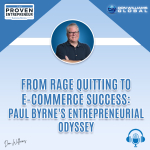
From Rage Quitting to E-Commerce Success: Paul Byrne’s Entrepreneurial Odyssey
Hey, Don Williams here with today’s episode of the Proven Entrepreneur Show. I have a real treat today. This person, guest today, I’ve known maybe 20 years. And so he was probably five when we started or maybe six. I don’t know. Maybe not quite that young, but anyhow, we’ve known each other professionally and other business lives, kind of, certainly for me, less so for him.
That wasn’t that creepy.
but please welcome to the show, Paul Byrne with Rosohio. Paul, welcome to the show.
It’s great to be here, Don. Really enjoy it.
Man, it’s a thrill to see you on the show and you reached out maybe a month ago, we went and had lunch and, it was like blast from the past. mean, cause I think it’d probably been 20 years. more than, more than a minute. Yeah. Yeah. So, tell me this, let’s take you all the way back to little Paul. Okay. Well, I think little Paul grew up in Wichita, Kansas. So my, my Wichita, Kansas brother. Okay.
It had been a long time. Yeah. Yeah.
Okay.
That’s right.
And in your house, the house that you were raised in, was there an adult who was an entrepreneur?
Yeah.
So in my house, no. My grandfather was an entrepreneur and he ran a media company that was later purchased by Borg-Warner, I think about the time that he retired. And so he did well off of that. My father was actually a rocket scientist, of all things. He worked for Beach Aircraft Missile Systems Division.
And he was actually the senior rocket scientist on staff there for a number of years. But so I grew up in kind of what you would call a math heavy home. And my father ended up working a lot with the military, but he always admired entrepreneurs. And he tried to set up kind of a couple little side things in the technology space.
But he never, you know, was really a dedicated entrepreneur. Certainly never made his living off of it. My mother did open a fabric store at one point, but it was more of a hobby that she did with her friends than really a business. you know, not so maybe a little bit a touch of that in the home, but not directly.
Yeah. Well, and I love that. And so many times, you know, an entrepreneur has a side hustle. They have a hobby that they kind of turn into a side hustle and, you know, years later or weeks later, it kind of depends on the deal, but, know, it, it blossoms into, one those businesses where it takes all your time and all your effort and, and hopefully pays you off one day. Okay. So still with little Paul, okay. It’s like five to 18.
Yeah, I’ve met a lot of those people. Yeah.
Mm-hmm.
What was your first paying job? What’s the first thing you do where you traded time and effort for money?
I guess I would define that as my paper routes that I had when I was early teens, know, 12, 13 years old. And I had a really bad habit of signing up to become for a route. And it was more about when they became available. But I would sign up, you know, in October and then go through the entire winter.
which in Kansas was often brutal in Wichita. And then because it was so windy and cold. then I would, my poor father, some mornings I’d get him up at five o’clock and it was sleeting outside and he’d have to drive me because my first route was like a mile away.
And then the next year, I think I got the one in my neighborhood, but I’d quit in the springtime and my parents were just like, what are you doing? Like, that’s this is the time to sign up. You got this backwards and they were right. But that was my that was my first thing. So it wasn’t really a job. It was kind of an entrepreneurial thing because I had to, know, I sold papers, I collected money, I delivered. And yeah, that was that was really kind of first thing.
You know, and don’t even think that exists anymore.
I can’t imagine. Yeah, back then everybody got the newspaper. So I would deliver 200 papers and my first space was an apartment complex. And I had like four or five buildings and that was it. Everybody got the paper. So it was pretty easy. And then when I had my neighborhood, which was more just like a single home, single family home type neighborhood.
Yeah.
The the lots were bigger, but still it was pretty compressed to do it now I don’t know anybody in my neighborhood that gets the paper on a regular basis. You’d have ten miles between Subscribers. I don’t know. It’s yeah, it’d be really rare
Yeah, I think the distance and I just think the security, the safety concern of.
of a young person doing that. Yeah.
of children, you know, I remember I was never a paper boy. I think that’s what we called him, but I had friends that were and then I want to say like it maybe age 10 or 12. They were throwing papers and up at the crack of dawn and throwing papers in the middle of the night, folding papers, banding papers, tossing papers, collecting money. Today that just couldn’t happen.
Sunday morning was a beating because those papers were 20 pounds each and you know, I could only load a few and I was doing this on my bike, but on Sunday morning I’d get a wagon and pull that behind me and load that up with paper and still I had to return like three or four times. Yeah, it was just all those dang coupons. It was horrible.
you
Yeah. But you know, there was a recent, maybe published this week in Forbes that it talked about the relationship between childhood chores and adult success. you know, and there may be something to youngsters having, and a paper out is certainly more than chores. That’s a job, but certainly some relationship there. So, okay. Well, after school,
Right. Yeah.
So you’re 17, 18, 19 years old. then I think you, I think you hiked the Andes in Peru or you. you didn’t. Okay. So, so what was it? You went to college, you went to university, you joined the merchant Marines. What’d do?
Right.
nothing like that. No.
Well, yeah, so I should go back to because there’s probably another interesting story in there of my young. So like you, I listened to one of your podcasts where you talked about working the wheat harvest or at least driving a combine or something when you were when you were very young, by the way. Yeah. Yeah.
Very young. OSHA would not approve.
Yeah, well, you know, I was 13, 14 years old and I worked, I harvest on a wheat farm in Kansas and I was driving a pickup truck and, you know, working a wheat scoop, which, you know, was really, really tough, tough work. But so I, I became a member of the Church of Jesus Christ of Latter-day Saints when I was 16 years old. And there was a gentleman in the
church out of Utah that had this program where he would provide labor to the pineapple plantations in Hawaii. And he would get all these kids together, hundreds of us. we worked, I was in like, I lived on kind of like a compound that there were probably, you in my compound, there’s probably like 120 to 150, you know, teenage boys.
And we have, like we all lived in one room, barracks style, with a leader who was maybe a few years older than us, who was kind of responsible for the group. And we were the crew and every day we worked together and we went to the beach together in the afternoons and all of that. And so that was probably one of my most formative experiences.
was that summer that I spent in Hawaii on Maui near Lahaina on the pineapple plantation. it was kind of a, it was one of those things that made me realize like, I do not want to do this for the rest of my life. At the same time, it was such a great summer. Yeah, it was such a fantastic. Now, the program’s gone. It was, I think it went on for like 20 years or so.
And, yeah, was, was really interesting, but there were, there were kind of two kinds of boys that went there. So there were ones like me that were, you know, good clean cut kids. I had cleaned up my act when I joined the church, but so I hadn’t always been that way, but there were other ones that were sent by judge’s order and it was either that or juvie, you know, and so it was really kind of an interesting mix of kids. and, and that was, that was, you know, that was just a fantastic experience. So.
Yeah, as a member of that church, I went when I was 19 to serve a mission and I ended up going to Italy. But the year before my mission, I had graduated from high school and I went to the University of Missouri, Mrolla and I was studying electrical engineering. And for whatever reason, I…
decided I didn’t want to do that anymore. And so I went home the like the eight months before I left on my mission and I started selling computers in a computer shop to mostly engineers and accountants because that’s I mean talk in 1983, 84. Yeah. Yeah. The first Macintosh came out.
That’s who I am.
when I had that job and I was selling Hewlett Packard computers, opposite brand. It was kind of a disaster for us from the personal computer side of things. But when I got back from my mission, I probably made the worst mistake of my life and I did not go back to engineering school. I decided that I was going to get, I wanted to get the degree that was quickest.
for me to get, because I knew I wanted to go get an MBA. And so I decided to get a degree in Italian. Because when I came back from my mission, I spoke fluent Italian. I had studied the grammar and everything. So it was easy. I could quiz out of every day. I quizzed out of, I don’t know, like 20 hours of class. I already had tons of time as an engineer. So I already had all my math and science out of the way. So all I really did, so I ended up at
at Brigham Young University for a couple of years studying Italian, Italian literature. And then I worked in tech sales for about a year and then went to Sdobocconi, which is in Milan, Italy. So, and by the way, the most important thing happened to me during this time, which was I got married and my wife’s from Italy. So,
She was a kind of deciding factor to go to graduate school in Europe. And she was from the south of Italy. I went to school in Milan, but you know, what a great time. I mean, we were just, you know, in abject poverty living in this illegally built apartment in Milan that was really cold in the winter with a, you know, we had a newborn baby.
when we moved in there and it was crazy. But yeah, that’s kind of how I got involved in business. And I got hired out of there and I worked for a German company. At the time, the borders were going down around Europe. so, you know, before that time, you drove from Italy to France and you had to go through customs and, you know, all of that. And then by 1993, so a year later after a year after I graduated,
January of 1993, the borders went down. And so was helping this German company take its importers in other countries and either acquire them or prepare them for the common market. This was before the euro, by the way. And so that was a really interesting job. And I did that for three years.
I started in Germany, spent a year kind of traveling around Europe, helping companies, and then I spent a couple of years in France. But after that, I came back to the US, and I was recruited by PepsiCo to work at Pizza Hut, its hometown, Wichita, right? And the headquarters was still there. And then,
Alone by the carnies then or Pepsi co-head. No, Pepsi code bought it. Yeah. Yeah.
Yeah, PepsiCo had long since purchased it. Although Brian Carney, one of the Carney sons was actually in a band that I was in when I was in high school. had nothing to do with me getting a job at Pizza Hut. yeah, I knew the Carnies. And we decided, well, we’re settling down in which I kind of moved home, right? And we decided to have our third child. By that time, I had a daughter who was born when we were living in France.
We came out, you know, and within a few months we were expecting another child, our third, and Pizza Head said, hey, we’re moving to Dallas. And I’m like, you know, the time you’re scheduling me to move is about a week before my wife’s due date. And so they were kind and let me finish out. I was the only person in the building.
that I knew of in which at least in my section of the building and I was able to work there, know, email, phone, etc. And then three weeks later we moved down.
Amazing. Okay. I want to make a couple comments. So first off, the pineapple plantation thing, I’m just saying, you know, it beat driving a tractor in Sumner County, Kansas at wheat harvest, which is what I was doing at that time, where it was 105. And if you’re not familiar with Kansas, they don’t even talk about it being breezy until it’s about 20 mile an hour wind and not windy until it’s about 40 mile an hour wind. And the wind’s always blowing.
Yeah. Yeah.
Yeah
Yeah.
Well, yes.
And so, in the summer, it’s kind of like a hairdryer. very much so. And, and I was just there last week and, and we were in Western Kansas and the people I were with, were asking the guide, we’re on a hunting trip and they were saying, so what’s the wind going to be like tomorrow? And he’s like, we don’t check the wind. This is Western Kansas. It will be windy. And you’re like, well, yeah, yeah, it’s, it’s going to be windy. And then.
Yeah, lots of women with short hair and cancer. That was the start.
It’s just no doubt, yeah.
mission trip to Italy, okay, somehow you’re living right or something because, you know, that’s not the rainforest and the Amazon.
Well, they don’t tell you like you just apply to go on a mission and then they send you a letter back and here’s where you’re going. And my daughter went to Brazil. But yeah, I went to Italy and it was Southern Italy at the time. My parents were quite concerned because I the my mission headquarters was in Sicily. There were other missions in Italy, but mine was in Sicily and Catania.
Yeah.
And it was a time of the, you know, the big mafia trials and Giovanni Falcone was killed while I was on my mission. We were threatened by Muammar Gaddafi that he was going to bomb Sicily because Americans were launching flight aircraft from Sigonella against Libya, which is just right outside of Catania. and then. Like I had been there just a few weeks and I was actually in kind of the
the part of Italy that’s sort of the heel of the boot in Bari and the an anarchist communist terrorist bombed the Bologna train station, which was like the main hub for train traffic in Italy. all that happened while I was there. But I was just oblivious to it. I was just walking around trying to trying to talk to people about Christ and
All this stuff’s going on around me. had no idea.
Yeah. Yeah. Well, absolutely. My favorite city on earth is Florence. And, and, you know, if I could be in Italy today, I would. I just, it’s just one of those places. Okay. So that kind of brings us to, and interesting about the engineer thing. So you, you probably know this, but 40 % of the world’s entrepreneurial billionaires, not inherited billionaires, but entrepreneurial billionaires.
beautiful.
you
Mm-hmm.
40 % have an engineering background.
I’m not surprised, yeah.
Yeah, it’s just a different kind of a different level of thinking and and then I have some friends that are physicists and and that’s kind of a whole nother You know like for what your dad did. He was probably as strong in in physics as he was in engineering and that’s kind of a whole nother level on its own so So awesome, so tell me so now you got to Dallas you followed Pete the Hut
Mm-hmm. Yeah. Yeah.
Okay. They were up there in North Dallas and, and my aunt, my aunt dated, I don’t remember if was Frank or the other brother. Yeah. But they did one of the pizza that was founded by two brothers in a little bitty, I don’t know, 10 by 15, 10 by 20 space on East Douglas, I think, in Wichita, Kansas.
one of the carnies.
Yeah, they moved that building to the Wichita State University campus.
Well, it’s certainly a big piece of entrepreneurial history. These two guys started a little pizza place. They sold pretty good pizza. It grew like wildfire. And I think when they sold to PepsiCo in the 80s, if I’m right, maybe the early 80s, I think they sold for 300 million, which would be an entirely different number today. That would be in the billions for sure.
Yeah, absolutely.
yeah, I think Jimmy John’s sold for 1.6 billion, something like that. Or yeah, or no, Jersey Mike’s Sandwich Shops. Yeah, sold for 1.6 billion and certainly Pizza Hut was a much bigger brand and organization than they were. So yeah, it would have been multiple billions.
Here’s to mics.
And I’ll just say this as a kid, I can remember going into a Pizza Hut restaurant, hut hut to the Pizza Hut, going into a Pizza Hut restaurant, sitting down, ordering a pizza like you would in any sit down restaurant, which of course I don’t think anybody does anymore. They would deliver this pizza to your table. It would be so hot. It would burn the skin off of the roof of your mouth every time. And people just flocked to it because it was just…
Yeah, absolutely.
excellent product. And, and there’s certainly an entrepreneurial lesson in there is you can burn the roofs of their mouth every time if you serve an excellent product. That’s just how it goes. Okay. So you got to Dallas, you’re working for PepsiCo. Okay. You’ve had kids all over the world. You married your wife. Well, one wife in Italy, but, but it’s from everywhere. Okay. Italy, France, U S okay. you’re in Dallas.
Yeah
Yeah.
Easy one one wife. Yeah Yeah,
At some point you start Rossoio. When is that?
Yeah, so my I feel like my entrepreneurial story is somewhere between inspirational and maybe a cautionary tale. I I do not recommend this, but I as a career move, but I rage quit my job one day. I was the CMO of a direct sales company and that had, you know, revenues of I don’t really know exactly because it was a privately held company and
I wasn’t involved in all the businesses, but it had to be, you know, at least a billion dollars. And I ended up, just getting really, really frustrated with that job because of a number of things going on and, and, and kind of the change in my role, et cetera. And so one day I just was in a meeting. The meeting was going not so well for me personally, and I was just kind of tired of it. And so I just.
hung up from the call, it was an online meeting and I sent my boss an email and just said, I’m done. And I got up and left. Which, you know, and I was completely sober. Like I don’t drink or anything, you know, like this was, this happened, you know, just, you know, I think it was maybe one o’clock in the afternoon or something when this was going on. And
And I remember that we had a visitor from the California office in our Dallas office and that I had given a ride from the airport to the office. So I gave her a ride back to the airport. And so that gave me about, you know, 40 minutes to figure out what the hell I was going to tell my wife. Right. And and so, yeah, you know, she was not thrilled, but kind of.
I think just bit her lip and said, no, can you get this job back? know, I’m like, I don’t think so. Yeah, I think I think it’s done. I think the way I quit, this is probably it. So and I was right. And my boss, who I was good friends with, I kind of said, you know, I really think you should take this opportunity to kind of change things up. You’ve been talking about doing your own business for a while. Maybe this is the time. And
And was generous. extended my healthcare benefits for a couple months and so forth because I did help them with a few things afterwards. Things calmed down, right? In fact, they became my first client, but I ended up not knowing what I was going to do. I had a friend who I was actually also a client of his who had this business doing data entry for
sales organizations. So they did it for our organization. They would take all of the receipts that were generated in the field, know, sales, door to door sales, direct sales, and they would put them in a database for us. And then we use them for a variety of purposes. But he had some other clients and he offered to let me join that business. And I did. so technically, you know, I that that company was called a data.
And we had dozens and dozens of women who were working from home and they would come pick up these tubs full of paper and take them home, do their data entry, you know, after the kids went to bed or whatever, and then email us back spreadsheets. It was really, really inefficient. And we eventually got to the point where we were doing that. You know, we had built some software for them to do it online, et cetera. And it was much, faster.
But I, through that process, we started selling the products of my old company online to the people on the receipts, cause they were not using the receipts to sell things. So initially we did with email and then that company said, Hey, you guys are doing pretty good job with these emails sales. Can you get us, can you rebuild our website? Cause we don’t like, you know, the guy who’s running our website right now. We don’t really like it. You know, can you do something with that?
And so I said, sure. had no idea what I was going to do. I wasn’t really technical at all at that point. And yeah.
hey, hey, I got to stop you there. Moral to the story, people, when somebody asks to buy something from you, the answer is always yes. Okay. And then figure out how to deliver that. And literally millions and tens of millions and hundreds of millions and billions of dollars of business have been done because somebody said, yes, they didn’t tell them they were going to figure it out. They said, yes. And then they figured it out.
When somebody asks to buy something from you, the answer is always yes. And then figure out how to deliver that. Share on XYes.
Yeah. Yeah. Yeah. Yeah. And I think they had enough trust in me overall that, you know, despite the way that I quit the company that, that they, they knew that I wasn’t going to commit to something that I couldn’t do. And I, know, and so I just spent, you know, three weeks, night and day figuring this out. And I ended up using this software that was owned by eBay. It was called Pro Stores and it was kind of like a Shopify.
And they built a business. Okay. I’m sorry. Didn’t mean to interrupt, that was.
before there was a Shopify, where you could build this online store and sell things online and do it on your own. It was a self-service thing, just almost like selling on eBay, A little bit more than that, but essentially that was the case. I built that website and started selling the product online and within a few months,
We were the largest merchant in Texas on their system. And we weren’t that big, maybe a million dollars a year or something like that if you looked at the run rate. But they invited me to attend this event that they were doing in Dallas with eBay that the people at Pro Stores did, because they were going to be there as well.
And they invited me out to dinner and they asked me like, what can we improve? cetera. I was like, you want the list? Here you go. And after about an hour, they stopped me and the guy says, says, look, Paul, you seem to know a lot about like this and how this should work, et cetera. I have a group that’s doing my, pre sales support that I’m thinking of changing. Could you set up a team to do this?
And again, the answer was yes. Right. I actually said, you know what? Like, I think so. Let me get back to you. Cause I did go back and talk to my business partner about it. And we had, you know, and he was fine. Like we, he wasn’t that much help with it. We had sort of started dividing up the business between the data entry side and, and the e-commerce side. And I was doing the e-commerce stuff. And so within six months.
you know, we signed the contract, I think on Christmas Eve with eBay and I was supposed to be up and running 1st of January. And so like I found an office, I put in a phone system. I, you know, you know, we connected it to theirs, everything. And I hired my Jason who’s on my business partner at that time, because he had experience in both, selling online on pro stores and he had.
experience in Salesforce because that was one of the tools that they used. He, in fact, at the time he was like a Salesforce admin. So this would been 2011. And so January 1st, 2011, that contract started and that’s how I got into really got into e-commerce and e-commerce consulting. and, and, know, once again, they came to us with more opportunities because one thing I found out
about large corporations is like, once you’re in as a contractor, it takes a long time to get that first contract, right? But once you’re in, once you’re a recognized vendor, it’s much easier for them to come to you than anybody else, outside. And so they just kept throwing stuff out as we ran this merchant council that involved the CEO of eBay and these massive online meetings.
Just, you know, where we had to recruit attendees and we would practice it and we had like multiple backups for the transmission. And, you know, we working with the folks out of San Jose and just really, you know, kind of started doing things like that for them. And that was kind of how we got into, you know, that was how I got into e-commerce.
During that time, I kind of got the bug, you know, like I started as an engineer. had written a little bit of code. My son was getting into it. and I hired him and some other folks and we started helping merchant with eBay’s permission. We were allowed to kind of in a separate business, help these merchants like either move from one platform to another. They had just acquired Magento’s. They were trying to get all these people onto Magento.
And so we started developing on Magento and customizing Magento stores. And, you know, that was it. And I, I found out, I discovered my son who had a degree in radio, television, and film at that point, he had just graduated. He, but during the time he was in college, he discovered that he didn’t really like that that much. And he wanted to.
learned programming and he did, and he ran these automated online stores where he would connect vendors to eBay. And it would literally like manage his inventory, manage his feed, manage his postings, everything. And he had written the software for that. And then he started getting into Magento development when we asked him to. And, and, and, and eBay started bringing us leads because people would kind of get too big for pro stores or for Magento go, which was Magento’s online version.
and they would need something more customizable. And so we started doing that kind of development. I started hiring software engineers and eventually it spread to what Resolio has become today.
Amazing. so tell me, so I mean, it sounds to me like there’s been a series of yes.
Yeah.
in your career. And I can’t emphasize that enough. You know, this show is about entrepreneurs learning from other entrepreneurs. And, and that is a huge, a huge win to be able to swallow your fear and just say, yes, you can always say no tomorrow if you have to. Okay. Try not to. So tell me this, I want to ask you a couple of questions and we’re kind of in the.
Sure. Yeah.
Yeah.
Right.
Fourth turn here, I can see the finish line up there ahead of her. So, tell us about a hard lesson. So something in your business that when it happened is like, man, that is painful. But maybe today with a little distance and a little perspective, it turns out it was a very good thing. And certainly the rage quit from your employer probably qualified, but do you have another one?
Okay, yeah.
My fault. I’ve got plenty. I would say the one that comes to mind that was probably the most impactful on our future was we were pretty much dedicated Magento developers. And that was all we did was we customized Magento stores. And as technology evolved, security evolved, hacking evolved, they needed to upgrade from this Magento one, which was…
built in a very specific framework to Magento 2. And there was a lot of changes being made. And unfortunately, at that same time, eBay was selling off Magento. In fact, they sold it to Adobe. It’s now Magento, what they used to call Magento Enterprises, now Adobe Commerce. And it was really tough because we were working with a lot of companies.
and doing all of this like development customization work, but they’re like, well, when Magento 2 comes out, it has this feature, that feature. We really want to kind of pause until Magento 2 comes out. And unfortunately, both the pre-acquisition folks and the Adobe folks, they kept kicking the can down the road. And so our clients kept pushing off their projects and the well…
almost ran completely dry. We were down to really just maintenance work at that point. And that was our only real source of income. so was, you know, that was tough. That was tough. At the time, I probably had, you know, 12 people on staff and mouths to feed. And I mean, you know what that’s like. So, you know, fortunately, we never missed payroll. I missed payroll personally more than once. as a company, my employees never did. And we
And we said, we got to branch out. so we branched out and started working on other platforms and started doing different kinds of software development. And that really forced us to go from kind of imitators of things that other people were doing to innovators where now we build fully custom systems from, and we work with clients to figure out what they want them to do. So it.
It forced that change. was tough at the time. The company, you we lost money for a year or two, but you know, now we’re much, we’re much better off for it.
I love that. Imitators to innovators. That’s a great lesson there. And one that many entrepreneurs have learned, who either had one product or one client or one delivery model and found out, hey, if something happens there, the step from one to zero is just one step. And that can be scary. So thank you for sharing that. Okay. So.
Right.
Mm-hmm.
down.
Right.
Next question, if your mind was an open book and I said, in this career, you’ve learned many, many wise things, but there’s a couple of nuggets that you hold near and dear to your heart. Okay. Do you have a nugget you could share with us?
So, mean, learned as an entrepreneur.
It doesn’t matter if it’s helped your entrepreneurial career, doesn’t matter where it came from. And certainly the one that you’ve shared with us several times today is Paul says yes. Even if he doesn’t know how to do it, Paul says yes. And I love that. Do you have another?
You
Yeah. So I would say the most important realization that I came to was that your, your family, and I would say, you know, especially your spouse, if you’re married is the person that is going to be with you, you know, for, for the rest of your life, this business at some point.
it could go away. And as I saw kind of the waves of technology crashing on us, right, we could have easily been sunken by one of those. But I still have my family, right? And so you really need to figure out how you’re going to focus on them and put that business in second place, third place.
You can still be great at it. You can still be excellent. You could still spend the time you need on it. But they need to know that they’re number one because they are. In the end, they really are. And I love my business. I love my employees. I love what I do and the work that I do, et cetera. But I realize that if it all went away tomorrow, which it could, every entrepreneur knows, right?
that, yeah, that really I’ve spent my life building my family and the relationships that count there and not, you know, just building a money making machine. So.
I love that. so, you know, most of my clients and my consulting practice are entrepreneurs. They come to me and they’re wanting to build their business. And, and we help them by bringing the cash register faster and larger. And that doesn’t solve all their problems, but it does solve maybe half of their problems. And, and so, so they’re focused on business. And then, you know, just in interacting with people, you know, then there’s their family and then there’s them. Okay.
Hmm.
Yeah, some revenue problems. Yeah.
Right.
And, and one of the mind shifts I try and help people with is let’s turn that upside down to where you are the top. And that’s really hard for a female, for mother entrepreneurs, because they’re always putting their family first and many fathers too. but it’s, but it’s, I mean, it’s just cliche with mothers. And, and my theory is this.
Yeah.
I get it. And I was a single dad for a long time and my kids lived with me. And so I was a great dad and not a very good mom, but I’m what they had. but, but I know this, that if you’re empty, you cannot fill them. And so take care of you, take care of your family, take care of your business. But if you take care of the top two, you know, business is a lot more about who you are.
than what you do. It’s the being, not the doing. And people say, want to grow my business. I’m like, well, you have to be better. Not necessarily do better. You got to be better. And then the more will happen almost automatically without effort. So.
Well, there’s one piece of advice they give to everybody, which is never take advice, including mine. People come, you when you’re an entrepreneur and you have some degree of success, like I’m not a billionaire or anything, right? But you have some degree of success. People come looking to you looking for lessons. And I just, I just say, like, don’t rage quit your job. Like don’t do any of the things I did. Don’t take my advice. You have figured it out on your own.
Yeah, yeah, good point.
and you’ll be happy, right?
Yeah. And I’m a big believer in people can learn if you share your story and you will find the similarities and the things you can learn from, which is different than you should. You ought to, you know, that’s advice.
Yeah, I agree.
Yeah. And I’ve really plucked some nuggets from some of the, I listened to some of the past episodes of your podcast and you know, there’s some guys in there whose situations may have been different from mine, but they just make me think, right? They stop, you think, you reflect, you get a new insight, right? And I think that’s, you know, the message, the story is the message, right?
story is the message. Absolutely. Okay, hardest question I’m going to ask you, Okay. I’m going put you in a time machine. I’m going to send you all the way back to 20 year old Paul. You’re going to get about 60 seconds to share a piece of advice to your younger self that would have been helpful.
And we’re.
Mm-hmm.
Yeah.
to know that you know it now, but it would have been helpful if you’d known it then. Okay. And your kids will one day listen to this and they’ll be like, that for dad. So into the time machine, you go all the way back. Here’s 20 year old Paul. What do you say?
Yeah. I probably would try to encourage myself to finish the degree in engineering. And I could still get an MBA. I would have spent an extra year in college to finish that out as opposed to the way I did it. I really wish I had done it. And I kind of ended up over my life making up for it by studying, acquiring technical knowledge through
Okay.
my own independent study on the subject. But that degree would have been a very helpful foundation at many points in my career.
You know, and the interesting thing, because I spend a lot, I spend all my professional life with entrepreneurs. Okay. I know so many engineers, physicians, dentists, accountants, you know, people that would be very, STEM oriented, you know, that maybe they were in that career for 10 or 20 years. but, but now they’re not.
Yeah.
Yeah.
Yeah.
And even physicians and even dentists and even lawyers who kind of have this inside joke about I’m a recovering physician, I’m a recovering dentist, I’m recovering attorney. And the training and the way that they learn to think in those disciplines has proven to be invaluable in their entrepreneurial lives.
night.
Bye.
So.
Right. And I, I, when I was 20, I saw that as I’m studying the thing that I’m going to do for the rest of my life. And at that point I wanted to be involved in international business. And what you really need to do is figure out, how, do I become, I think Einstein said it, you know, focus on becoming useful and then you will become important. And
E114 | From Rage Quitting to E-Commerce Success: Paul Byrne’s Entrepreneurial Odyssey Share on XI think I would have been a lot more useful if I had a degree in engineering. But, you know, because I really don’t use my Italian, you know, my knowledge of Dante’s Inferno or, you know, the Divine Comedy doesn’t really play much in my business life.
Yeah, the Divine Comedy. I can remember touring Florence and the guy told me something about Dante. And I’m like, you know, you know it was comedy, right? And he’s like, well, it’s called the Divine Comedy. I was like, okay, yeah, all right. So Paul, how would a listener, a viewer of the Proven Entrepreneur show, how would they reach you or Rosario if there was a professional interest?
yeah.
Dante’s City.
Yeah. Yeah.
Absolutely. So just go to rizoya.com. It’s r-a-z-o-y-o dot com and hit contact if you want to contact the company. If you want to contact me directly, go to LinkedIn. It’s slash PW burn. just look me up. I’m easy to find, and just reach out to me there. I, I, I’m pretty active on LinkedIn and I, if somebody interesting,
ask to connect with me on LinkedIn, I will definitely connect to them and at least see what they’re about. So, give that a shot. Otherwise, contact me through risiolio.com.
Yeah. So go to the website or look up Paul on LinkedIn and I can testify he’s very active on LinkedIn.
Maybe a little too active.
He’s very active on LinkedIn. But as all of us who are B2B should be, LinkedIn is not to be ignored or avoided if you’re B2B for certain. So Paul, thank you so much for being on the show today.
Yeah, I agree.
Right.
Thank you, Don. It’s a pleasure. I look forward to our next encounter, whatever that is.
Yeah, me too. Folks, that’s today’s episode of the Proven Entrepreneur Show. We’ll see you next time. Thanks. Bye.