In this episode of The Proven Entrepreneur Show, Don Williams interviews Kent Gregoire, a serial entrepreneur and the founder of Stakeholder Business. They discuss the importance of a stakeholder-centric approach in business and how it can lead to
-driven organizations. Kent shares his experiences growing up in an entrepreneurial household and the lessons he learned from his father. He also talks about his early ventures as a young entrepreneur and the importance of aligning business goals with personal values. The conversation touches on topics such as trust, ethics, and the impact of mental health on entrepreneurs. Kent emphasizes the need for businesses to solve worthy challenges and create a world that works for everyone.
Don’t miss this inspiring episode filled with valuable insights and practical advice from an experienced entrepreneur. Tune in now!
For information on how to work with Don visit Work With Don Williams
You can also reach out to Don Williams at https://donwilliamsglobal.com.
Watch the episode here
Kent Gregoire Shares The Importance of Trust in Building Strong Relationships
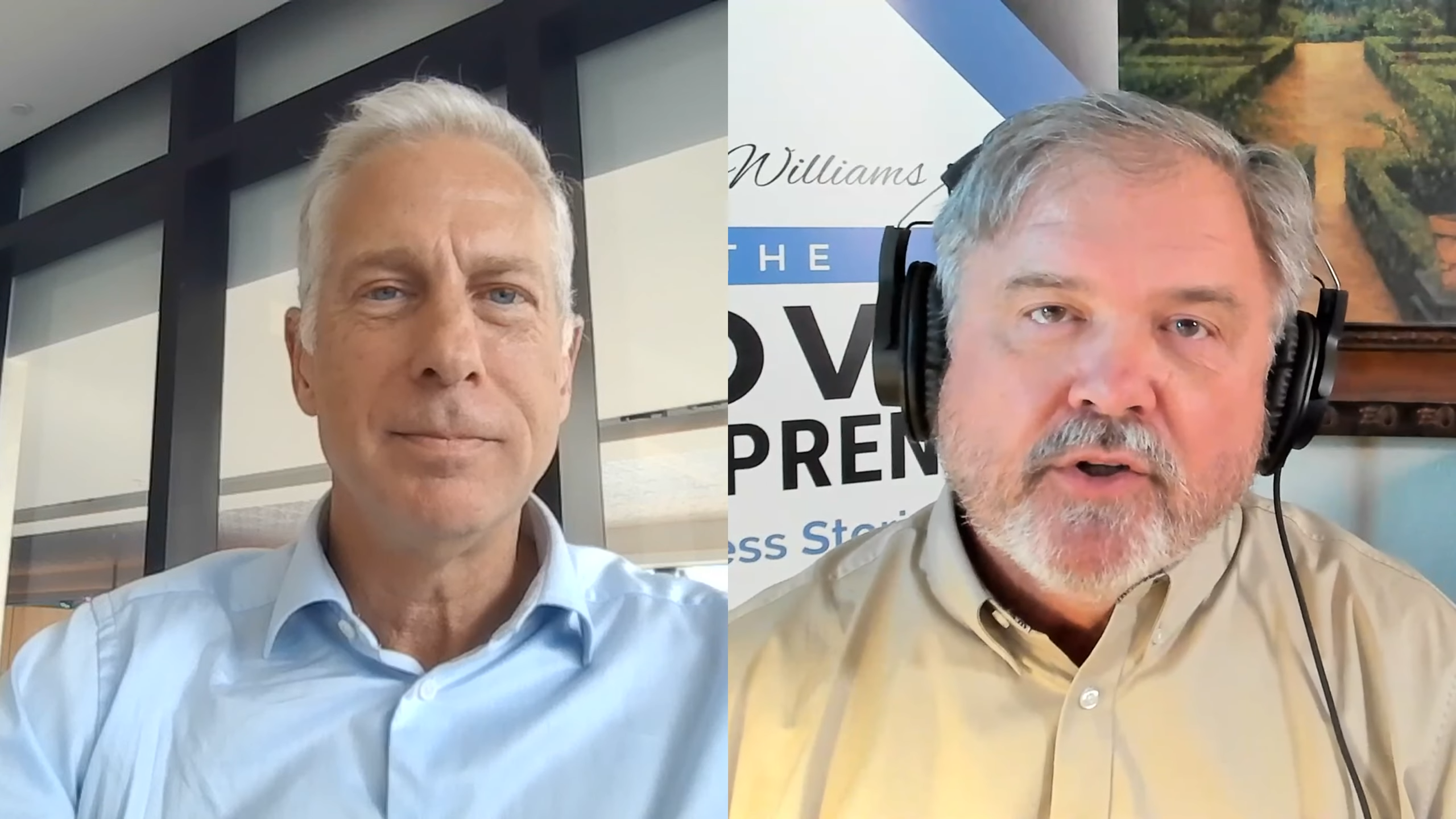
Hey, it’s Don Williams here with today’s episode of The Proven Entrepreneur Show. What a treat we have today. Very good friend of mine lives in Vermont, but he’s trespassing, I believe, in Florida today. And so we’re thrilled to have him. Kent, Greg Watt, please welcome to the show. Yeah, I’m thrilled to have you. I’ve been looking forward to this. We talked, I don’t know, maybe a couple months ago.
It’s great to be here, Don.
and this has been on the calendar, busy people, that’s a good thing. So start out and tell us a little bit about your current business, and I know you’re a serial entrepreneur, but tell us a little bit about stakeholder business, what you do, who you do it with, and why you do it.
Sure. So stakeholder business was something really a brainchild that three of us had, all of us independently, more than a decade ago, trying to really understand how to evolve capitalism here, not just in the US, but certainly abroad as well. And so using a stakeholder approach, a stakeholder-centric approach, and what that means is really about how do we engage with our stakeholders to solve for the real specific worthy challenge.
that might be for the environment, or it could certainly be with regard to community society. And so it’s companies, we certainly can identify with them. Most consumers, and most of them, we’re all consumers, we really do identify with those brands, whether it be Patagonia, or it might be on a commercial side like Interface Carpet. The list is certainly lengthy, they’re very purpose driven, and they use that purpose as their most strategic
you know, direction. It’s that North Star, it’s that moonshot. But they don’t just say it. Literally the entire company is aligned with that purpose and it becomes natural to the operating system of an organization. It’s not something that they necessarily even put that purpose out there. They certainly can publish purpose. But companies that do it really well, purpose begins to show up. And in the showing up, it’s a much more believable story.
“Purpose Share on Xthan putting it out there. I like to say, instead of dangling on the fishhook purpose, let’s make sure that the clients, let’s make sure that the public really do understand what the company is doing, why it’s doing it, from the standpoint of their experience, the stories that are being told.
I love that. And to me, it’s the difference between talking the talk and walking the walk. And when you live your purpose, instead of just recite it and put it on nice signage and on your website, your actions scream so much louder than your words ever could. And so, totally, totally love that. Okay, I’m going to take you all the way back a year or two.
a young Kent, so like five to eighteen, okay, in the household where you were raised, was there an entrepreneurial example? Was there an adult who was an entrepreneur and kind of led by example into entrepreneurship?
Absolutely. My dad was an entrepreneur, probably one of my most favorite times. And it’s really, really crystal clear and help inform and shape who I really feel I have become as I, in, even as I continue to grow. And I was the kid who every time being in Vermont where I was raised and every time there was a snow day, some excuse not to have school, it was presented to me. I would be like, Oh dad, I get to go to the office. And
It was really exciting. I had two older brothers, so it was a safe place to be. And he had quite an impressive business. It wasn’t just an office. He had warehouses and showroom and service and delivery people and large areas and territories. So a lot was happening. And you might say, I learned a lot about entrepreneurship through watching. Maybe one of the most unusual things, because I don’t normally see this. I’m not even sure I would do it as well as my dad. He actually.
pretty much gave me the keys to do whatever I wanted. That didn’t always mean I showed up as the best person either. Sometimes in the learning, you know, somebody’s older, you know, I’m young, I know this stuff, right? You know, and I could rub some of the employees the wrong way. But it certainly also helped me understand that wasn’t the best way to be, and I needed to develop myself in ways that were gonna come across as more caring and kind to really be that leader potentially one day.
Yeah, love that. And I think I certainly thought I was, I don’t know if I thought I was wise, but I certainly thought I was very, very smart when I was very, very young. And as I’ve aged, hopefully I’m gaining wisdom and I’ve pretty much figured out everybody else is smarter. And that’s a good way to be, to learn from other people. So love that you’re dad.
And when I first started the show 150 episodes ago, I thought, well, every proven entrepreneur will have a childhood example, but it’s about 50-50, you know? And so I think kind of like our, you know, sometimes we emulate our parents and sometimes we, you know, go the other direction, we go the opposite direction. And so I love that. So tell me about your first, and it may have been entrepreneurial, it may not have been a job.
Yeah.
one.
But tell me about the first time that you traded time, effort, brain power for commerce for dollars.
Yeah, actually I have kind of a series of them and I can be succinct. My grandfather was really an amazing woodworker in some really big ways. But one of the things that he would make her those wooden cutting boards, almost like those paddles and you put in like a steak knife. My dad’s business was a restaurant equipment and gourmet supplies, food service, et cetera. So grandpa liked making those. We call them paparies, French. And he also used to make these really small rocking chairs. So I would go door to door. I’d ask him and.
He’d give them to me, originally gave them to me at first. And then my father convinced me I needed to pay him something. And I’d go door to door, I took the cutting boards and I wrapped them in Saran wrap, put a card in them. I’m telling you those things I could literally sell today. Everybody wanted them, it was so easy. The rocking chair is the same thing. And I started doing that year after year. I think that I grew a little bit tired of it, however, and I got a little bold. An uncle that had retired, I wouldn’t call him a traditional entrepreneur.
was quite eccentric. My mom’s uncle, Bill, he had a cleaner and he had closed it down, he had made his money and I was very intrigued with this cleaner, picked it up, managed to have my parents help me get a license agreement in place where we pay actually a royalty for every jar that I sold. So I started a manufacturing company. It literally is a manufacturing process. This isn’t like you just kind of show up in your kitchen and do something. Actually I had to have.
a manufacturing process and machines and so on. So manufactured this cleaner called Velvet and probably one of the most memorable, well, two of them, stories about that. One, I used to go into Hill’s hardware store and there were local hardware stores in our community and I’d go in on Saturdays and I’d have like big chrome bumpers, I’d have jewelry, I’d have mirrors, I’d have Formica and I would demonstrate it and people would buy it.
You know, it was beautifully labeled. We were at the time, it was the first UPC code started coming out. So they had UPC codes I had to apply for. That was one really big memorable moment. So it taught me so much. Not only was I in this manufacturing and had to work with the graphic, you know, at that time it was known as an artist to develop the thing and, you know, the labels and et cetera. But the other piece that, you know, was really understanding how to put myself out there and how to sell.
And I think selling in a sense, not necessarily just in sales, but using the kinds of skills served me really well. The first client, however, that I had to approach was my dad’s commercial banker, Marcy Harden. She worked for Howard Bank. And my dad one day says, okay, we’re going to go see Marcy. I knew she was. I’m pretty young. I’m 14. I still knew she was. I was a little intimidated. We go into the bank and I had to carry in a case, which was 24 jars, jars where I think were like eight or 10 ounces.
And I had to carry in this case and I needed to convince her that she needed to buy a case, but on consignment. And so she did, that ended up opening other opportunities. And then I was in stores on consignment or outright sell. So it was a really great run for a number of years. I went away to school and instead of selling the company in a traditional way or continuing to operate it, it did cease to exist, but it existed pretty strong.
It pretty strong for about five years and what a great learning experience. My mom, a little bit of an entrepreneur as well. So that was really helpful, but she, you know, just had a great family support unit and others who would help me develop this product, put the labels on it, all the things that needed to be done as well as make this, as well as make this product, which, which multiple steps. Again, it wasn’t like making a cake. It was a little more involved.
Yeah. And I want to be sure that our audience doesn’t miss the fact that you were 14 years old. Okay. And running, I’m going to say a real business and, and I’m not knocking any businesses, but like this is a real business with, um, uh, real processes and real procedures. And I love the fact that at a very young age, your father was, um,
I love.
knew the value of, hey, you gotta be able to, whatever you do, you gotta be able to sell your product, service, or experience, or it doesn’t matter how good you deliver if nobody ever buys it. It’ll be the best kept secret in bankruptcy court because you won’t make it. And so I love that. Okay, so you went off to school. Did you go to school to study entrepreneurship or?
Yeah.
French cooking or what was your mindset like at the time?
Well, I like both those ideas a lot. That would have been fun. I actually was very intrigued with accounting, believe it or not. And I’m very, very grateful I went down that path. However, it does have a story. I originally entered college at the age of 15. I could not be a matriculated student, but it was part of actually allowing me to graduate from high school. I did a very nontraditional, wrote my own curriculum plan. And my parents used to have to help support me with the school system because I’m not that young.
Yeah.
Oh.
Homeschooling didn’t exist then. And so in that, Accounting 101 was my first class. Fortunately, I got a 4.0. I was very, very excited. It was a night class, three and a half hours long. Ooh, it was brutal, once a week. But I got through that and then I could, again, I wasn’t matriculated. They allowed me to take two classes. I graduated from Champlain with my associates in accounting. And then the professors are there, are saying you gotta go to.
Bentley University, Bentley College at the time, but Bentley University. So I went to Bentley University and continued with accounting. There was a year, so it was in my junior year last semester. We’re all signing up for classes for the next year. And somebody comes to the door and they’re like, is to say to the professor, I need to speak with Kent Gregoire. I literally felt like I was back in high school, like, Oh my God, what did I do? Because there are times I wasn’t perfect child, I will admit. And.
I come to find out I was literally one course away from a double major and I had no clue. All those electives I took were in marketing and sales like. So I double majored is what happened. I ended up having a very heavy course load my final year to make it happen because I was actually one class behind already due to transfer. And.
I, you know, the accounting has served me extraordinarily well as an entrepreneur. I’m definitely wired from a marketing and I would say maybe better from a sales perspective, but a broader base. And my experience is my interest. You know, we, I could talk all day about all the things I did at my dad’s company, but having him give me the keys to in essence do what I wanted. He had a brand new IBM computer. I was in there.
programming it, putting in inventory management systems, and all kinds of stuff. So, you know, a very unusual childhood. I would say I missed a lot of the traditional things that a while back I used to say, well, you know, really unfortunate I didn’t get into the sports scene, I didn’t do this. You know, my life has turned out.
Yeah. And, you know, we may be brothers from other mothers. I, my parents were strict, but very open about me exploring new things. And, and I never really felt like a kid. I always felt like a short adult. And, and so, you know, I think there’s some, maybe some commonality there. So, so other than.
Mm-hmm. Yeah.
The, and for the audience, man, cannot stress enough, you know, an accounting background or accounting classes. If you can’t understand the numbers, it’s really hard to drive a business. I mean, no matter how well you do everything else. So can’t recommend that enough. And one of my best friends is, he would say recovering CPA and recover.
attorney, which is pretty rare, but has served him exceptionally well in his business career to be well-schooled in both. So thinking back across your career, which is a year or two, I want you to search the memory banks for a hard lesson. So something that occurred or an event that happened that at the time…
Ouch, man, this hurts. Now maybe today with, in retrospect, it might be a very positive event, but at the time it was hard. Do you have a hard lesson you could share with us today?
Yeah, I have one that really is something that, it was a very pivotal moment in my life. I was in my early, I guess, getting close to mid twenties. My first larger company, it was lots of employees, lots of things happening in a very short period of time, making really, really good money. Extraordinary money, to be frank. And my dad wasn’t involved in the company, which looking back on it was really a bad
but would have been great to ask dad to help mentor me, but somehow I needed to go prove myself I could do it, right? But he came up from Naples, Florida, and it wasn’t just to see me. And he said, let’s go for lunch. And I’m in the, literally on the shores of Lake Champlain where my offices were looking out at the lake. It’s beautiful. We first start walking outdoors in a park area and he literally like pivots. He just looks at me and he says,
Sure.
business and your personal priorities in order. And he was more, said more about that, but he’s really, really direct about it. He said, you know, you’re raised to be caring and kind and it’s not showing up anymore. And I’m really disappointed. And the third thing he had to say is if my heart wasn’t already down to my feet and my chest was pounding really hard, is he said, you know, you spend money and there’s just no purpose behind it all.
And I was, and I was spending big dollars, like significant dollars. And there was no purpose behind it all. I think what today, what is so extraordinary about this here is certainly coming from my father was really hard. It was a really good, not just a reminder and put me back on course, but being that today, I’m a conscious capitalist, very centric and stakeholder model.
is my dad and there’s other great stories I could share about how he actually ran his company this way. You know, it wasn’t that unusual like 50 years ago, you know, that was certainly some of that time was less than that, much less. But it wasn’t that untypical that people operated more like a stakeholder model. It was about 50 years ago when business began to change and we started looking at there was only one stakeholder that.
and that was simply the shareholders, the investor, and we had to make as much money as we could for them, even at the expense of others, the planet, society, and etc. So in that, it had a really big impression, caused me to dig back in, and go on a lifelong journey of entrepreneurship, and oftentimes I would look at various companies as like, you know, a test case.
because I love starting companies, getting them going. I get bored, but I want these test cases. So I could literally take and use them to help me develop skills, help me develop methodologies, to help me carry this forward and continue. Something I’ve done for now over 35 years is work with other CEOs directly with the CEO. Not really as a coach in a very unique situation. And I could be with these CEOs for a decade or more.
I mean, they didn’t like every single month or two or 10 times a month, whatever was required. And my father’s words set me on a path that was very significant. There was another event later on which brought it together, not a bad situation, but a good situation caused me to dig in even deeper with regard to the stakeholder model. But that’s a little bit of a history of that one thing that it definitely was difficult to hear. It was a really good learning lesson.
It caused me to readdress my priorities, make sure that my values were really strong, and to make sure that if I’m going to operate a business, I need to be solving a worthy problem. And money is, you know, you can have money, but it’s not going to buy happiness. So I better get that figured out.
Yeah, it’s not. You do get to go nicer places and do some more fun things, but it doesn’t work at the happiness counter for sure. And so, appreciate you sharing that. What about a warp speed moment? So sometime in your career, things are going pretty good, but all of a sudden, one or two or maybe three things fall into place and it just goes like crazy.
Yeah.
No, he doesn’t.
Do you have a moment like that you can share?
Yeah. I have several of them, but I’m really almost more compelled to talk about something that’s recently happening. I’m not going to go into like the details of what it is. Um, although there’s no reason I couldn’t, I want to really stick to the fact that, um, it now goes back four weeks ago. There’s a product that I had, um, that I decided to shelf and there were a lot of reasons why it was during the pandemic and thought that this program just needed to be shelved.
I never expected to dust it off again. And in very unusual ways, I scheduled some meetings with some folks in Atlanta, Boston, and in person, as well as here at Nerve running into a really dear friend. I started just getting to know these people better, reconnecting with them. And my objective wasn’t actually to talk about the program, because I had shelved it. And I still didn’t really talk about the program, but I talked about something that was so important to me.
My purpose being to really create a world, to build a world that works for everyone, and in particular to unleash the entrepreneurial spirit for good. I became more concerned that mental health is really creeping in not only to the workplace, but to more and more entrepreneurs, and there’s evidence of that, right? And I wanted to be able to do something about it, and I had an aha moment that this product was out there, but during these conversations that I was having,
In just split seconds, I’d say, yeah, you know, I’ve really been thinking about this. And people would be like, oh my God, really? We need to partner on this. We need to collaborate. I have an entire client base around the country that needs this product, even to the sense that they want to pay 50% of the fee to their clients, you know, for their clients fee to me, um, into the work that this could actually present. And this opened up. It became like serendipitously. It’s like daily things are literally coming to me.
I can say that what this is, is so in alignment with my higher purpose. It’s so in alignment with what I would call that mission, unleash the entrepreneurial spirit for good, that it’s really extraordinary. And so, and it’s, it’s something that not only impacts in a very positive way, the entrepreneur and something they want. It hasn’t gone away. I know they still want what we had, but now taking a look at it and bringing in this real sense of this deep purpose.
higher purpose and helping companies rethink their vision, their talent and their performance is really at the intersection of how to help entrepreneurs to have the freedom to grow and to give their second in command and others in their organization, but specifically the second command, the ability, the autonomy to give them the autonomy to lead. And so it’s
Pretty interesting how it’s coming around full circle. But let’s put it that way.
I love that. And I’m a big believer in what I would call parking lot market research, just talking with people. And you’ll be surprised if you’re onto something that’s pretty hot, people will gather towards it and it will get momentum. And also a big believer in selling people what they wanna buy, not what you want to sell. And many times those are two different things.
And I know in my own journey that being aligned with my mission is where all the magic happened. And things were pretty good before that, but the magic really happens when you’re on your personal mission. So, okay, now I’m looking for a nugget, a piece of Kent wisdom that if we knew everything you knew…
We’d be like, can’t this is the one thing we want to know the most?
Yeah. Recently, I was really gone asked that question by some folks that we know. I enjoy having mentors as well. I find it very powerful. So not only to be a mentee is a very powerful place. And so going through and kind of exploring this, and I’m very fortunate this mentor happens to be a branding expert as well, and interviewing clients and past clients. And as it turns out, there are lots of things I discovered.
Why don’t I just write books on all of this stuff? I consider that a lot of what I actually contribute also isn’t just the knowledge that I had through all these clients and working in different industries and being a serial entrepreneur, but I do feel that it is this connection. People can call it whatever they want. Source, I don’t care where it is, but there’s this higher level of wisdom. One of the things that comes to mind right now, which I think is really important to the times in which we’re in,
And we hear these words, but trust is just not replaceable. And I think it’s become very misunderstood in organizations. And as capitalism has continued to perpetuate in a very, what I would call a shareholder model, it’s easy to make trade-offs. And trade-offs also deteriorate companies over time. It takes the foundation out. In that notion, one of the things that I started looking at very, very closely,
is even in myself and in I noticed that a past behavior, I’m not doing it knowingly today, but a past behavior would be if I want this result, especially if it comes to people of any nature, supplier, other talent, employees, is if I’m looking for something to happen, it was easier to almost make this trade off, which can also look like a form of manipulation and to really reconcile.
Hmm.
this notion of ethics and morality as it’s essential to business and it’s become more essential than ever. So employees can very quickly tell what’s going on. We think they can as leaders and we think we’re just so bright we figured it out. The truth be known, a lot of the things that corporate America is doing today are rather manipulated to try to create engagement as an example.
And it just doesn’t need to be that way. In fact, you don’t really need initiatives around engagement because if you’re actually doing all of the other right things, engagement ensues just like profits. I think we talked about that once before, Don. I’m very, very clear about that. And I’ll admit, at one time, in one of the companies that I still have today, we used to focus on engagement. And I figured out that wasn’t the right thing. And we, within three years,
like so.
realize that well, engagement is something that we want to happen within organizations. We want this high level of engagement. We need to get back to treating people as humans. And when we treat people as humans and we care about people, regardless of how they’re performing, their people are humans. You know, a great lesson that I learned from a gentleman by the name of Will, many years ago, I was in my 20s in a restaurant.
And there were four of us and the waitress there wasn’t that great. She was frankly a Middlebury College student, probably trying to make her way through Middlebury and obviously very bright. She just wasn’t the best waitress. And Will said, remember Ken, she’s somebody’s daughter. Do you know that had amazing impression on me? And I know you and many listeners have heard this, but that story came to me at a time that was so, so important. And it came to me shortly after the conversation that my dad.
So I think this notion of when we look at this trust that’s needed between not only our employees, but our customers and everyone, we need to be really thinking about our ethics. No ethics is somewhat of a governance, so then I think of morality. We need to think about how to treat people as humans. And we need to understand anything that we’re doing to try to think we’re going to get a result that could look like manipulation or heading down the wrong path.
I love that. And so, you know, my thoughts on trust are, trust is a bridge built very gradually and destroyed in an instant and irreparable once destroyed. And so, you know, most of my clientele were focused on the sales side. And this is from the sales Bible of dawn. No trust.
“Trust Share on XNo sales. K-N-O-W trust, K-N-O-W sales. I, it just goes hand in hand. You can’t, if you don’t have it, you’re in trouble. And if you do have it, you know, you’ll enjoy the fruits of your labor.
Right. Yeah.
I think one of the things that reminds me of Dawn is like especially and I think this is true in all sales You know certainly the trust factor is But if we think about selling into more complex sale environment selling to senior level executives a C suite Etc and we think going back to like, you know, Fred Reichhold and the loyalty theory the royal the loyalty effect Is you know the consistent delivery of credibility and capability?
If you only deliver one or the other, there is no way to really get to that trust quote. It’s very important. It’s a delicate balance. If we’re seen as delivering a lot of capabilities, we’re seen as an extra pair of hands. If we’re delivering only credibility, then they kind of wonder what we can do. But when we can actually do both, we actually bring this value to them. We keep the promises that we make. We look for opportunities to create more value aligned with their purpose. Trust levels go up.
I remember very specifically, and I’ve done a fair amount of selling at the C-suite. So I’m coming from a very place of significance. In some of the clients that I had, whether I was in selling or not, just certainly it could be a CEO client, but this one client, I remember, and it was the first light bulb that went off, and I saw a pattern afterwards. I do nothing. I know nothing about roofs on commercial buildings.
But it was literally asked, who should I call? And I thought it was the most bizarre question. I was still relatively young, I’m going to say about 35 years old. And I’m like, why are they asking me? And of course, what I immediately do, I went out and I did the research, and I found out everything worked. And what I discovered, like you know very, very well, when we do this, we really understand, we truly hear what it is the client, not just that they need to feel understood. That’s when it’s really known.
and we bring this level of value, they begin to see us as that trusted advisor. And then when they see us as a trusted advisor, we now become like they don’t work indispensable, in essence, because there’s so much more we can do. If we take that now, when we take it into the context of what I’m doing more specifically today, that’s in essence when we work with a supplier, we understand their purpose. Our mission is actually to try to help them with their purpose. The more their purpose is fulfilled.
the more the purpose of our company is going to be fulfilled. It becomes a symbiotic relationship, not a quid quo pro, but how do we literally help elevate each other? And in that, we see more innovation, we see better products that help solve real challenges that are going on, not just business challenges.
Yeah, I love that. I think, and we’re both members of entrepreneurs organization, and I think most of the people who joined entrepreneurs organization joined out of a motive to build or improve their business. And what most entrepreneurs find is that the number one way to improve your business is to improve yourself. And that is a tide that lifts all boats.
across your business. It is that symbiotic relationship that as you grow, as you improve, so does everything, not just in your business, but in your life. That’s pretty cool. Okay. Here’s the tough question. I’m going to put you in a time machine. I’m going to send you all the way back to 20-year-old Kent.
you get about 60 or 90 seconds to share a couple of thoughts, things you know now, you’d like your 20 year old self to know if you had that opportunity. So in you go, what do you say?
Yeah. Well, I’d say the first thing, you know, kind of the no, just really, I felt like a little bit of the no at all. You know, I had done a lot of things early on, which meant that my listening wasn’t as good. And it became really, really apparent and, frankly, created friction between me and my father, which is very, very unfortunate because that’s not the way I am today. And I haven’t been that way for a long time. It did take me a while to improve it. I will say that.
And so, you know, that’s kind of one thing. I was still really to some extent looking at this aspect of goals, which leads me to a lot of really what it is that I’m most charged up about today. But, you know, kind of this, you know, I get this goal and I get this goal and it’s always like, you know, I’m on this machine and every time you hit a goal, you’re just no happier. You know, all you’ve done is, you know, buy a yacht or buy a home or you’ve done whatever, right? It’s just ongoing and ongoing and there’s no fulfillment in it.
and those would be keeping to the timeframe. If I had understood that earlier, I think that I would have created much more, I’ve had great impact, but I would have been much more impact towards solving worthy problems that helps elevate humanity much, much faster.
I love that. Thank you for sharing. So how can we support UCant today?
Um, well, it’s supporting today is kind of almost like what I like to, you know, it’s almost like the reverse. I, you know, my, my whole, my whole world is about supporting others. We have stakeholder business and stakeholder business is really there to help support entrepreneurs through media, through the films that we produce. We have an award winning film that was at the Cannes Film Festival Beyond Zero.
Chronicles, a company over 30 years interface out of which is a carbon manufacturing company. One of the best examples in the world of the most sustainable businesses, frankly, but not just sustainable, a great place to work, etc. So we’re looking to continue to support organizations that are called to solve worthy challenges through their business. And the more that we’re connected, you know, I can speak to myself personally.
the more I became connected and truly understood this purpose and even able to understand how to measure it and what the theory of change is. And as we begin to accomplish what this is happening along the way, knowing that this has real impact, not just for today, but for so many generations, that it can literally also begin help solving some of the problems. I don’t think anybody would disagree that we have climate change problems. Maybe the question is why it’s happened.
or the urgency around it. I’m not an extremist FYI. I do think there’s urgency. And you know, I think the other thing is, is organizations are starting to pay more attention. And you know, certainly from a stakeholder business, a stakeholder centric model, I think we see environment, climate change as being maybe one of the biggest challenges we’re dealing with as a society. And number two, I believe we’re going to see bigger and bigger mental health issues than we’re already seeing.
And certainly, I’ve been talking with experts about that because it pulls back into my purpose and passion. And so it’s really trying to find those organizations that want to solve those kinds of issues. Doesn’t have to be those specific issues.
I love that. And so, previous guest, Dr. Mark Gould, who is a psychologist at UCLA, he wrote a book, New York Times bestseller book, Just Listen, and deals specifically with listening. But his practice for 30 or 40 years has centered around entrepreneurs who sometimes have a challenge listening to others. It kind of goes with the territory.
And one thought he shared on the mental health side is that entrepreneurs, many times as children were unknowingly depressed because they just didn’t feel like they fit in, and so they went out and launched something they could fit in, which was their own business. And, you know, I felt a little, I felt a little.
Yep.
you know, twinge when he said that. I was like, yeah, okay, I might recognize some of that. I don’t know. Not admitting anything, doc. But there you go. Kent, it has been my distinct pleasure to have you on the show today. How would we reach out to you? Would we go to your website and please give us that address?
Yeah, it’s a stakeholderbusiness.com and I’m also on LinkedIn and pretty active in posting content. So it’s Kent Gregoire. You should find me out there on LinkedIn. Pretty easy to discover. And those would be the two primary ways. And I look forward to people connecting. And we really do the work of helping to support people in the journey that they’re on.
That’s our utmost interest. It’s not necessarily about engagement for fee. That happens when the right time comes. But we’re an incredible place of resource to help people, whether they’re B Corps or they’re following conscious capitalism, they want to do a stakeholder-centric model. We’re very agnostic to all of it.
We just want to see a tipping point. We want to see a certain number of companies in North America and Mexico particularly, which is 16% is what we’re estimating with some experts, get to the point in which they are following a stakeholder-centric model. And to be clear, we’re measuring that on companies at a billion or more as a basis, but that means we also want all the small companies and we’re engaged with small as well as multi-billion dollar companies.
Love that. I cannot recommend or endorse Kent and stakeholder business enough. Please reach out. That’s today’s episode of The Proven Entrepreneur Show. We’ll see you next time.