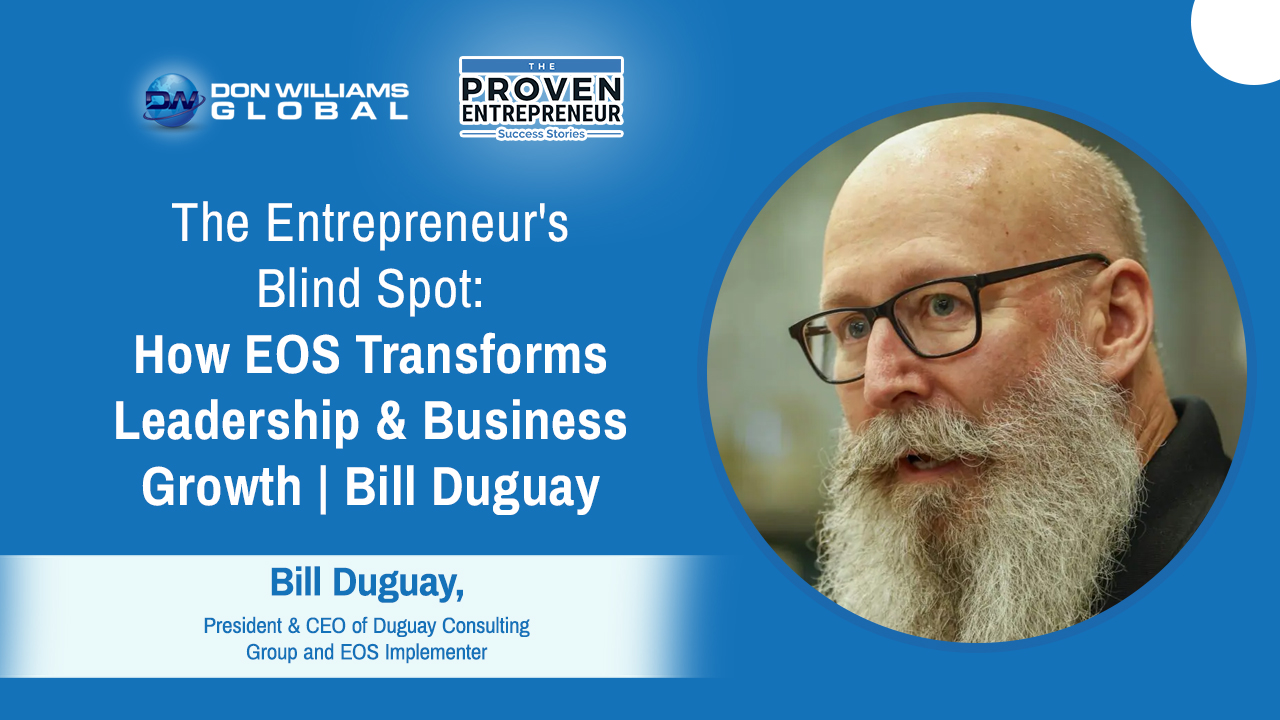
Most leaders don’t lose momentum because their strategy is wrong. They lose it because the business grows faster than their ability to adapt. When the pressure builds, everything from leadership development to organizational leadership gets tested, and the cracks reveal themselves in the places no one expects. That is where real entrepreneurship begins. In moments when the noise is louder than the vision, leaders must step back and rethink how they operate, communicate, and guide their teams.
Many founders eventually reach a point where business growth requires more than effort. It requires structure. It requires honest conversations. It requires systems that free the leader instead of trapping them. This is where EOS implementation becomes more than a framework. It becomes a lifeline for building leadership team alignment, shaping leadership communication, and creating a culture of accountability that supports sustainable progress. For leaders facing leadership blind spots or wondering how to keep their teams focused without being everywhere at once, the shift starts with admitting what cannot be carried alone.
Implementing EOS for business growth is not only about tools. It is about building high performing leadership teams, overcoming founder blind spots, improving effective communication in leadership teams, and learning to let go as a founder. When leaders stop relying on instinct alone and start relying on clarity, processes, and shared responsibility, everything changes. People show up differently. Teams communicate differently. The business finally moves in one direction instead of several scattered ones. The work becomes lighter, and the results become stronger.
For information on how to work with Don visit us at https://donwilliamsglobal.com
You can also reach out to Don Williams at https://provenentrepreneurshow.com
Watch the episode here
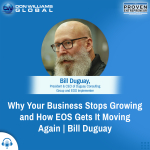
Why Your Business Stops Growing and How EOS Gets It Moving Again
Hey, it’s Don Williams today with one of my good friends, even though I cannot approve of his attire today. He’s wearing his Longhorn shirt. I’m wearing my Sooner shirt and I’m properly humbled after the game this year where we should have won, but we did nothing right, but get off the bus.
and get back on the bus. don’t think anybody got, was injured entering or exiting the bus. Bill Duguay, welcome to the show.
Don, thanks for having me. I’m excited to be here. know, the rivalry, the Red River rivalry, it’s always a ton of fun. And you know, it’s been years since I’ve been to Dallas and go up to the state fair and actually see the game. And the times I’ve been there is just a phenomenal experience. It truly is entertainment at the highest level.
It’s, it’s unbelievable. I mean, the elect, you can feel the electricity for a mile around the fairgrounds. It’s, it’s pretty crazy. And that game, it doesn’t really make any difference. Who’s favored what the national rankings are, what the records are. It’s a showdown and anybody can beat anybody on any given day. And, one of the truly great rivalries in not just college sports, but just sports. mean, it’s unbelievable. Okay.
Mm-hmm. Mm-hmm.
Mm hmm. Yeah, it’s just
a wonderful event.
Yep. Let’s hop into it. So Bill, tell us what you do and who you do it with and why you do it.
So what do I do? You know, I joke that I do as little as possible and get away with. But what I really do is I work with leadership teams to help them have the conversations that all leadership teams need to have and many avoid. And I do that by helping them understand and implement the EOS system, the Entrepreneurial Operating System, which is just a simple set of tools and proven processes to help them
get absolutely clear with the vision of the organization, a clear and compelling vision. And I work with lot of ESOPs and large construction and manufacturing companies who struggle to get aligned all the way to the front line where it truly matters. And help them build focus, discipline, accountability in a healthy way because sometimes those feel like weaponized words instead of empowering words so that they quit chasing Chinese stuff and set goals in a line.
their efforts, their decisions, their resources around achieving them and building a healthy, functional, cohesive leadership team because, and I’m sure you see this, many times they’re not. And as goes the leadership team, so goes the rest of the organization. And I got into it because I was faced with making a transition from being in the field
many many times.
sweeping floors for my dad at a young age when we did home remodels in a winter time and garage conversions and basement conversions and that kind of stuff in the winter, sweeping floors, picking up nails, that kind of stuff. And worked my way through college, my PE license and continued to climb all the way up till I was president and CEO. at that level, you need a different set of skills and abilities and…
Just being able to put work in place, even big complicated work, isn’t really the only skill set you need, it’s a different skill set. And I heard about EOS in a peer group that I was in. At the same time, I was taking classes, was living in office and like you’re talking about, and I was taking classes up at UT, at the McComb School in their executive ed program, know, just soaking in as much as I could about business and leadership and those types of things. And heard about…
EOS and a peer group that I was in, and it just resonated. As an engineer, as a road hand, it was stuff I could actually start doing on Monday. I love the theory of the collegiate learning, the mental exercise, but I struggled to turn it into, well, how do I go do that on Monday?
And EOS really was simple stuff, just go do it. And it just had a tremendous impact on my outlook on how to truly be a better leader and manager. And at the start of COVID, needed to come back to New England with my wife and I, both grew up in New England, we’ve been on the road for a long, long time. And just decided to lean in full time with EOS. As much as I love construction and how good it treated my family and I,
and experiences in the people, being able to work with leadership teams and empower them to have conversations, to work through that discomfort and truly get aligned is so rewarding. It’s where the passion, that sense of urgency is. And I just, when I see that light bulb moment with my teams where they break through or they’re feel…
better about having sticky conversations and they start doing them themselves, it’s a real rewarding feeling.
Yeah, I love that. Took me a long time to gain enough clarity to determine my personal mission, but my mission is to help others help others. And when I see the people that I’m helping, helping other people, the reward to that is unbelievable. And so you really got to EOS because you had a need in your own life, in your own company, in your own experience.
Mm-hmm.
Mm-hmm.
added EOS as an operating system in your business and then came over to the light, love that company. And now you’re helping other people do that. So love that. Let me ask you this, Bill, in your experience, what’s the single biggest blind spot? And I know that entrepreneurs have many blind spots, but what’s the single biggest blind spot?
most founders have before they implement the EOS and how does fixing that change their life in and out of work?
Yeah, this is a pivotal question that you ask here. Many of the entrepreneurs, whether they’re smaller startups, which I have several of, to large multi-state operations, leadership teams, and the founder, the director, whatever it is, many times they feel it’ll go away by itself. Or if I work harder, put more people on it, work more hours, we’ll get through it. They just…
Many founders believe problems will go away by themselves if they work harder or add more people. They won’t. Share on XListen.
We as humans are hardwired to just work harder, brush it off, pick ourselves up. throw around words like grit and resilience and all these other things. And I love that. Those are resources, not necessarily the solution. And by creating an environment, and I tell all my prospects and I tell all my clients again and again, that to the extent we can be open and honest and open from the standpoint of
putting aside our own needs for a moment to truly listen and be present for others to share. And to be clear, candid, and honest, I’m a huge fan of Kim Scott and radical candor, we just got to be able to say the hard truth in a kind way and empower others around us to actually excel and thrive in their role. There’s a great book,
book by Ken Blanchard, the one minute manager meets the monkey and this theory of managers of all size companies who want to be a resource, embrace open door policies. Hey, let me help you with that. The human desire to be a resource and help wind up boxing themselves in feeding a whole bunch of monkeys and not truly empowering those around them to own their outcomes and be accountable for them.
create systems and processes for accountability and for them to understand the joys and sometimes the heartache of true leadership and growing a business, growing themselves personally, growing as a team and not shouldering that themselves and feeding a whole bunch of monkeys. So the other part of your question, what was the end result? I think of it kind of in an EOS as a method, a system.
tools process. So why you’re back to Simon Sinek, why do this? And I think of it as in global terms like empower yourself to do what you truly love to do and create teams around you that can do the same and focus what you’re doing to those things you truly love. Make sure you’re in everybody around you is compensated appropriately that, you if you’re taking a risk and
Mm.
When we think about compensated appropriately, I ask my teams, well, how do you spend your day? And they come back, well, I manage email accounts, I book my hotels, and book in fights. And I’m like, is that how you create value for the organization? And when I ask like that, they’re like, no, but I just like control my email or my calendar or my booking, because I only want to stay in a great hotel when I go to Austin. That’s not what you’re here to do.
Leaders, founders, leadership teams also want to, at some point, start thinking about legacy, empowering others. And at some point, hopefully earlier in all of our careers, to be thinking about how do we have time for other passions?
And it’s empowering through EOS when it really starts to click. And it’s different for everybody. Some get it right away, some two years, some never.
When they embrace the tools, the freedom it truly gives them to live life fully, however they define it.
I love that. It kind of takes me to my next question. I know in EOS, you talk about letting go of the vine. And so what’s the hardest part for an entrepreneur about truly letting go?
Mmm.
Yeah, this is a deep question, Don. And I think of it in a couple different buckets. think part one bucket is the mechanics of it. Have I truly developed systems and processes and empowered others to do this? Got it out of my head that I’ll tell you, tell anybody if a process lives in your head, it’s not a process. You got to get it out of your head, document it, simplify it so that it can be done again and again.
Don’t let that stuff fall right around in somebody’s brain that walks out of the door every day. So the mechanics of have I truly trained, developed, enabled others to do whatever it is I’m doing? And understand that back to how do you create value, not to minimize it, but some of that stuff is like booking your own flights and you shouldn’t be doing it anymore if you’re going to truly grow the business.
Mm-hmm.
The other bucket, and many times this is even the tougher one for us as humans and hard-driving humans, founders, creatives that want to keep their finger in the mix, is the ego, the emotions, how do they resonate themselves and identify. And to help them address that part sometimes takes a softer touch.
Sometimes it’s a more direct touch. And understanding that if it’s truly them and their ego, their sense of ID, their sense of purpose, we’re going to tackle that because in the end it’s holding there to bottleneck of growth, of empowering others to have the same joy that they’ve had solving these issues or the same sense of urgency or the same sense of pain from failure when it just didn’t work out.
If you're doing tasks that don’t create value for the organization, you're holding back the growth you're asking for Share on Xyou
and you’re not allowing the team that you’ve built that you probably love, many of whom you have long relationships with, you might have handpicked them, are you truly being the leader that they deserve if you’re still down in the weeds, mucking around? It’s very hard for many founders, leaders who started the business, they were the chief idea generator or the chief doer to start to…
empower others to do that. You know, to coach and mentor them, walk with them, prop them up, pick them up, dust them off, whatever it is.
so that they can live their best life and truly move the business forward. So, I think of it as two different things that have to be worked through to truly make it happen and empower the leader founder to focus on really the handful of things they really should be focusing on and building a team that can thrive and do all the other stuff.
Love that.
Love that. OK, so I know EOS emphasizes measurable results. There’s a scorecard. We’re counting things. OK, counting things is good. Is there a success metric you’ve seen that can’t be captured on the scorecard that’s hard to quantify?
Mm-hmm.
Yeah, absolutely. You know, we measure a lot of stuff and I’m a big fan of that. We’re joking about football and you football be fun. But it’s a game when you have it up on the scoreboard and you’re keeping track of everything. How many downs? How many yards? How many points by quarter by minute? And in the background we’re running all this PFF stuff for everybody that’s kind of mind boggling. I’m a fan. You gotta measure what gets measured gets focused on.
and gets improved. And it’s just as old as time itself that that has been true. The other part is freedom, you know, back to are we truly on the same page? Scorecards are online. It’s an alignment tool. We think of them first as a measurement tool, yes. But if we go a little bit deeper, they’re an alignment tool that we as a leadership team or we as a department
or a frontline team agreed, these are the things that matter for us to stay focused. They’re the levers we’re pulling week in, week out that get us closer to our long-term goals. So yeah, they’re a measurement tool, but it’s so much deeper than that. Oftentimes, if scorecards aren’t working and we start to dig in and understand why aren’t they working, many times it comes back where we truly align.
did we have resources and capabilities and training aligned to deliver those? And we figure out that, well, was it the right metric or were we truly still had something gummed up in the background that we weren’t aligned or didn’t have the resources or decisions or whatever it is to truly get that done? So there are a whole lot more than just did you do it or didn’t you do it. There’s multiple nuances here that truly is
I feel the power of scorecarding to show alignment, to show we are committed towards empowering people to perform. Like, pick your football team. If they didn’t have a football, the quarterback would stand there all day. Like, what are you going to do? You know, they got to have the tools to go perform, and that’s a leadership responsibility.
Love that. You’ve seen hundreds of entrepreneurs evolve, grow, improve through EOS. For the next generation of visionaries and integrators, what do you think will be a new addition to the playbook to take them into the future?
Mm-hmm.
It’s simple and probably the hardest thing at the same time. And here’s why I say that. We, I don’t care what business you’re in, you’re in the people business. And in the people business, I don’t care if you’re making widgets, flying airplanes, doesn’t matter to me, our ability to communicate is what creates culture, environment, and alignment.
Our ability to communicate is what creates culture, environment, and alignment. Share on XHmm.
And this is an old old quote, the biggest fallacy about communication is the illusion that it actually happened. And this is true today, that we have an illusion that communication happened. And I hear all this stuff, Gen Z, Gen X, Gen whatever, they don’t wanna work, they don’t wanna do this. And that’s just BS, I’ll call that out every day. It’s not true because I see people.
all ages and demographics fully engaged when a couple things are true. They understand how what they’re doing fits into the bigger picture. They have a boss or leader who truly has her back, who is engaged with them and their success and is coaching them, helping them, guiding them, and they’re getting positive and delta feedback to stay
focused on what truly matters here. And when we do those simple things, they’re simple. I didn’t say they were easy.
We can do remarkable things regardless of our age or demographics or primary language, which many of my businesses have multiple languages are spoken in them, multiple demographics, multiple all kinds of stuff.
When we think about the question you asked, the newer generations coming into leadership positions, and you and I probably face this as well, and maybe didn’t realize that at some point you’re gonna be managing folks that are older than you. Like, might be your parents’ age, might be older than your parents. And so the next generations coming in are gonna face a broader range of ages in the workplace than we’ve ever had before.
people are staying working at your 70s, which 10 years ago didn’t happen. People are entering at 22 when they get out of college, maybe when they’re 18 and skipping college. And so we have this real broad range and the folks coming in with wannabe leaders and managers are gonna face this dilemma. And it might at first appear like a dilemma.
but they’re simple tools to make sure we’re engaging and communicating properly as humans. And the other part of it is if you think you did enough, Don, you know this, you’re in the communication business. You haven’t even scratched the surface. You’ve got to drive yourself crazy with communicating to even have started.
Yeah, what I always share with my clients is this, it’s not good enough to be sure they understand. You have to communicate to where it’s impossible that they cannot misunderstand. And so you have to see it from the other person’s point of view and communicate it in a way that they can hear it, that they can receive it, that they can own it.
There you go, love that.
And sometimes that means you’re the same things, different ways over and over and over, but that’s the job. Bill, think you’re the perfect combination of head and heart, intellect and caring to help entrepreneurs. And so if somebody wanted to reach out to you, what’s the easiest way to get in touch with you for you to help them professionally?
It is the job.
You know, send me an email, connect on LinkedIn. You know, I love connecting with on LinkedIn, different folks of all walks of life and steps in different careers and types of businesses. It’s just rewarding for me that, you know, I don’t want to have these binoculars on only want to talk to this segment of industry. Yeah, I tend to have more clients in one vertical, but what keeps me fresh and energizes having all kinds of stuff.
from startup energy to, you know, worried about making payroll next week to should I go buy somebody and add three more states to our portfolio.
Love that. So what’s that email address?
It’s bill.duguaY at eosworldwide.com.
Okay, so you can reach out to Bill directly and I know he’ll reply. And then I know that you’re based in Maine, but somebody who wanted to work with you, they don’t have to be in New England. They can be where?
They can be anywhere in the domestic US. So right now I’m working in seven states. I love that. I also have virtual clients and I have clients here close to home. You know, I think of it this way, Don, there’s lots of folks do what I do and they’re very talented and skilled people in the US community. It’s finding the person that resonates with you, that you truly think that you and your leadership team will feel heard, will…
Okay.
be challenged, will be supported, and you’ll accelerate your journey, however you define it, find that person. And if that client is in California, I’m getting on a plane tomorrow to go to California. Because it’s exciting to me to be part of that energy. And the other part, Don, is you understand this in your business.
It’s a respect thing. If they respect me enough to say, Bill, can you come to California and work with my team? Like, I got to show up ready to go, because they’re investing in me and taking a risk on me. So I got to come ready to deliver value, even if it’s down the street. But it’s a big deal.
Love that.
Yeah. So, okay. So you have Bill’s email address. You know that he works with people everywhere in the U S domestic U S and I got to ask even, even Sooners.
Yeah, I don’t have one yet, but I’m looking forward to it.
There you go. Bill, thank you so much. It’s been a pleasure having you on the show today.
Thank you for inviting me. You’re doing great work, Don. Thanks for spreading the word.
You bet.
you. That’s today’s episode of the Proven Entrepreneur Show. We’ll see you next time. Bye now.