What does it take to build a thriving healthcare data analytics company from scratch—without investors, without a team, and without a fancy office?
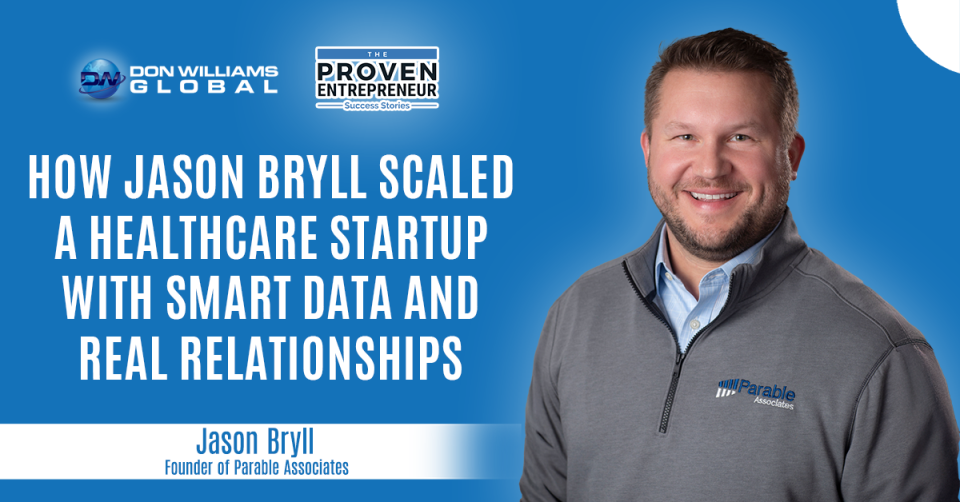
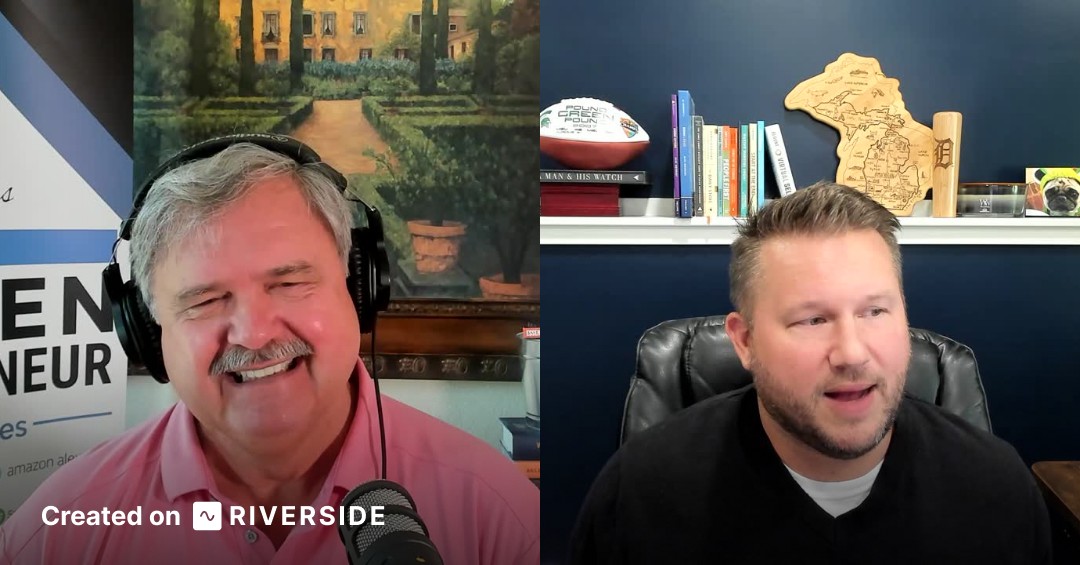
In this powerful episode of The Proven Entrepreneur Show, host Don Williams sits down with Jason Bryll, founder and CEO of Parable Associates, to unpack the real story behind scaling a healthcare startup that’s now helping hundreds of providers streamline operations, improve cash flow, and expand access to care.
Jason’s journey didn’t begin with a business plan or a boardroom. It started in a closet-sized home office, armed with nothing but a laptop, a vision, and a deep empathy for the healthcare industry—an empathy rooted in his own experiences as a patient. From battling severe acne in childhood to undergoing LASIK surgery, Jason’s personal health challenges shaped his mission: to empower providers with better data so they can deliver better care.
But this episode isn’t just about data. It’s about resilience, relationships, and the real cost of growth.
Key Highlights in this Episode:
- How Jason turned personal health struggles into a mission-driven business
- The real reason data analytics is revolutionizing healthcare operations
- Why scaling too fast can be more dangerous than not growing at all
- The painful lesson of selling services at a loss—and how he fixed it
- How relationships, not cold emails, drive long-term business success
- Insights from industry legends like Herb Kelleher of Southwest Airlines
- The golden nugget every entrepreneur needs: execute better, not louder
This isn’t just another startup story. It’s a masterclass in entrepreneurial resilience, strategic growth, and human-centered leadership. Whether you’re a founder, healthcare professional, or someone chasing your first big idea, this episode will leave you inspired and equipped.
Watch the episode here
Don Williams here with today’s episode of The Proven Entrepreneur Show. My guest is sitting in Southwest Michigan. I’m sitting in North Texas. It’s August. I’m guessing his temperature is 20 degrees or 30 degrees better than mine. ⁓ Very cool customer, Jason Bryll with Parable Associates. Welcome to the show.
Don, great to meet you, glad to be on the show.
Man, thank you so much. And tell me, just to hurt my feelings a lot, what’s the temperature?
Well, it’s actually really nice right now. It’s probably like 80 degrees. This is a perfect spot, but I will tell you what’s nice about Michigan. I always say Michigan is the perfect summers because it’s 80 during the day and then it’s like 6065 at night. Windows open nice and cool. It’s perfect.
Yeah, we’re going to open our windows again in November. ⁓ It’s hotter than, well, it’s just hot. I’ll just say that. Okay.
Yeah
Yeah, yeah. Well, you guys hit
the deep freeze a couple years ago. I was all over the news. Yeah, so hey, you know, it happens even in Dallas.
You know, the joke
was that Michigan’s weather got drunk and got lost down here. And, and, uh, and we wanted you to take it back, uh, cause, cause we don’t, we don’t like it. And I’m originally from Kansas, which kind of gets all four seasons. So I know winter, but people that are born and raised here, they don’t really know. There really no winter, you know, a couple of days here, cold couple of days, they’re cold, but not like three months of.
you
Yeah.
Mm-hmm.
So it’s different,
cold and to horrible cold. ⁓ tell us, what do you do at Parable Associates? What’s Parable Associates do? Who do you do it with and why do you do it?
Yeah.
Yeah, so ⁓ that’s a lot of dense questions rolled up into one, especially with a long-winded person like myself. I’ll do my best with it. So, ⁓ the Parable Associates, we are a data analytics company. specialize in healthcare. And so what we typically work with, client we typically work with, somewhere between 20 or 200 providers. I know it’s a wide range, but once providers in a certain specialty like podiatry or dermatology or orthopedics, once they start grouping together,
their business gets incredibly complex. So they have clinical documentation, they have claims processing, billing, you know, information, ⁓ scheduling software. And so all these different applications, it’s very overwhelming to try to grow and scale and get the visibility you need. So I started this company to help consolidate that we build data warehouses specifically for healthcare, we build analytics and data visualization specifically for healthcare customers. So they can
collect more cash, collect it faster, help grow and expand their business. And as far as like the why am I in it, why did I do it? ⁓ So I fell into healthcare years ago as a healthcare consultant right out of college. But what kept me in there was this, I just absolutely love this industry. First and foremost, I am a patient. So when I was in grade school, I had horrible acne problems. And so I have this empathy for like the dermatology specialty and the skincare specialty.
⁓ Same thing with eye care. I had LASIK and it was absolutely a miracle to get ⁓ sight without having glasses. It was just unbelievable. And so I’ve been a patient, you know, like anybody else my whole life. And so to be able to support the community of healthcare, the way that I look at it is I’m enabling these providers to grow and expand their practices and bring care to other parts of the community, specifically here in the U.S.
⁓ So whatever I can do to help them win and succeed, it’s ultimately helping the patients in their experience and helping grow access to care in this country.
Love that. And I think that healthcare and data analytics and AI is ripe for life changing improvements to the healthcare system. you know, previously kind of insurance companies on the actuarial side, they really used a lot of data analytics. Okay. And they don’t know which 65 year old white male is going to die.
this year, but they know how many, pretty much. And I think with ⁓ data analytics and AI, ultimately outcomes are going to be positively influenced in almost every specialty because difficult for the provider to have that much view.
Yeah. Yeah, it’s
into what’s happening and what’s happened and what can happen. Okay. Let’s say like the insurance company had. And so, ⁓ I applaud what you’re doing. Let me ask one clarifying question. So you’re primarily working with groups of providers and or physicians. Also with, so like here in Dallas-Fort Worth, about 50 % of the physicians are independently owned physicians and they may be part of a group, but, ⁓ by independently owned, I just mean.
They don’t work with Baylor Scott White or Texas Health Resources, which is about 50 % of the market. Are you also working with the big hospital owned chains?
Yep.
So no, we are not. We’re targeting those. in terms of the private space, ⁓ we see a lot of they’re called MSOs and DSOs, but these large organizations that are coming in and basically building a supporting mechanism for these practices that are independent. And so what you see a lot of, I would call them a roll up. there’s, you know, private equity money came into the healthcare industry, especially a couple of years ago in a specialty care started rolling up these groups because
What we saw in the industry and I don’t want to put any words in any specific people’s mouth, but what we saw in the industry as a whole is a lot of providers were coming into healthcare wanting to provide care only to find out that they now had to deal with marketing, scheduling, recall, reactivation to get patients back in the door who should be coming into their visit. So all these administrative tasks and burdens, and they weren’t necessarily as interested in ownership of that local practice. were, they wanted to provide care. And so.
It, these rollups are a lot of different moving parts and pieces, but one making it easier to manage practices, taking off administrative burden, but also giving an exit opportunity to those that are retiring physicians and providers to sell into a larger entity. And so those are typically the groups that we’re coming into. They’re not necessarily affiliated with the local hospital system. They are independent specialty groups, but they are, some of them are going to be quite large providers ⁓ and really impacting the community that
Yeah. And so I know MSO is managed services organization. DSO I’m guessing is direct. dental. Okay. Okay. And for the people who don’t understand, you know, an independently owned physician or dental practice, they almost have to group with other independent to be competitive ⁓ with insurance, et cetera. I they just almost have to. And so, ⁓
Yeah. Dental. It’s dental. It’s the same thing with the dental space.
It’s, we’ve come a long way since your family doctor 75 years ago, who would maybe come to your house on occasion. We’ve just, healthcare center, totally different space. Okay, so love that. How long have you been doing that as Parable Associates?
So as Pairable Associates since 2018, started with just me and a computer and literally like a closet office from home working on it. I’ve been in healthcare since 2008, so haven’t quite hit the 20 year in healthcare mark, but we’re coming, we’re knocking on the door. But yeah, since 2018 and it started as just me and right now we’re at 45 FTEs. We’re having a bit of a growth spurt this year, so I would anticipate we’re gonna be somewhere around 55 to 60.
to exit the year. So a lot of growth over that period of time, especially in recent history. Appreciate that.
Congratulations. ⁓
Okay, so let’s talk about your entrepreneurial path. If I ask you what’s the most painful lesson you’ve learned as an entrepreneur and how has it changed your leadership?
⁓ Painful lesson, there’s, anytime you’re an entrepreneur and you really want to commit to it, expect pain. ⁓ It is a challenging process. In fact, one thing, I’ve had people come to me and say like, I had this business idea, I want to be an entrepreneur. And my first reaction is don’t do it. ⁓ Because it’s really, you you have to really want it. You have to really be interested in the journey, the path, and the ups, the downs, and so on.
Anytime you're an entrepreneur and you really want to commit to it, expect pain. Share on X⁓ That being said, anybody who keeps coming back to the well and asking me for advice, will absolutely give it. I would not do anything besides be an entrepreneur at this point. I just love ⁓ the growth and leadership stories. But it is challenging and not a thing for everybody. As far as ⁓ the painful experience, I’ll say it this way. When you are growing a business,
You have to recognize that when you’re hiring staff members and individuals, you’re not just hiring them, you’re hiring their families, you’re hiring their children, especially who have to pay for soccer camp and other things like that. And so you have to be very conscientious when building out forecasting models and budgets and looking at how you’re actually growing the business. There’s a lot of, we’ll call it fodder online on YouTube that says, it takes money to make money.
you know, throw money at everything. But if you’re not backed by an angel investor, if you don’t have that, it’s it’s a you have to really be mindful and strategic around where your money’s going. ⁓ And you have to be very mindful about margin analysis, which, to be frank about it, I was I was just happy to make a dime years ago. And so now we’ve been way more strategic, and that’s infused the growth. But it was quite painful when we had to ⁓ kind of take a look at like, we actually aren’t making any money. We’re selling
We’re selling services at a loss and so the fact that sales are going up is actually a bad thing. So we had that experience a few years ago before we kind of pivoted our model.
You know, and it sounds a little funny, but it’s really common. Okay. We’re not making any money. We don’t have any profits. So we need to go sell more until somebody helps them understand, by the way, you’re actually losing money on every sale. And so don’t sell more. Let’s fix the pricing and the margin scenario. And one thing I liked, I really liked is your viewpoint on, hey, when I hire somebody, you know, I’m hiring their spouse and
and their kids, and I have a really good friend who built a tech company in Oklahoma City and sold it for a gazillion dollars. And in his case, gazillion is the right number. ⁓ But one of the things he did, know, school’s either starting right now or gonna start here in a week or two, depending on where you’re at in the country. But you one of the things he did where he looked past the employee into their family is,
I think at their highest they had maybe 350 employees, but he bought school supplies for every student, K through college. And his employees that, you know, it’s not a great big thing when you look at it on the individual. It’s just not a great big thing. Maybe it’s $40 or $50 for that kindergartner. Maybe it’s $500 for the sophomore in college. I don’t know, but.
But when you compare it to payroll, you know, it’s just not that big a thing. But as we know in, you know, one of my second books, Romance, your customer talking about dealing with customers in a way where they absolutely love you. Well, your employees will absolutely love you if you take care of little things like that that have big impact. And ⁓ so it’s not the size of the check.
yeah.
Yeah.
I love that idea. ⁓ We have three governing principles at Parable and the first one is employees are the business. And by the way, that line, employees are the business, that has different context depending on who you are. So in my seat, it is exactly what your friend and colleague did, is you have to see what you can give to them because you have to realize this business isn’t Parable Associates Jason Bryll, it’s Parable Associates, this team, this entity, this brand.
Employees are the business. Share on Xthat we’re working on together and building. And they are, they are the client facing, you know, team. They’re the ones doing the actual work and bringing things to life, ideas to life. But to them, employees of the business is more of a, I have some impact to the direction that we’re going. The quality of what I’m doing is dictated by my own, you know, energy and expertise. So, ⁓ you know, they find value and worth in the work that they’re doing because they’re part of this, this entity.
⁓ so just triggered me when you were, when you were saying, you know, what, what, what that leader did for, for their team members, ⁓ probably something I need to take a look at and think about how can I give back and how can I fulfill that.
Happy to share two thoughts when you say, you know, employees are the business. The thought that came to my mind, what resonated was Herb Kelleher, founder of Southwest Airlines here in Dallas, Texas. And Herb was like the first big time CEO to say, hey, the customer isn’t actually always right. Okay. He was kind of the first one to kind of break from the customer is always right. And he said,
I’m not going to worry about taking care of my customers. I’m going to take care of my employees. And because I take such great care of them, they’re going to take care of my employees or my staff, ⁓ customers. so, ⁓ you know, unbelievable, ⁓ and kind of change customer experience for ever. And, ⁓ interesting that some, some major airlines today still don’t get it. And.
And you know, it’s been a proven concept for 60 years.
Yeah. Huge fan of his and what he built. I’m very familiar with the case study. We’ve applied it so many ways, not just that part, but the system, the systemization, staying only in Texas for a long period of time to get the routes right. And then to only have the certain Boeing size jets that they had so they could easily flip and turn, or if they had to ⁓ switch planes entirely, they knew they had enough seats from one to the next. Unbelievable businessman. ⁓
And he practiced law while building a massive entity. So unbelievably productive in his life.
Yeah, only flew 737s to where ⁓ planes were totally interchangeable. And that Texas to Texas ⁓ destination protocol. like, most people don’t know this, but if you’re in Dallas and you want to go to Houston and you’re like, well, that’s in Texas. And you’re like, well, yeah, it is in Texas, but it’s not close. Okay. Texas is big. And so ⁓ it’s about a
Mm-hmm.
mask.
five or six hour drive, depending on traffic and how far you’re going in and out of each city. But Southwest Airlines for years has flown that route every 30 minutes, 24 hours a day. And if you were early, just get on the, if they had a seat, you just get on the plane, you know? And they’re kind of changing now, but they did that for years and years. Okay.
Put you in a time machine. You’re sitting across from your 21 year old self.
What brutal truth would you tell 21 year old Jason that nobody else would?
Well, I think other people would tell me this, but I wasn’t able to listen to it at the time. So if I go back to 21, I spent way too much time in my early career working. I know that sounds like counterintuitive to the point of the call, but way too much time working. I was putting in nights, weekends. I was literally turning opportunities down to go out to dinner with leadership.
peer group, et cetera, just trying to check boxes and get stuff done. And I worked incredibly, incredibly hard, but there were some things that I missed when I start to take a step back and look at long-term. One is I was in my early career, I was a consultant, so I was flying all over this country and I didn’t get a chance to see any of it. I was just looking at the walls in an office. And so it was just a missed opportunity because you think when you’re young, you’ll have time like, Oh, I’ll come back to San Francisco. And I,
I haven’t been really in any recent history and I don’t have intention to go there anytime soon unless hopefully we get a client out there and I have to go back. But as of right now, there’s certain things that I could have been to, I could have seen, but instead I said I’ll come back to it. The other part of it is the interaction and the relationships, the value that that carries, the relationship itself is such a massive asset. So while it’s impressive that you’re checking boxes and you’re more productive than…
your other coworkers and you’re impressive in the business that will help you get up the chain. It will help you in so many ways. It will help build knowledge and experience. But what I’ve noticed now is I look at those that I was early on with and some of them are becoming CEO of larger entities than my own large DSOs and large MSOs. And they were my colleagues at one point, but what they did better than me is they went out to dinner.
They made those relationships. They prioritized those things and if they had to do the work, they would prioritize it on their own side. Hey, I’ll do it for my apartment at night or whatever it took that way. But they made a point of building those relationships better than I did where I was really hyper-focused on heads down, computer stuff, coding, SQL coding, writing reports, pushing them out and being ahead of deadlines. There’s a ton of value in that but I undervalued the value of a relationship, especially long term.
when you’re building a business, mean, fast forward to now, now I look at sales, there are sales and marketing agencies that’ll push out 3000 emails to all of these leads in your CRM. But what I found is based on the services that we’re providing, it’s in our best interest to go to a conference, spend a little bit more money to go there to build face-to-face relationships, build the relationship because spending a penny per email that doesn’t result in any
or any relationship or any value doesn’t help anybody out. But if I go and I invest into building a relationship, being a part of, ⁓ you know, certain groups or alliances and so on, it’s just tremendously more valuable. Relationships are so valuable.
No doubt about it. Regardless of what product, service, or experience you sell, we are all in the people business. Companies don’t have relationships with companies. People in companies have relationships with people in companies. I’m a little older than you, but I literally have people that I’ve been doing business with, not continuously, but at times.
for 40 years. And if you don’t plant those seeds in your 20s, that won’t happen in your 60s. It just won’t. And many of those people will go on to much bigger roles, sometimes in much bigger companies.
Be intentional about it. It’s kind of, I think another point to it as well. I wasn’t, I wasn’t burning bridges by any means, ⁓ but be very intentional about it and be proactive about building those ⁓ in and outside of the office relationships and establishing them. People, you’ll be shocked at, you know, 20 years from now where people you’re working with, where they are at in their own professional career and development, you’ll be shocked at who is in each of those roles.
of a decision making responsibility. And so you’ll benefit by investing the time now. You’ll reap the rewards in 10, 20 years for sure.
sure. Here’s one thing about people. You cannot invest into people, time, money, effort, energy, and not have an ROI. It’s impossible. I can’t tell you when it happens. I can’t tell you to what extent it happens. I can only tell you that if you treat other people in a superior manner, that will come back to you over and over and over again.
Okay, fun question. What’s the craziest thing that ever happened to you in your entrepreneurial journey? And what did you learn from it?
I like the grin. I like what you were thinking right then.
I don’t know if it’s crazy or not. I’m trying to think of a good story to tell as far as the craziest thing. I’ll tell you, this isn’t gonna be a story of humor and whatever, but it’s a story of warning, I guess, as it were, that you can’t predict when things are gonna get
crazy or overwhelming. And so, ⁓ or what’s going to happen in the industry around you. So this is actually fairly recent, but part of that growth and trajectory of what I mentioned earlier, hey, we’re at 45 and we should end probably closer to 60 by the end of the year, FTEs. ⁓ There was recently an organization that, you know, was in the healthcare analytics space who went bankrupt. And so all of a sudden I built relationships that they gave me a call and they said, hey, we’re
struggling right now, we want to offload these customers to somebody. And so we’ve just been going like gangbusters and it has been crazy. So when you said crazy, I smirked because it’s like, that’s my life right now. So anticipate as an entrepreneur waking up at 4am to work on all the things you had planned, you know, already, and then spending all day doing calls you didn’t anticipate that are very quickly happening. ⁓ But expect the unexpected. I mean, that’s this moment in time. ⁓
But yeah, there’s, ⁓ I don’t know, there’s leading team members dealing with people and their personal stuff. There’s always some stories there, personal on their side, but ⁓ entrepreneurship is such a great journey. It’s just, it’s so fantastic and it’s so, ⁓ the emotional roller coaster you get on sometimes, but expect the unexpected, be intentional about your time, allow for the unexpected, which I learned that lesson too. I blocked time for.
The emotional roller coaster you get on sometimes—entrepreneurship is such a great journey. Share on X⁓ miscellaneous things. literally have time blocks for work time or whatever. need to use it for it. Cause it’s, it’s going, something’s going to happen.
I love that. And to the uninitiated, it may sound…
Not terribly significant to go from 45 to 60 people, but let me tell you, it’s not a, that’s not a 25, that’s a 33 % increase. You have 45, you’re to add 33 % more people and you’re going to have to integrate and onboard and all that jazz. And it’s a lot. That’s a lot, a lot at one time. And the other thing, new entrepreneurs are
ignorant of is this, is like significant growth probably kills more companies than the opposite of growth, okay, because it’s hard to go from, you know, this revenue level to that revenue level. And I love the fact that you had a good enough relationship with your competitor that ⁓
You that’s kind of like, you know, you make sales one at a time or sometimes if you’re lucky and if you’ve done things right, you make sales in bunches. And this is one that you made in bunches. We had a call center that one time a national insurance company closed their call center. And because we had a relationship, they sent all of their clients to us. And we hired as many of their people as we could because we didn’t have people to
you know, to handle the excess capacity. It’s not like they’re sitting on a bench over there saying, hey, put me in coach. It’s like we got to find the people to do the work. And so, ⁓ pretty amazing.
Yeah, yep. One quick thing about your, because I think it’s really important to anybody listening as an entrepreneur, that growth, I agree. And if this type of situation transpired a couple of years ago, we would have been the company that grew too fast and collapsed. However, I’ve spent the past two years building systems to rope it into the Southwest part of it. I’ve spent, so we have onboarding systems and checklists. We have client onboarding platforms. We use a product called Asana that we have our whole project management in.
The point is, is I’ve spent two years honing in on here’s what we do best from the first five years of the business, honing in on here’s how we’re gonna execute it so when we do have rapid growth and expansion, we can handle it. So if you’re early on in your business ⁓ journey, figure out what you’re best at and document it, productize it, figure out the workflows because when you have something crazy occur, you need to be ready for it. And if you’re not, could, you know, it could go the opposite direction.
Absolutely. And systems, you know, we think that we rise to the level of our goals. And this is not my quote. I don’t know who to give attribution to, but we don’t really rise to the level of our goals. We fall to the level of our systems. And so what you have as a system or a methodology for everything that’s critical and strategic in your business just sets you up for success.
Okay, so now last question. What if we could open your brain and say, I’m looking for one golden nugget for an entrepreneur. Looking for the best one. What would that be?
think that the best one is…
A lot of entrepreneurs believe they have to recreate the industry or the wheel and you don’t. Hopefully I’m the first voice telling you this. You don’t have to create a new industry. You don’t have to be the next chat GPT. If that’s your goal, you can be the next AI. But for the most part, most business is simply find what other people are buying or doing well and execute better.
You don't have to create a new industry. Just do something a little better than the next guy. Share on XDo something that is either more specific or niche. So parable being healthcare focused. That was very intentional. We want to be the best healthcare analytics company. We’re not seeking to be the best analytics company. So hone in, focus, find something that people are already buying today and just do it a little better. Do it a little bit better than the next guy and you’ll have immense success and you’ll have that growth faster than I did as well as a
a plan, a business plan, because the precedent’s been set. So, yeah.
I love that. It’s
wise counsel. Entrepreneurs, we have a reputation for chasing everything that’s shiny. We love to ideate. We love to create. However, the money’s always an execution. He who can execute. Okay. And some entrepreneurs get a little tired of that. They’re like, it’s boring. I just keep doing the same thing, same things. Like, mm-hmm. And that’s how you make money. So ⁓ Jason, thank you so much for coming on the show. Been a real pleasure.
How would somebody in a managed service organization or dental service organization, it’s a new mouth, I’m just trying it out. How would they reach out to you or Parable?
Yeah, the best way to get a hold of me personally is on LinkedIn. So you can find me, Jason Bryll, B-R-Y-L-L ⁓ on LinkedIn. I respond to all the messages personally. The best way to send in a request for a proposal or to hear about us is go to our website, parableassociates.com and fill out our contact form.
Awesome. Thank you so much. That’s today’s episode of The Proven Entrepreneur Show. See you next time.