In this episode of The Proven Entrepreneur Show, host Don Williams sits down with serial entrepreneur Ankit Patel, who transformed his wife’s optometry practice into a springboard for innovation. Discover how Ankit’s journey from engineering to entrepreneurship led to the creation of My Business Care Team, a game-changing business process outsourcing solution that’s helping optometry practices save up to 30% on non-doctor payroll costs while boosting revenue per patient by 33%.
From humble beginnings teaching martial arts at 15 to revolutionizing healthcare staffing, Ankit shares candid insights about the intersection of process and people. He opens up about his evolution from a process-first engineer to a people-focused leader, and reveals the powerful mindset shifts that supercharged his success. Don’t miss his vulnerable discussion about entrepreneurial mental health and the surprising lessons learned from his early ventures – including why chasing money isn’t the answer and how understanding market signals can make or break your business.
Whether you’re an established healthcare provider looking to optimize operations or an aspiring entrepreneur seeking wisdom from the trenches, this episode delivers actionable insights on scaling businesses, leveraging global talent, and the critical balance between systematic processes and exceptional people.
Watch the episode here
The Proven Entrepreneur Show: The Power of Outsourcing: Ankit Patel’s Tips for Optometrists and Ophthalmologists
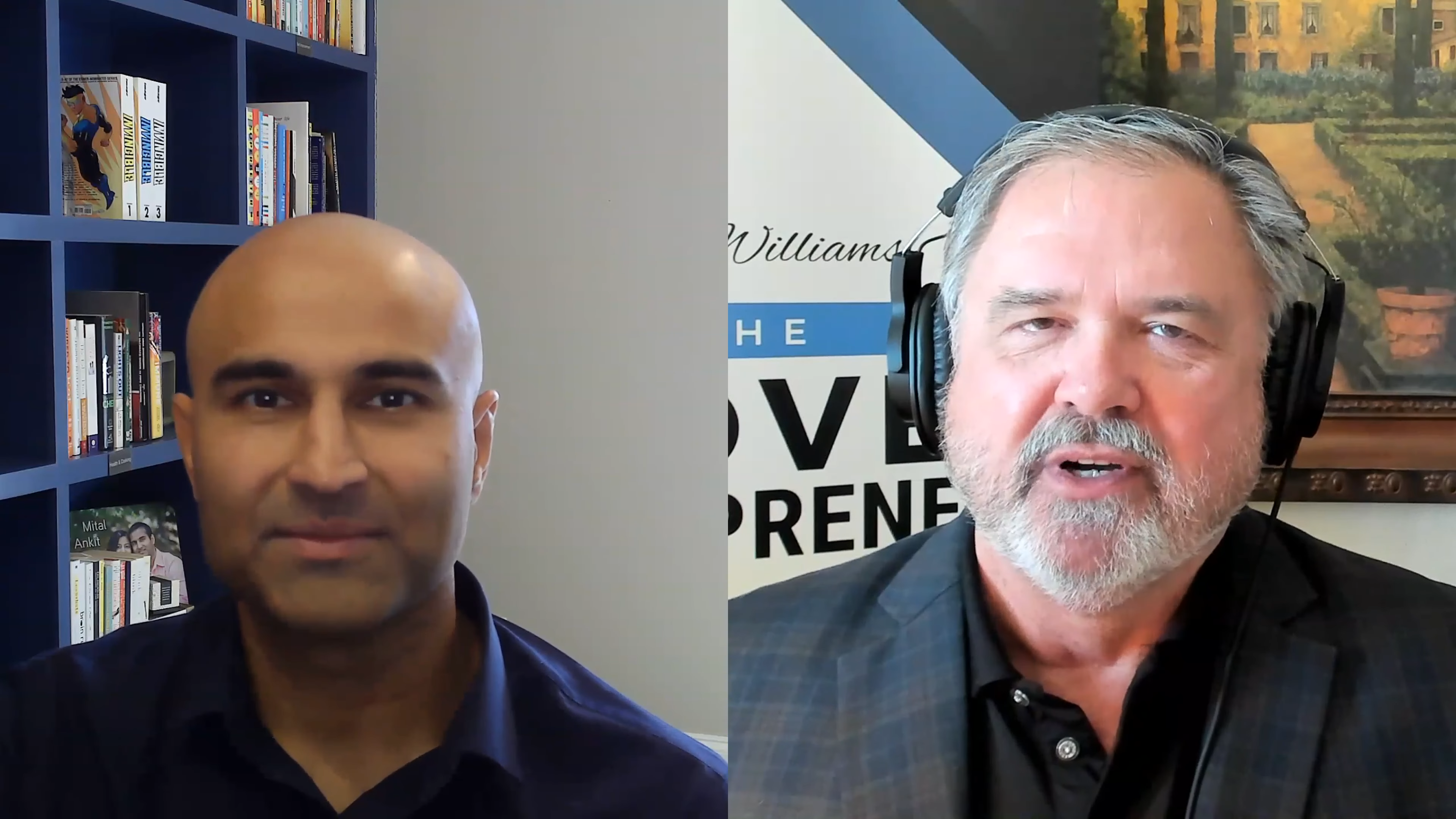
Hey, Don Williams here with today’s episode of The Proven Entrepreneur Show. Man, do I have a treat for you. Close friend of mine, super entrepreneur, serial entrepreneur in two businesses now. And I think there’s a third knocking on the door. Ankit Patel, please welcome to the show.
Thanks for having me, Don.
Yeah, my pleasure. And so, um, tell us, Uncut, uh, you live in Atlanta, Georgia. Okay. And your first business, I know what it is, but, but tell the audience what, um, your first business is.
one that I currently have, correct? Or my first business from way back when, when I was a wee lad. Fair enough, yeah. Yeah. So currently the primary business or the first business is eye doctor offices. My wife is an optometrist and long story short, I decided to help her grow those practices. So that’s how I got into that business. So I have actually no optometry background prior to that.
Well, let’s talk about the current business. We’ll get dig back in a little bit.
That’s all.
That’s awesome. And I’m always kind of in awe of couples who can do the married, the husband and wife thing and the business owner thing. Cause that takes a certain skill to be able to do that. So optometry offices, can’t talk today, it’s a new mouth. I’m just trying it out. And then your second business that you have currently, tell us about that.
So that one spun out of the optometry business. So I think Wyfe and I looked at, how do we really grow these businesses? And part of the, we were scratching our own itch. We said, okay, well, let’s look at a global resourcing model for staffing versus just a local one, because we’re, like most folks have trouble finding good quality local staff. And so we did.
we’ve done that so well, we’ve started to do that for other iDoctor offices across US and Canada as well. So we primarily can do anything that you can do remote. We do a lot of phone answering, appointment setting, verification of insurances, things like that. So anything that you can do remotely, we can do for other iDoctor offices.
Love that. And tell us the name of that business.
That business is called My Business Care Team.
my business care team. I love that. And so two things, one where you said, hey, we scratched our own itch. Okay. And a lot of entrepreneurial businesses, you know, are born in that manner. And then the second thing is I love it when an entrepreneur takes a line item cost and flips that into line item revenue. And so you solved a problem for yourself and also…
Yes.
are able to solve that problem for other people that are in similar situations.
Yeah, and it’s definitely been quite a ride. So, folks that need it definitely, they’re like, where have you been all my life? So, it’s been kind of fun. It’s been a fun journey so far.
I love that. Now I know the answer to this, but I want to be sure the audience here. So when an optometry office contracts with my business care team and you take care of a portion or all of the clerical functions, okay, for that business, I think that there is a savings that the practice owners, the physicians
and that savings can be up to what.
So we’ve seen as high as 30% off of the non-doctor payroll cost, so that’s something specific to the industry, but basically you have your doctors that you pay for the exams, but you have your non-doctor payroll, and we’ve seen as high as 30% savings there, just by us having come in to help streamline and help manage resources a little bit better.
That’s amazing. And I can’t imagine there’s an optometry practice anywhere in the country that wouldn’t like to save up to 30% on their non-doctor payroll. That just seems like a no-brainer to me. And then the flip side of it, I think not only does the practice save money on non-doctor payroll, but there’s also an enhanced income piece, isn’t there?
So it’s interesting because our job is to be helpful. So we charge for the resourcing and staffing, but we give a lot of resources away for free to our folks because we wanna be helpful to other private practices. And so once you are able to reduce your total staffing needs and your in-office head count, and you have a little bit extra budget, now you can take that and increase the pay, get better candidates and staff.
and hold them accountable. So we have a whole process and we kind of just give it what we’ve discovered in our own offices, how to do it. We just sort of just give it to our clients to say, hey, this is something you can do as well to help with your top line revenue as well, not just the bottom line.
Wow. And, and care to share any quantification on that enhancement to top line? Is there an up to number there?
Yeah, so I’ll share our numbers because I have permission to share our numbers. So we increased it by 33%. So specifically revenue per patient is one of the metrics that’s common in the industry and it jumped up by 33%. And that all had to do with just making a better experience for the patient, like educating them, understanding. And previously weren’t able to do that for two reasons. One, our staff was stretched thin. The caliber staff
Sure. Wow.
wasn’t to the level that we have now. We actually spend more on our in-office staff than we did before, but we offer benefits, we offer better pay, better bonuses, and we also make sure we hold them accountable to performance. So it’s been a win-win for everyone, for patients, for staff, for the business.
Yeah, I love all of that. You know, it’s all about the people, whether the people are on your team or the people are your customers. And the more you can better serve them, the better things work. Okay. Ankit, thank you for sharing. And the third, and we’re going to touch a little bit on this, but I, and I don’t know, you’ve never actually told me this, but I think maybe there’s an AI business somewhere in your future because you are certainly one of the most experienced and intelligent people.
Yeah.
I know of in AI and I know a bunch of them. And so we’ll talk about that just a little bit. Care to share anything that you’re doing with AI right now?
So we’re always looking at how to get better, more efficient. So again, I always start with where’s my needs right now? What needs can I, what kind of scratch? Right now we’re using a lot in training and development and it has been fantastic for that. So we do a lot of, it’s hard for my managers to be at multiple sites at once. And it’s hard for my, since we have a remote team, it’s hard to be on top of coaching all the time.
So we use AI to help with the coaching development and auditing a lot of times. And so for in-office team, we’ll have them do a practice scenario. It’s like, hey, you’ve learned how to sell glasses. Let’s do a recording and one person be a patient, one person pretend to be an optician and sell them glasses and go through that whole journey. And that recording gets uploaded and scored and they get feedback right away. So now your feedback and learning cycles go faster and that’s where AI has been really helpful for us.
is shorting those feedback and learning cycles to get even better improvement in performance.
I love that, you know, and there’s some thinking out there that like AI is going to replace all the people. I’m not one of those people who believe that. I think AI is going to accelerate the pace at which people can produce results because things that normally took time. Now, a microprocessor is going to make it happen like that. And so they’re not going to replace people, but it is going to change a little bit about how people work and the pace at which results come around. And we’re
Yeah.
We’re all in the time and money business. If you’re in business, you’re in the time and money business. That’s just all there is to it. So thank you for sharing. And I want to dig in. I’m going to take you all the way back to little Uncut. So like picture yourself five years old, maybe up through 18, through high school. And in the house that you were raised, and that looks different for different people. We don’t care about that. But in the house that you were raised, or houses,
Yeah.
Was there an entrepreneurial example? Was there an adult in your life who was on that crazy journey called entrepreneurialism?
So it’s interesting. So my background is Indian, right? So my heritage is from India. And the part of India that our family and most lot of folks that we knew in the US from India, very entrepreneurial. So that’s sort of probably one of the most entrepreneurial groups in the country. And so we had my ironically, my parents’ tribe, they were okay, they kind of dabbled at it, but I really had a lot of
Mm.
other examples of our family. I don’t think, I’m trying to think, I don’t think there wasn’t anyone that didn’t have a side business or a primary business that they worked on. So it was sort of something that I’ve always seen as, you know what, this is something I had to figure out and I want to do. And I see the difference between working for someone else versus being an entrepreneur. And, you know, I think other family members may feel differently, but I felt like, okay, I’m definitely wired to do this entrepreneur stuff.
Awesome. Okay. And so, um, and it’s interesting to me. I thought when I’ve started the show a couple of years ago that everybody would say, Oh yeah, my dad was an entrepreneur, my mother, my grandfather. And, but it’s interesting to me about half had, you know, my dad was a mailman and my mother was a teacher. And you know, that there was no, uh, hint of entrepreneurship. Um, but I think some entrepreneurs are just wired. They’re going, you know, some it’s by nature.
and some by nurture and some, you know, a combination of the two. So, okay. Now, now I’m looking for, I’ll say your first job, but your first job may have been your first entrepreneurial venture. I mean, you may have been selling lemonade or pencils or whatever, but, but the first effort you did where you, somebody paid you for some kind of effort. What was that? How old were you? Where were you at? Tell us about that.
15 and I started getting paid to teach martial arts classes. So I had received my black belt at that point in Taekwondo. And yeah, I was just teaching classes, which was a lot of fun. My first real job was working on a Steak and Shake as a line cook at 16 over summer job. So that was definitely a different experience than teaching Taekwondo to people.
Yeah, I’m sure.
Yeah, you know, it was interesting because working at Steak and Shake really, it really impacted, I had a lot of impactful stories from there because, you know, I was learning and I didn’t make mistakes. And, you know, the waiters and waitresses would come up to me like, hey, this is my livelihood. It’s like, you mess up, you’re taking food off out of my kids’ mouths. Like, oh, shoot. Okay. I got to take this a little more seriously. So it was, it was a little bit of an eye opener. It was like, okay, you know what, my decisions do impact other people.
That sort of stuck with me for a while, because it’s like, even now, I’m like, okay, well, you know, decisions I make impact a lot of people. And it was, yeah, it was, yeah, I didn’t work there for long, but that was something that stuck with me for a while.
Yeah, I think, I think, I think any type of retail is very good experience for young people because it teaches you how to deal with people and, um, and some people are easy to deal with and some people as we know are not easy to deal with, but, but we’re going to run across both kinds in our life and we’ve got to learn how to do that. Okay. So, um, now you’ve graduated high school, you, um, joined the Marine Corps or the Merchant Marine or your backpack to crush Europe.
You went to university. What was next?
Yeah, I didn’t do any of the military route or anything. I just went straight to school. Yeah, I just went straight to school. And the school I was at has, I went to school for engineering and they have a co-op program, which basically means one semester school, one semester work. And I started working at Delta Airlines here in Atlanta. So I went to school at Georgia Tech, industrial engineer working as a co-op at Delta.
And two weeks into the job, I knew I was never going to long term work for someone else. So, you know, that was a pretty fun, fun journey. I’ll pause there. I know that may not have been the question that you were asking, but I can dig into that story or reframe me if you want me to answer a different question.
No, I do want to dig into that. I love that. I think most non-entrepreneurs think that entrepreneurs are motivated primarily by a profit motive. And so they went into business to make tons of money. And the more entrepreneurs I talk to, the more rare I find that to be. Many times it’s something far different. So like in my case, I’m resistant to authority. And so I…
I’m not a good employee. I’m not a good person to tell me what to do. I don’t like that. And so, uh, yeah, share a little more on Georgia Tech, Delta airlines, 50 50, what you learned there.
Yeah.
So the first two weeks at Delta, or like within the first month, my first project was, this is before the days, everything was automated. We had, if you go around, they had paper records of bag drop-off times. So let’s say you land in Atlanta airport, you go from A concourse to D concourse, well, there’s a record of how long that baggage transfer takes and who drops it off, when they drop it off, but it was all manually recorded.
So our job was to go in there and transcribe like thousands and thousands of records over the past month. So me and this other guy, we spent two or three weeks doing it. And I was like, you know what? That’s fine. I don’t mind doing it. I get it. You know, it’s part of the deal being a co-op. Um, my assumption though, was that we be involved with the decision making, involved with the process, involved with some of the credits, right? Cause that’s what I’m there to do. I’m there to learn, okay, this is the data. Now, how do I take this data and apply it to the engineering side? Um,
But as soon as we finished that data, crickets, nothing. Didn’t hear anything for months and then all of a sudden the guy who ran the project got a lot of kudos for running the project and didn’t hear anything from it. And that lack of respect or my perception of lack of respect was really instrumentable in me saying like, yeah, that’s not happening. That’s like, it’s like if I, at least give me something, if you had taught me something and taken the credit, I wouldn’t have been fine with that. If you would have given me the credit and not taught me whatever, at least it would have been something, but.
you know, not to have anything from that handoff, I felt very, almost felt used, right? It’s like, okay, there wasn’t that level of respect that I thought should be there.
video.
Yeah, sounds to me like they could have used some leadership upleveling because we know it’s all about the other people and they weren’t dealing with that. So, okay. Graduated school, your degrees in what?
Undergraduate is industrial engineering and have a master’s in positive organizational development. So a little bit, a little bit different. I kind of took a roundabout path to where I ended up today for sure.
Okay?
sounds like the perfect education to be in business process outsourcing. Yeah. That’s how entrepreneurship is. I do know a few people and I live in Fort Worth, Texas. So TCU, Texas Christian University, has the Needles School of Business and they have a college of entrepreneurship and you see that more and more common today. But
Yeah.
for people of my generation or your generation that it’s really rare to find an entrepreneur who went to school for entrepreneurship. It’s just pretty rare. Okay, so talk a little bit about you and your wife own optometry practices and you were looking to scale the business. Talk us kind of through the birth, the genesis of, hey, we need a better solution for us. And then I’m just assuming that at some point
have that solution going, you’re like, I think maybe this is sellable. I think maybe we can provide this as a service to other people. So talk us through that a minute, if you don’t mind.
So you know how you were saying that you knew that you weren’t gonna be great working for someone else because you had that, don’t work well with authority. For me, I have a little bit of that, but for me it’s more about, oh, I know this can be solved and you’re not letting me do it. And so I have that burning desire because I like solving problems, that’s fun for me. And I was like, I always liked seeing what’s possible. Like, okay, I think we can do this. Let me see if I can figure it out. I enjoy that part of entrepreneurship journey. And so when we…
When we came to that, you know, you talk to your peers in the industry and they’re like, ah, that’s just what it is. Right. How do you do it? Or here’s some like incremental things. I’m like, I need something radical. Like I want something like bigger change. Cause I, this isn’t enough. This isn’t good enough. So I met with people outside of my industry. Um, you and I are part of an organization called EO entrepreneurs organization. And so I knew some people there, uh, actually a mutual friend of ours, Brad Stevens. Uh, he and I talked and, um, there’s a couple other people I talked to that were doing this and I said, you know what?
I think I can figure this out. I never had any call center experience, never VA experience. And so it was a bit of a rocky start, but we kind of hammered it out and honed it in over the course of a few years. Now COVID accelerated it. So we started in 2019, November of 2019 is when we hired our first employee and she was with us and then COVID hits. We lose some of our regular staff and need to augment. So we augment globally versus locally.
And so we grew up from there and started taking on beta or like, you know, I guess friends and family type clients in the year, let’s see, what is it? 2022, 2021, 2022, we started that. And in 2023, we officially launched My Business Care team when we finally got enough traction and understanding that, oh yeah, this is definitely something people want. Cause I didn’t know if it was something people would wanna do or even think about doing.
But we found that, yeah, there’s a lot of optometrists, especially multi-practice optometrists, that this is perfect for them. Because that’s essentially the solution we solved, right? We have multiple locations. We needed to centralize. We needed to streamline and save on cost. And so since it is centralized, we have options to not keep it local if we wanted to. And so that’s why it’s been working really well for us as well as our clients.
I love that. And, you know, I have decades of working in and around healthcare. And one really common theme I’ve found is this, is that physicians, regardless of their specialty, have a really burning desire to positively affect the health of humans and are frustrated with the non-
delivery of healthcare activities that are required. And so the insurance, the patient management, all that stuff is not universally, but it’s pretty common that the healthcare professional, they’d really like to just focus on helping people improve their health.
and all the rest of it is painful. So I think there’s a huge market for that. And in fact, you’ve had quite a bit of success the first 12 months of actually launching, yes.
Yeah, we’ve grown quite a bit. You know, we’ve picked up a little bit over a couple, well, yeah, over a dozen clients plus and then really have been getting folks, we’ve actually slowed down a little bit just because we want to make sure we get it right because since we own our own practices, we know how important that is. Like you said, right, patient care is really critical. And so we were hit some growing pains. So we said let’s put the brakes on a little bit. Make sure we sort this out.
Yeah.
Yeah.
get the right people that we need in the right seats, and then we can hit the gas again. So it’s been a blessing to be able to have, to slow it down versus having to find ways to speed it up.
Hard to have discipline to do that, but in all truth, there are businesses that are growing for growth sake, that they basically out punt their coverage. They grow too far, too fast. And ultimately that’s fatal to the business. And so it’s very important that you’re able to maintain your core values and your service levels and stay true to your mission.
And so it takes real discipline and I applaud you for being able to do that. Say, Hey, we’re growing pretty fast now. Maybe we tap the break just a touch. Okay. To be sure that we’re maintaining the quality that we want to put out to the world. So great job. Looking back, been an entrepreneur more than a minute. I’m going to ask you for a hard lesson. So something that happened.
that when it happened, your initial reaction was, ugh, that hurt, I don’t like it, I’m mad, I’m scared, it’s not fun. But maybe after a period of time and some perspective, being able to look back on that event, whatever it was in retrospect, maybe it turned out that it was a real positive. Do you have a hard lesson that you could share with Asanka?
Yeah.
How much time do you have? I think I’ve got a lot of those. And it’s just what, Wednesday or Thursday? I, yeah, do you want one this week? So one of the first lessons, one of my first, I’ll call it like a real business, right? I started Liberty Tax franchises and the town that I opened mine in were military town. So the first year I had one location.
Me too!
did great, went gangbusters, made an okay profit, not great, but good enough. I can’t remember what the exact amount was, but it was enough to get me through to the next year because there’s seasonal business, three months, whatever. And then I said, you know what? Let’s just grow for growth’s sake. And so I was like, I need to grow faster because a little bit about me, I’ve noticed that, and I learned this after the fact, but.
I feel like I’m not good enough unless I’m constantly achieving. And that is, that can be a double-edged sword as an entrepreneur, um, as a, as a person in general. And so I was like, well, let me expand. So opened up two more locations and the military got deployed. Uh, this was back around, uh, rack of war. And then, so all of the main clientele we had gone had extra costs and.
Hmm.
I was barely making a profit as it was, and now it was like, okay, I’m upside down. So I had to take out a couple of loans. I had a house at the time that I ended up selling to get out of loans. And so yeah, a lot of lessons learned. Know yourself. Understanding my own psychology is something, that was my first lesson, understanding my own psychology when it came to business decisions to strategy.
I’ve had another lesson around understanding psychology, around management and understanding people and knowing what I’m good at. I always thought, oh, I’m good at everything, right? Turns out, no, I’m really not. And so it took me until, you know, what am I, mid-40s now to figure that out. So that was a struggle, right? Cause I’m like, why can’t you just do it this way? And I would interview people.
perfect example is that several times I’ve tried to hire a manager or a GM at my offices and I’d always hire people I think, oh I could get them there, right? They seem like almost a perfect fit, I could get them there. And so what I realized from that is, no, I can’t, I am not a great manager.
I’m not a great teacher. You know, I’m okay teacher. I’m an okay manager, but I am not good at those things. So I need to focus on where I am good at. So for me, it’s solving problems. So if I have decisions on, do I expand the business? I have a finance person that I have certain things that I run through. You talked about partners with my wife. My wife is much better at those types of things. So we have a system now. I was like, hey, should we do this? Like, what do you think? What are the issues that we need to resolve or answer first before we would do this? And so I’ve put in things in place to kind of…
stop myself from going crazy in terms of making bad decisions. And that’s been helpful. And then forcing, having forcing functions. So another thing I learned is that, hey, if I don’t have the right person because of my own psychology, I decided to hire the wrong person and I’m doing all the work for them or they’re not going to do it. I’ll end up doing too much work and I get too busy. So now it’s like, okay, you know what? I know these are the things I should be working on. If I’m working on anything outside of that.
Whose job is it really to do that and why am I doing it instead? So that’s another trigger for me where I’m like, you know what? I need to pass it off. Um, cause, uh, my job and my strength is not in the day-to-day piece of doing, even though I can do those things. It’s more about, Hey, problem solving and strategy.
Love that. I want to add some weight to a couple of those things. One, it’s all about people and having the right people makes the job so much easier. Two, I think all of us think that we’re right all the time, that we’re the best at everything all the time. And the reality is any human knows about a trillionth of a trillionth of a percent of all.
human knowledge and so it’s impossible to be great at everything. But the secret is not to do everything, but to do what you do best and in your case, that solving problems and I know you, you’re one of the best people I know at identifying the actual issue, which to me is step one in solutions and then looking at alternatives that have.
a chance of success, and then you bring kind of the magic where a lot of entrepreneurs struggle is they don’t actually act. But you run that process very quickly and that’s a big part of your success. So okay, now what about a warp speed moment? So you’re going along, business is going pretty good, it’s like the old Star Trek show, give me more power Scotty, and you know they go from
a thousand miles an hour to a hundred thousand miles an hour. Can you share a warp speed moment, a decision you made, a hire you made, a policy you implemented or killed that the business did that hockey stick really took off?
There’s a couple. One was around when we’re expanding our locations and the types of places we wanted to acquire. So we looked at more opportunistic buys. And so we ended up, we went from like one location to five at one point within a matter of a couple of years. And since we’ve consolidated down, financially didn’t make sense to keep everything open. So, but that was one of the decisions, but.
I think the other piece was really around the decision around hiring and focusing on who, not what and how. To kind of build off your story, my background’s in engineering. I was a lean Six Sigma guy for large corporations. I had a lean Six Sigma company doing this for other companies. And so I was a very processed person. And until like about a year and a half ago, I was always processed first. Anyone can…
Get it, want it, have the capacity to do it - the three non-negotiables for hiring that transformed our business Share on Xprocess can overcome most people, right? And process is what needs to be fixed first, not the person. I had a 180, because I spent an entire 2022, 2023, focusing on process and not the people first, and just kept hitting my head against the wall. And then I finally just said, you know what, maybe it is the who first. So maybe there’s something to do that. And so I started looking at how to interview.
how to do these things and that made the biggest difference. So there’s several different things now that I do on the front end. That’s really made a huge impact on the backend for performance across the entire organization. Um, and that’s, that’s been just putting gas on gas on the, on the flames. Um, cause now we’re getting the right people. Warrant just barely meeting expectations or kind of meeting expectations. Um, cause if they are, they’re worked out of the business fairly quickly now, cause we’re like not really dealing with it at this point. Um, and so we really get folks that
Yeah, they get it, want it, and they have the capacity to do it.
Get it, want it, and have the capacity to do it. That’s a golden nugget right there. Get it, want it, and have the capacity to do it. And I like the, you know, some entrepreneurs focus really, are really strong on the people side. They’re not that good on the process side. You had it in reverse, really strong on the process side, not as skilled on the people side. But folks, if you want the big magic.
Not the little magic, the big magic. You got to do both. Okay. You need the people and the process. And so, um, you know, decide where you’re good at and then go get somebody to help you on the other side. That’s the easiest way to do it. You don’t have to learn everything yourself.
And quick credit to the get at one of capacity is not my terms, it’s actually traction in EOS. So if anyone’s curious where I got that from, that’s, that’s a good resource. We use EOS at the companies that I have.
Yeah, EOS, great system. And.
Gina Wickman product and so super stuff there. Okay, this is the toughest question I’m gonna ask you. Gonna put you in a time machine, gonna send you back 27 years, gonna get about 60 or 90 seconds to talk with 20 year old Uncut. And so what do you know now that you wish you knew then that would have streamlined
made your journey a little easier. So, end of the time machine you go, all the way back to 20 year old Ankit. What would you tell yourself?
a lot.
One thing I would say is that this, the global resourcing company, my business care team, was easy because of the experience that I have in the industry. And it’s an industry that I enjoy and actually like working in.
And it’s kind of a growing industry. So I would say, don’t chase the money. You can get a job, do what you need to, but go in an industry that’s interesting and growing. So you can learn it. So, because for me, it took about 10 years of really knowing the industry ins and outs to make a job, to make another business easy, to understand the pain points, to really understand how you can service folks and really make that add a lot of value to the industry.
And so it’s, it’s a lot harder than it looks. So make sure you got all that experience and then find out what people are willing to really listen to what they say when they say they have a problem. Um, quick story. I started a business doing, I thought I wanted to do computer repairs. And this is before cell phones really got big. And, um, I put one ad out and the 55 and older, um, newspaper and everyone called me for computer tutoring and not computer repair.
And so I was like, I don’t want to do that. I just want to do the repair side. And so I didn’t pay attention to that signal that I had. I was like, well, that’s what people want to pay for. Nearly because I didn’t, that was just something I was doing on the side for fun. It wasn’t really an area I had a lot of experience in. So really understand what the market and the business really, really want. And the second thing I’ll say is know yourself. And quite frankly, go get therapy, right? Got.
I found I had some, you know, clinical depression, suicidal for a while, had a lot of stuff that I worked through. And quite honestly, though, I was doing a lot of things that were very protective of my own ego and my own emotional state that caused bad business outcomes. So part of the reason why I didn’t listen to the market was because I was like, well, it has to be this way or I’m not going to be good enough. Right. And so that took some time to kind of process that and get over that and understand that that’s really what I was going through.
Those two lessons were probably the most important I’ve learned over the last 20 years.
I love that. And thank you so much for sharing those details. A couple of things hit me as you shared that is one, you as an entrepreneur will never do your best work until you find something that you love. And so if you go in strictly for the money, like you said, that, that won’t end as well as you think.
But when you do something that you absolutely love, what’s the old saying? Find something you love to do and you’ll never work a day in your life. And man, that’s like in spades for entrepreneurs. And then two, going back to what people think they know is get certain, look for experts, people who can help.
Okay. And that, that might be therapy and it might be a business coach and it might be somebody to set up your books the right way. It might be somebody, it’s just somebody who does something that it’s in their superpower and it’s not in yours. And the best teams are teams where you have a team of super players and they’re all playing their position and helping where they can the other players. And so.
I love that real wisdom from a young man like you. So Ankit, how can we, as the proven entrepreneur tribe, how can we support you? What could we do for you?
Yeah, there’s, if you know any optometrists or ophthalmologists that need some support, your local, I’m sure everyone sees their eye doctor. Would love if you said, hey, you should check out on kid. He has some practices. He’s hopefully you feel comfortable enough to say, hey, you should check me out. So I would love, love that. And if anybody has any questions, we’ll be happy to answer any questions that they might have. Like you had mentioned, we’re working on a lot of cool things around AI and…
how to implement that. So I’m always here to help. So I was like sharing and helping.
Yeah, love that. And so, Hey, if you’re seeing an eye doctor, doesn’t matter what they are. If they’re an eye doctor, they probably need on-cut service. Okay. My business care team, give us the website address.
It’s mybcat.com. So it’s M-Y-B as in boy, C-A-T.com.
Okay. And so tell your doc, man, I think you guys could use some help. Okay. And that’s okay to say that and then reach out to Ankit. Ankit, thank you so much for being a guest on the show today. That’s today’s episode of The Proven Entrepreneur Show. We’ll see you next time. Thanks. Bye now.
Thanks for having me, Don.